Quick answer: The most common baby safety equipment mistakes

Parents invest in gear from brands like Britax, Graco, Chicco, and Motorola to keep their children safe. But the equipment itself is only half the equation. Installation errors, mismatched age ratings, expired products, and overlooked recalls eliminate most of the protection that safety gear is designed to provide. The four areas where mistakes cluster most heavily are car seats, baby gates, infant monitors, and sleep environment products. Fixing these mistakes does not require buying new gear in most cases; it requires using what you already own correctly.


Car seat errors: The most consequential mistakes parents make

Car seat mistakes are the highest-stakes category because the consequences show up in crash statistics. According to NHTSA, roughly 59% of car seats are misused in ways that reduce crash protection. The three errors that appear most often are harness angle, harness tightness, and using a seat past its expiration date.

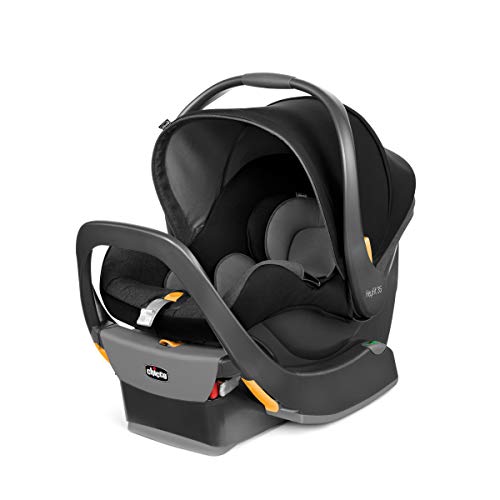
Harness angle. Infant seats (rear-facing only, like the Chicco KeyFit 35 or Graco SnugRide 35) require the seat’s recline angle to keep a newborn’s airway open. Most seats have a built-in angle indicator on the side. If the seat is too upright, a newborn’s head can fall forward, compressing the airway. Check the angle indicator at every installation and after every car switch.

Harness tightness and clip position. The chest clip on a Britax or Graco seat belongs at armpit level, not belly level. A chest clip at the belly can cause abdominal injury in a crash. The harness passes the pinch test when straps lie flat at the shoulder with zero gathered slack between your fingers.

Expiration dates. Every car seat carries an expiration date molded into the plastic shell, typically 6 to 10 years from the manufacture date. Plastic degrades with UV exposure and temperature cycling. A seat used past expiration cannot guarantee the structural integrity the crash-test ratings assumed. Check the date now; if your seat expires within 12 months, plan the replacement rather than scrambling after a fender-bender.

A free CPST inspection takes about 20 minutes and is available at fire stations, hospitals, and police departments nationwide. NHTSA maintains a locator at nhtsa.gov. For car-seat-specific safety standards, the governing federal regulation is FMVSS 213; all seats sold in the US must meet it, but installation technique determines whether the seat performs as researched.


Baby gate errors: Pressure-mount placement and height miscalculations

Baby gates prevent falls, which are the leading cause of non-fatal injuries in children under age 5 according to the CDC. The two most serious misuses involve gate type selection and installation height.

Pressure-mounted gates at the top of stairs. Pressure-mounted gates like the Regalo Easy Step are safe at room transitions on flat surfaces, but the CPSC explicitly advises against using them at the top of any staircase. A toddler leaning or pushing against a pressure-mounted gate can dislodge it entirely. Only hardware-mounted gates with screws anchored into wall studs or solid mounting blocks belong at staircase tops. Gates rated for stair-top use, such as the Munchkin Pressure-Mounted Stair Gate (bottom of stairs only) versus the Evenflo Position and Lock hardware-mounted gate (top or bottom), are labeled accordingly. Read that label before installation.

Gate width gaps and height clearance. A gate installed with a gap wider than 3 inches on either side allows a toddler’s head through, which creates an entrapment and strangulation risk. The CPSC standard for baby gates is ASTM F1004. Gates meeting this standard must have vertical slat spacing no wider than 2.375 inches. When using extension panels to fill a wide doorway, verify the extensions are from the same manufacturer. Third-party extensions can create inconsistent slat spacing that violates the researched configuration.

Height. A gate that stands shorter than 22 inches above the floor when opened can be climbed by an active 18-month-old. Most ASTM-compliant gates meet or exceed 22 inches, but check your specific model’s specs if you have an unusually tall or athletic toddler.


Baby monitor errors: Cord hazards and false security

Baby monitors from brands like Motorola, Nanit, and Infant Optics provide genuine peace of mind when set up correctly. Two errors shift monitors from helpful to hazardous.

Cord placement. The CPSC has documented infant strangulation deaths caused by monitor cords left within reach of the crib. The standard recommendation is a minimum 3-foot clearance between any cord and the crib perimeter. This applies to the monitor unit itself, the power cord, and any cables connecting accessories. Cord-free wi-fi monitors like the Nanit Pro eliminate this risk entirely for the monitor unit, but the power adapter cord still needs to be routed away from the crib.

Over-reliance on monitoring technology. Video monitors show you what is happening; they do not prevent unsafe sleep situations. Seeing your baby on a screen does not replace following AAP safe-sleep guidance: firm flat sleep surface, no soft bedding, no positioners, no inclined sleepers for unsupervised sleep. The AAP’s 2022 safe sleep policy statement, updated and available at aap.org, is the definitive reference. Parents sometimes see a monitor as a substitute for a safe sleep setup, which it is not.

Signal security on wi-fi monitors. Monitors that connect to home wi-fi networks can be accessed by unauthorized parties if the default password is not changed. Within the first week of setup, update the default network password on any internet-connected monitor and enable any available two-factor authentication. Motorola and Nanit both publish setup guides for securing the network connection.


Sleep environment errors: Products that look safe but are not

Sleep-related infant deaths account for approximately 3,500 deaths per year in the United States according to CDC data. A significant portion involves products marketed for infant sleep that do not meet current safety standards.

Inclined sleepers. Products that position infants at an angle greater than 10 degrees for unsupervised sleep have been linked to deaths from positional asphyxia, where an infant’s airway becomes obstructed as the head slumps forward. The CPSC banned infant inclined sleepers exceeding a 10-degree angle in 2022 under Section 104 of the Consumer Product Safety Improvement Act. If you own an inclined sleeper purchased before this ban, stop using it for sleep. This includes popular products that were recalled before the ban took effect.

Soft bedding and sleep positioners. Loose blankets, pillows, bumper pads, and wedge positioners are not safe in a crib for infants under 12 months. The AAP specifies a firm, flat sleep surface with a fitted sheet as the only item in the sleep space. Swaddle products with integrated wings or velcro closures, such as those from Halo or Love to Dream, are acceptable alternatives for the newborn period when used according to weight limits and discontinued before the infant shows signs of rolling.

Crib and bassinet standards. Cribs sold in the US after June 2011 must meet CPSC’s revised crib standard, which eliminated drop-side cribs. If you are using a hand-me-down crib, verify it is compliant with the current standard. The maximum slat spacing is 2.375 inches, the same as baby gates. Older cribs may not meet this standard even if they appear structurally sound. The CPSC recall database at cpsc.gov/Recalls allows you to search by brand and product type.


Bottom line: Fix the installation before buying new gear

Most baby safety equipment mistakes are installation and usage errors, not product failures. A Britax car seat installed incorrectly provides less protection than a budget seat installed correctly. A hardware-mounted gate used at the bottom of the stairs is safer than a pressure-mounted gate used at the top, even if the pressure-mounted gate costs more. Before purchasing any new safety equipment, verify that what you already own is installed per the manufacturer’s manual and current CPSC guidelines.

For car seats specifically, schedule a free CPST inspection at nhtsa.gov if there is any uncertainty about installation. For sleep products, cross-reference anything you received as a gift or hand-me-down against the CPSC recall database. The 15 minutes these checks take are the highest-value safety investment available to parents of children from birth to 36 months.

If you are building out a safety equipment setup from scratch, start with verified categories: a rear-facing car seat from an established brand, a hardware-mounted stair gate, and a firm, flat crib with a well-fitted mattress. Search Amazon for baby safety gates hardware-mounted or infant rear-facing car seats to compare current options, and check current Amazon pricing before purchasing.

For additional guidance on testing methodology and how Kiddopicks evaluates safety equipment, see our methodology page.