Quick answer: the five mistakes that matter most
Most stroller and pram mistakes fall into a short list: choosing a frame that is too heavy to carry daily, running in full upright mode before a baby has head control, mixing car seats and strollers that were never certified together, skipping harness adjustments after growth spurts, and overloading the handlebar with a heavy organizer bag. Fix those five and you eliminate the majority of the frustration and safety risk parents encounter in the first three years.
The rest of this guide digs into each area with specific numbers, brand examples and the safety sources you should bookmark before your next purchase.
Frame weight: ignoring the daily lift penalty
Stroller weight is the most underrated purchase decision. Showroom demos are short; a daily school run with a toddler plus a diaper bag is not.
A full-size stroller like the Graco Modes Pramette tips the scale at 28.4 lb. A mid-size option like the Nuna MIXX Next sits at 26.5 lb. A compact travel frame like the Babyzen YOYO2 weighs 13.6 lb. The difference becomes obvious the 40th time you fold and unload it alone.
The mistake is not buying any of these. The mistake is buying the heaviest option and expecting daily commuting to feel effortless. Before you commit:
- Weigh what you carry now (groceries, diaper bag, car seat).
- Simulate lifting the stroller weight into a car trunk at hip height with one arm.
- If you ride public transit, add the weight of the child to the lift you will make up subway stairs.
A frame over 25 lb is workable if you have a lift-assisted vehicle and a co-parent most days. For solo urban parents, anything above 20 lb creates fatigue that accumulates over months.
Brands to compare directly: Babyzen YOYO2 (13.6 lb), Chicco Bravo (21.3 lb), UPPAbaby VISTA V2 (27 lb). None of these is a wrong choice; the mistake is choosing any one of them without doing the lift test first.
Recline angle: putting a newborn in a fully upright seat
Newborns cannot hold their heads upright without support. The airway of an infant whose head flops forward in a semi-upright seat can compress enough to restrict breathing. This is documented in CPSC incident data and is one of the primary reasons stroller bassinet modes exist.
The AAP recommends that babies ride in a fully reclined or near-flat position until they demonstrate consistent head and neck control, which typically appears between 4 and 6 months. The specific posture risk is the chin-to-chest position: when a baby’s head falls forward at more than a 30-degree angle from vertical, the tracheal airway narrows measurably.
Common mistake pattern: a parent buys a seat-unit stroller instead of a pram or bassinet attachment because they think the fully reclined seat position is equivalent. It is not always the same. Stroller reclines are measured from the seat shell, not from true horizontal. A stroller marketed as “multi-position recline including flat” should be verified to reach true 170 degrees or more. Brands like Stokke (Xplory X) and UPPAbaby (Cruz V2) publish their recline angles in the manual. Read the number before assuming “flat” means flat.
If you already own a seat-unit stroller and have a newborn, use a carrycot accessory or an infant car seat with an appropriate adapter rather than relying on the seat recline.
Travel system compatibility: mixing brands without verified adapters
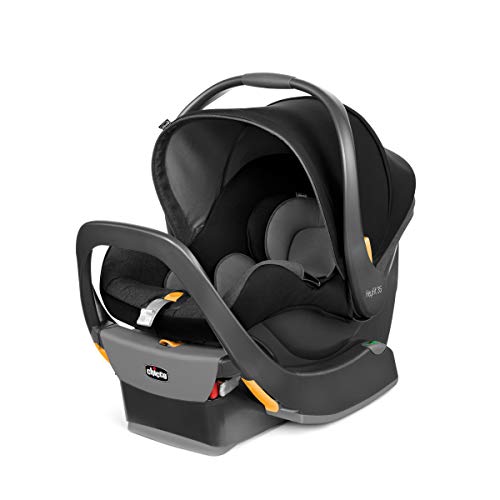
A travel system lets you move an infant car seat from car to stroller without waking the baby. Done right, it is a lifesaver for the first 12 months. Done wrong, it is a safety failure.
The mistake: assuming any car seat will click onto any stroller with any generic adapter. CPSC safety data includes incidents where infant seats detached from incompatible stroller frames during use. Manufacturers test and certify specific pairings; outside those pairings, there is no researched proof of retention force.
What verified compatibility looks like:
- Graco car seats (SnugRide 35, SnugRide Lite) are natively compatible with Graco strollers such as the Modes Nest and Modes Pramette via Graco’s Click Connect system.
- Nuna PIPA series car seats work with Nuna strollers via Nuna’s certified adapters, and a subset of compatibility has been researched and published for Bugaboo frames.
- Britax B-Safe Gen2 seats publish a compatibility chart on Britax’s website listing researched stroller pairings.
- UPPAbaby publishes a compatibility chart at their site for Mesa car seats with UPPAbaby stroller frames.
Before buying an adapter from a third-party Amazon seller, search the stroller brand’s website for their published compatibility list. If your combination is not on the list, contact the manufacturer. Improvising is not worth the risk.
Harness fit: forgetting to re-adjust as your child grows
The harness on a stroller restrains your child in a forward tip or collision. A harness that fit correctly at 6 months will likely be too loose or too low by 10 months.
CPSC guidelines state that harness straps should:
- Sit at or below shoulder height for a rear-facing infant position.
- Lie flat against the chest with no more than a finger’s width of slack at the collarbone.
- Be adjusted so the crotch buckle does not allow the child to slide forward.
The mistake: setting the harness once and leaving it for months. Growth spurts in the first two years happen every 6 to 8 weeks on average. Each time you notice clothing fitting differently, check the harness height.
Brands handle harness height adjustment differently. On the Chicco Bravo and Graco Modes, harness slots re-thread through the seat shell, which takes about 3 minutes with the manual. On Ergobaby’s Metro+ stroller, the harness adjusts via a single pull strap at the back, no re-threading required. Know which system your frame uses so adjustment does not feel like a reason to delay it.
A loose harness on a stroller is not equivalent to a loose harness on a car seat in terms of crash force, but tipping incidents do occur. The CPSC recorded over 360 stroller-related emergency room visits related to harness and fall incidents in a single recent year.
Handlebar accessories: overloading past the weight limit
The aftermarket for stroller accessories is enormous. Snack trays, cup holders, phone mounts, organizer bags, and insulated bottle pouches all clip to the handlebar. The mistake is treating the handlebar as a weight-free attachment rail.
Every stroller manufacturer specifies a maximum handlebar or hood weight. A common published limit across major brands (Bugaboo, UPPAbaby, Chicco) is approximately 11 lb (5 kg) total. When you load an organizer bag with two water bottles, a phone, keys, a wallet, sunscreen and two snack containers, you can easily hit 7 to 8 lb before you add a single shopping bag to the hooks underneath.
Exceeding handlebar weight combined with weight on handlebar hooks is how strollers tip backward when the child climbs out or when you lift the front wheels to cross a curb. CPSC recall records include stroller models recalled specifically because they were found to tip backward at loads parents would reasonably expect to apply.
Practical guidance:
- Weigh your filled organizer bag before attaching it. Kitchen scales take 10 seconds.
- Use the under-seat basket for heavier items like grocery bags. UPPAbaby VISTA V2’s under-seat basket holds up to 30 lb; Bugaboo Fox 5’s basket is rated for 22 lb.
- Keep handlebar hooks empty when the child is not buckled in.
One substantive con worth naming for popular organizer bags sold under brands like Bumkins and Skip Hop: neither brand specifies a weight limit for the handlebar mount itself, and neither includes a load warning on packaging. That gap in labeling is a real consumer safety problem. Treat 5 lb as your personal handlebar ceiling regardless of what is omitted from the packaging.
Bottom line: what to fix first
If you are still in the research phase, the single most impactful thing you can do is lift the stroller at the store with the car seat and a full diaper bag to simulate the real load before buying. That alone eliminates the weight mistake.
If you already own a stroller, open the manual to three pages: the recline angle specification, the harness height adjustment instructions, and the handlebar weight limit. Those three numbers will tell you whether you need to adjust anything today.
Strollers from reputable brands like Graco, Chicco, UPPAbaby, Nuna, Bugaboo, Britax, Stokke and Ergobaby are built to real safety standards. The problems that create genuine risk are almost always in how parents configure and use them, not in the product itself. Configuration is correctable. Check the CPSC Recalls page for your specific model as a final step, and then push on.
For further reading on stroller safety standards and harness fit, the AAP car seat and stroller resource and CPSC stroller safety guidance are the most current authoritative sources available to parents.