Quick answer: match the gear to the stage, not the age
The single most useful rule for baby safety equipment is this: buy for the developmental milestone your child is approaching, not the birthday they just had. A 7-month-old who crawls aggressively needs cabinet locks and a top-of-stair gate sooner than a 10-month-old who is still happily sitting. Below is a stage-by-stage breakdown of which safety gear matters most, what specs to look for, and which brands consistently pass independent testing.
Stage 1 (0-3 months): safe sleep and the first car seat
Before your baby comes home, two categories of safety equipment are non-negotiable: a compliant sleep surface and a properly installed infant car seat.
Safe sleep surface: the firm-flat rule
The AAP’s safe sleep guidelines specify a firm, flat surface with no incline greater than 10 degrees. Every bassinet, crib, or bedside sleeper you consider must meet 16 CFR Part 1218 (bassinets) or 16 CFR Part 1219 (cribs). The Babyletto Hudson 3-in-1 crib ships certified to both and converts to a toddler bed, giving it a useful 5-year lifespan. The SNOO smart bassinet from Happiest Baby meets 16 CFR 1218; its 33 lb weight means you will almost certainly need a partner to assemble and reposition it.
What to avoid: any padded inclined sleeper that tips more than 10 degrees. The CPSC has issued recalls on over a dozen inclined sleep products since 2019; check cpsc.gov/Recalls before purchasing any product in this category.
Infant car seat: weight limits matter more than brand
Every infant car seat sold in the US must pass FMVSS 213. The difference between budget and premium brands is primarily ease of installation, side-impact protection design, and longevity of the rear-facing weight range. Three seats worth comparing:
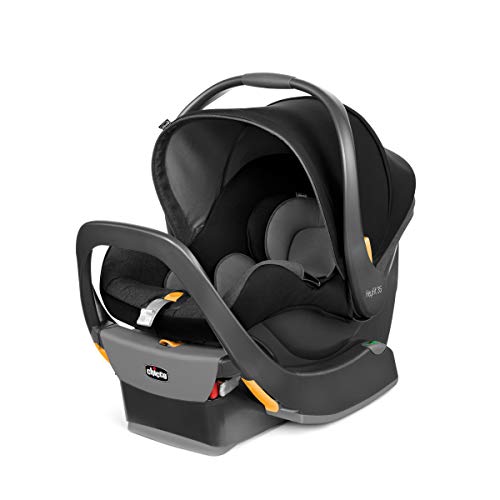
- Chicco KeyFit 35 supports infants 4-35 lb, weighs 9.8 lb without the base, and receives consistent high marks from NHTSA installation-check data.
- Nuna PIPA Lite weighs just 5.3 lb (carrier only), which matters at 3 a.m. when you’re lifting a sleeping infant out of a car in the dark. It rear-faces from 4-32 lb.
- Graco SnugRide SnugLock 35 hits a lower price point while still passing FMVSS 213, making it a reasonable choice if budget is the primary constraint.
The NHTSA recommends having every car seat installation checked by a certified technician. Locate your nearest inspection station at nhtsa.gov. According to NHTSA data, roughly 46% of car seats inspected at check events have at least one installation error, which is a sobering reason to get a professional check before the hospital discharge drive.
Stage 2 (4-8 months): floor-level safety as rolling begins
Most infants begin rolling front-to-back between 4 and 6 months, and back-to-front shortly after. This mobility stage is when floor-level hazards become real risks.
Outlet covers: skip the plug-in caps
Plug-in outlet caps are the most commonly purchased outlet safety product and also one of the more problematic choices once a baby can reach and pull. The CPSC found that standard plug-in caps can be removed with a force as low as 9 lb, well within a sitting infant’s arm strength. The better options:
- Sliding-plate outlet covers (brands: Leviton, SnapPower) replace your existing outlet faceplate with a spring-loaded slide that requires two simultaneous movements to open. These cost current pricing per outlet and require a screwdriver but no wiring.
- Tamper-resistant receptacles (TRR) are built into the outlet itself and are required in new construction under the 2008 National Electrical Code. If your home was built or rewired after 2008, you may already have them.
Play yard: ASTM F406 compliance
If you use a portable play yard as a supervised play space, verify it meets ASTM F406. The Graco Pack ‘n Play On The Go weighs 14.5 lb and folds to 24 inches, making it practical for travel. The UPPAbaby Remi is heavier at 18 lb but includes a firmer mattress pad and a slightly deeper wall that limits climbing attempts later. Neither should be used with aftermarket mattresses or padding not supplied by the manufacturer, per CPSC guidance.
Stage 3 (8-14 months): gates, locks, and furniture anchors
Crawling and pulling-to-stand introduce the three most common injury scenarios for infants aged 8-14 months: stair falls, access to cabinet contents, and furniture tip-over.
Baby gates: hardware-mount at the top of stairs, pressure at the bottom
The ASTM F1004 standard is the baseline for all baby gates. Beyond the certification sticker, the key decision is mounting type:
- Hardware-mounted gates use screws into wall studs. Required at the top of any staircase. The Regalo Easy Step Extra Tall Walk Thru Gate (29 inches tall, 38.5-inch maximum span with extensions) is among the most installed gates in the US. The Evenflo Position & Lock Tall Gate allows 6-inch micro-adjustments, which is useful in older homes where stud spacing is irregular.
- Pressure-mounted gates are appropriate for bottom-of-stair use and room doorways. The Summer Infant Multi-Use Deco Extra Tall Walk-Thru Gate fits openings from 28 to 45.5 inches and does not require drilling.
One con for both types: gate hardware can loosen over time. Re-torque all screws monthly and after any impact. Most gate failures in CPSC incident reports trace back to missing re-tightening, not product defects.
Cabinet and drawer locks: magnetic over adhesive
Standard adhesive cabinet locks lose adhesion on painted or textured surfaces within 3-6 months in humid environments (kitchens, bathrooms). Magnetic cabinet lock systems (Safety 1st Magnetic Cabinet Lock, SKYLA Homes Magnetic Cabinet Locks) require drilling but hold up to 200 lb of pull force and cannot be defeated by a child without the magnet key. Installation takes roughly 25 minutes per cabinet pair. One practical con: if you lose the key magnet, you’re locked out of your own cabinets until you order a replacement.
Furniture anchors: the Anchor It campaign
The CPSC’s Anchor It campaign documents that tip-over incidents kill approximately 2-3 children per month in the US. The fix is inexpensive: furniture anchor straps costcurrent pricing for a two-pack and attach a dresser or bookcase to a wall stud. IKEA includes FIXA anchors with most dressers; for older or thrift-store furniture, Quakehold and Safety 1st both make universal kits rated to 250 lb. Anchor every item your child could use as a step or grab: dressers, bookcases, TV stands, and filing cabinets.
Stage 4 (14 months-4 years): convertible car seats, door guards, and stair mastery
As your child transitions from infant to toddler, the safety equipment priorities shift from passive environment controls to protecting an increasingly mobile and risk-seeking small person.
Convertible car seats: rear-facing weight limit is the metric
The AAP’s updated 2023 guidance removed the old “rear-face until age 2” language and replaced it with a simpler rule: keep your child rear-facing until they reach the maximum height or weight allowed by their specific seat. For most children, this means rear-facing well into ages 3-4. Key convertible seat specs to compare:
- Britax One4Life ClickTight: rear-faces to 50 lb, forward-faces to 65 lb with harness, converts to booster to 120 lb. Weighs 32 lb installed. Side-impact protection via the Britax SafeCell system. One con: the 32 lb weight makes it difficult to move between vehicles.
- Graco Extend2Fit Convertible: rear-faces to 50 lb with an extendable footrest panel that adds 5 inches of legroom for longer rear-facing, forward-faces to 65 lb. Weighs 23 lb. More practical for families with multiple vehicles.
- Nuna RAVA: rear-faces to 50 lb, includes a true-lock LATCH system that audibly clicks at the correct tension, which reduces installation error. Weighs 28 lb. List price is current pricing more than the Graco equivalent.
NHTSA recommends using the LATCH system only when the child plus the car seat total weight is 65 lb or less; above that, use the seat belt instead.
Door pinch guards and door knob covers
Toddler fingers fit perfectly into door hinges. Door pinch guards (brands: Munchkin, KidCo) slide over the hinge side of any interior door and prevent the gap from closing fully. At current pricing per door, they are among the cheapest high-payoff safety products in this guide. Door knob covers (Safety 1st Door Knob Covers, KidCo Door Knob Lock) are rated for children under 36-48 months; above that age, most children can defeat them. Plan to remove them and transition to door alarms or chime locks by age 4.
Stair mastery and the ongoing gate question
Between 18 and 30 months, many parents choose to teach supervised stair climbing rather than maintaining permanent gates. If you remove gates during this period, consider stair safety strips (3M Safety-Walk or similar non-slip tape, minimum width 2 inches per tread) and a bottom landing mat rated to absorb impact. The transition from gate to supervised use is a judgment call based on your specific child’s coordination; there is no CPSC-defined milestone for this decision.
Bottom line: buy specific, install correctly, verify monthly
The brands covered here (Britax, Graco, Nuna, Chicco, UPPAbaby, Babyletto, Happiest Baby, Safety 1st) all produce products that meet or exceed the relevant CPSC and ASTM standards. The difference between a safe home and a hazardous one is rarely the brand you chose; it is almost always whether the product was installed correctly and whether the hardware was re-checked over time.
Three habits that eliminate most preventable injuries:
- Check CPSC recalls before purchasing any baby product. Visit cpsc.gov/Recalls and search the brand name. Takes 2 minutes.
- Get your car seat inspected. NHTSA’s inspection station locator at nhtsa.gov finds free checks near you.
- Re-tighten gates and furniture anchors monthly. Mark a recurring reminder in your phone calendar for the first weekend of each month.
For specific product searches, the links below use Amazon search so you can compare current prices and availability:
- Infant car seats on Amazon
- Baby gates on Amazon
- Furniture anchor straps on Amazon
- Magnetic cabinet locks on Amazon
- Convertible car seats on Amazon
Check the current Amazon price for any product before buying; prices on safety equipment can vary by 20-30% week to week.