Choosing a stroller feels simple until you are standing in an aisle surrounded by 40 models, each with its own acronym system and a price tag that ranges fromcurrent pricing tocurrent pricing. The real problem is that no single stroller is the right stroller for every stage of a child’s life. A lie-flat bassinet pram built for a 3-week-old has completely different geometry requirements than the compact seat you want for a 3-year-old at an airport.

This guide moves stage by stage, from birth to 4 years, and names specific brands, weights, and seat angles so you can make a decision grounded in something real.

Quick answer: match stroller type to developmental milestone, not just age

The most useful mental model is developmental, not just calendar-based. A full recline (170 degrees or more) matters until your baby holds her head without help, around 4-6 months. A harness height of at least 17 inches matters once your toddler tops 40 lb. A stroller that weighs over 26 lb becomes a burden if you lift it into a car more than twice per day. Brands like UPPAbaby, Nuna, Chicco, and Graco each publish exact weight minimums and recline angles. Use those numbers, not the marketing description.

A quick cheat sheet before the deeper stage breakdowns:

  • 0-6 months: lie-flat pram or travel system with infant car seat
  • 4-12 months: reclining seat, 130-170 degree range
  • 12 months to 2 years: upright seat acceptable, 5-point harness required, weight under 50 lb
  • 2-4 years: compact stroller or sit-and-stand; some children can use an umbrella stroller

Stage 1 (0-6 months): Flat-recline prams and travel systems

Newborns cannot hold their heads upright. Their airways can compress if a seat holds them at an angle above approximately 30 degrees from horizontal. This is why the CPSC’s stroller safety standard under 16 CFR Part 1227 requires that prams and bassinets for infants allow a fully reclined or flat sleeping position.

Your choices at this stage fall into two categories.

Dedicated bassinet prams. The Bugaboo Fox 5 and the Silver Cross Wave both ship with a carrycot that lies flat. The Fox 5 carrycot interior measures 29 inches long, which fits infants up to roughly 6 months or 20 lb. These prams run heavy (Fox 5 chassis: 26.2 lb) and work best for parents who walk daily rather than those who primarily drive.

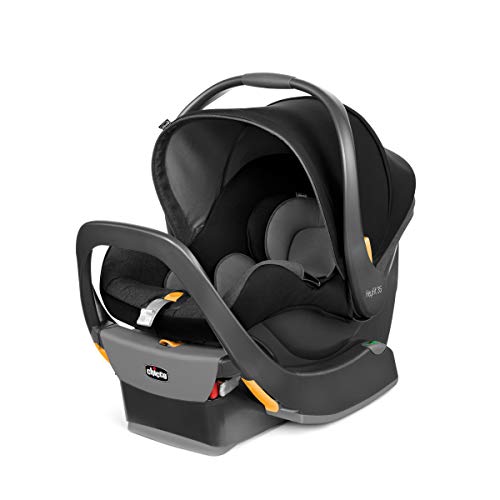
Travel systems with a lie-flat infant seat. The Graco Modes Pramette (system weight: 29.5 lb) includes a bassinet mode that reclines to 180 degrees and accepts Graco SnugRide infant car seats directly. The Chicco Bravo Trio (system weight: 28.1 lb) takes the Chicco KeyFit 30 with no adapter needed. Both are widely available on Amazon and suit parents who need a stroller and car seat in one purchase.

What to avoid at this stage: umbrella strollers with a non-reclinable or only partially reclining seat (typically 90-130 degrees), any frame stroller that does not lie flat, and secondhand strollers without documented recall history. CPSC has issued multiple stroller recalls in the past decade, including harness failures and canopy detachment issues. Always search cpsc.gov/Recalls before buying.

Cons to be aware of:
– Bassinet-only prams add cost and storage volume because the carrycot becomes obsolete at 6 months
– Travel systems with car seats often feel stiffer to push than dedicated prams due to frame compromises
– Prams with large wheels (12 inches) manage rough pavement well but fit poorly through standard doorways (32 inches wide)

Stage 2 (4-12 months): Convertible strollers and reclining seats

By 4-6 months most babies have sufficient head control to ride in a reclined (not flat) position. This is the stage where a convertible stroller earns its keep, because you need a seat that adjusts from a deep recline for naps to an upright angle so your baby can see the world.

The UPPAbaby Vista V3 converts from a bassinet-included system at birth to a forward- or parent-facing reclined seat, and later to a double stroller if a sibling arrives. The seat reclines to 162 degrees for sleeping. It weighs 26.1 lb without the bassinet. It is not a travel stroller. It is a daily driver for urban families who walk at least 1 mile per day.

For parents who want something lighter at this stage, the Nuna TRVL weighs 13.8 lb and reclines to 130 degrees, which is adequate for a 5-6 month baby with good head control but not appropriate for a newborn without the Nuna PIPA car seat attachment.

Key specs to compare at this stage:

  • Seat recline angle: minimum 130 degrees for this age range
  • Harness slot height: should have at least 3 adjustable positions to grow with the child
  • Wheel size: 7-inch or larger for a smoother ride; smaller wheels increase vibration transmitted to the infant’s spine

Cons to be aware of:
– Convertible strollers that promise “birth through toddlerhood” typically weigh 24-30 lb; this is manageable on a daily stroll but tiring if you carry the stroller up stairs
– Some convertible seats require purchased accessories (bassinet, adapters) to reach full lie-flat mode, addingcurrent pricing to the base price

Stage 3 (12 months to 2 years): Upright seats, toddler frames, and jogging strollers

Once a child walks independently and has strong trunk control, the seat geometry changes. An upright 90-110 degree seat is appropriate. Harness height matters more because toddler torsos grow quickly. Look for a harness with shoulder slots at or above 17 inches from the seat base.

At this stage parents often consider a jogging stroller. The BOB Revolution Flex 3.0 (weight: 28 lb, minimum jogging age: 8 months per BOB’s guidelines) and the Thule Urban Glide 2 (weight: 22 lb) are reliable options. For running use specifically, note that the AAP advises against running with a jogging stroller until at least 6-8 months and only with a fully reclined seat at that age. At 12 months and above, an 8-inch pneumatic front wheel with a lockable swivel is the practical minimum for safe running.

An alternative for families with multiple young children: the Joovy Caboose Ultralight Graphite, which weighs 26 lb and seats a toddler in front with a standing platform for a second child up to 45 lb. This works better than a double stroller in tight spaces because the footprint stays close to a single stroller width.

Cons to be aware of:
– Jogging strollers are poor at tight urban turns; the fixed-front-wheel mode required for running is frustrating at grocery stores
– Double strollers and sit-and-stand systems typically exceed 30 lb and are harder to lift solo into SUV cargo areas

For this age group, stroller accessories become practical. A stroller rain cover rated for your stroller’s canopy dimensions keeps a napping toddler dry without waking her. A snack tray or cupholder for this stage saves you from passing a sippy cup backwards from the driver’s seat. A stroller organizer bag that fits Graco, Chicco, and UPPAbaby handlebars typically holds a water bottle, phone, and small pouch.

Stage 4 (2-4 years): Lightweight and travel strollers

By age 2 most children weigh 25-30 lb. They walk independently but cannot sustain a 1-mile walk without tiring. A compact, lightweight stroller that folds in under 3 seconds and fits in an overhead bin is the practical choice for this stage.

The Babyzen YOYO2 (weight: 13.6 lb) folds to 20 x 17.5 x 7 inches and fits most airline overhead compartments. It accepts children from 22 lb (approximately 18 months) and has a maximum weight of 44 lb. The seat reclines to 135 degrees, which is enough for a napping 3-year-old. The frame is available without the seat and works with the compatible bassinet from birth, making it a one-purchase-for-life option for parents who travel frequently.

A more budget-aligned option is the Chicco Liteway Plus (weight: 17.6 lb), which folds with one hand to a compact triangle shape and accommodates children up to 50 lb. It does not qualify as a carry-on for most airlines, but fits easily under airplane seats on domestic routes.

For parents expecting a second child while the first is 2-3 years old: the Ergobaby Metro+ (weight: 14 lb) converts to a parent-facing or forward-facing seat and supports a ride-along skateboard attachment for a walking toddler, avoiding the cost of a full double stroller.

What to watch for at this stage:
– Some umbrella strollers sold for this age have a maximum weight of only 35 lb, which means a tall 3-year-old outgrows them within months
– Strollers without a five-point harness are not appropriate until a child can remain safely seated without restraint, which most children cannot reliably do until closer to age 3.5-4

Stroller accessories: the ones that pay off and the ones that do not

Not all accessories are worth the drawer space. Here is a frank breakdown.

Worth buying:

  • Rain cover (universal or brand-fit): A Britax stroller rain cover or a universal option from Munchkin fits most canopy shapes and weighs 5 oz. For Seattle or Portland families, this is non-negotiable.
  • Car-seat adapter: If your pram or stroller accepts a compatible infant car seat, the adapter eliminates the need to unbuckle a sleeping newborn. Graco, Chicco, and UPPAbaby all publish adapter compatibility charts.
  • Weather shield or footmuff for cold climates: The Bugaboo Breezy sun canopy extension weighs 0.4 lb and blocks up to 50+ UPF. For winters below freezing, a sheepskin or fleece-lined footmuff rated to 15 F is more practical than layering a bundled infant in a coat that compresses the harness.

Skip or buy cautiously:

  • Stroller fans with non-USB power: clip-on fans requiring proprietary batteries are rarely worth the cost. Acurrent pricing USB fan clipped to the handlebar works on any power bank.
  • Aftermarket cup holders that swivel: these often loosen after 30 days and tip beverages onto the child. The Momcozy universal holder is an exception with a friction lock.
  • Full infant head-support inserts that came with the original stroller: at 6-8 months many inserts narrow the harness path and can cause incorrect harness positioning. Remove them when the baby no longer needs the head positioner, per the brand’s manual.

Bottom line: three decisions to make before you shop

Choosing a stroller reduces to three questions, answered honestly.

First, how often does this stroller go in and out of a car? If the answer is daily, weight under 22 lb is a real quality-of-life issue. The Nuna TRVL and Babyzen YOYO2 are designed for exactly this. If the stroller mostly stays on sidewalks, a heavier system like the UPPAbaby Vista V3 or Bugaboo Fox 5 rewards you with a smoother push and a better nap platform.

Second, how old is your youngest child right now? Newborns under 4 months need a flat or near-flat recline (160-180 degrees) as specified by the AAP’s safe sleep guidelines. Do not compromise on this even if a stroller description says “suitable from birth” without specifying the recline angle in degrees.

Third, is a second child coming within 2-3 years? If yes, a convertible system or one with an optional sit-and-stand attachment costs more now but costs less than buying a second stroller in 18 months.

Whatever stroller you choose, check the CPSC recall database before you buy, verify the brand’s minimum age and weight, and confirm the harness height matches your child’s shoulder measurement. A stroller that fits your lifestyle at every stage is worth the research. A stroller that works beautifully for 4 months and then collects dust is not.

Browse strollers and prams on Amazon using the specs from this guide as your filter criteria.