Quick answer

A safe nursery for a baby ages 0-24 months rests on four pillars: a firm, bare sleep surface inside a CPSC-compliant crib or bassinet; anchored furniture with no cord or blind hazards within 3 feet of the sleep area; indoor air quality kept below 0.5 ppm VOCs using low-emission paint and materials; and a consistent back-to-sleep routine per AAP guidance. Get those four right before spending money on anything else.


Sleep Surface: the non-negotiable first decision

The sleep environment is where most preventable nursery injuries and deaths occur, so it gets the most space here.

What CPSC requires of a full-size crib (16 CFR 1219 and 1220): slat spacing no wider than 2-3/8 inches (about the width of a soda can), no corner post extensions taller than 1/16 inch, and no drop-side mechanism. Drop-side cribs were banned in the US in 2011 after being linked to 32 infant deaths. If you are using a hand-me-down crib built before 2011, retire it. The CPSC runs a free recall search at cpsc.gov and it takes under two minutes.

Mattress firmness: press the center of the mattress with two hands. If it bounces back quickly with no lasting indent deeper than 1 inch, it passes. Brands like Newton Baby (the Wovenaire Core model), Naturepedic, and Sealy meet this bar and carry GREENGUARD Gold certification, which means third-party testing for over 360 chemicals including formaldehyde and phthalates.

What goes in the crib: the fitted sheet and the baby. Nothing else until at least 12 months, per the AAP. No bumper pads (even mesh ones are no longer recommended), no positioners, no pillows, no loose blankets. A Halo SleepSack or Ergobaby Swaddle rated for the room temperature replaces a blanket and does not create a suffocation hazard.

Bassinet as a first step: many families use a bedside bassinet for the first 4-6 months because room-sharing without bed-sharing reduces SIDS risk by up to 50% according to AAP data. The SNOO Smart Sleeper by Happiest Baby (roughly 4.2 lb when empty, rated 0-6 months or up to 25 lb) is CPSC-compliant for its age range. The Arm’s Reach Co-Sleeper and the Halo Bassinest Swivel Sleeper are lower-cost options that meet the same standard. Whatever you choose, stop using a bassinet the moment the baby can push up on hands and knees or reaches the weight limit listed on the unit.

Cons to be honest about:

  • Even GREENGUARD Gold-certified mattresses carry a premium price. The Newton Baby Wovenaire Original runs current pricing which is roughly 3 times the cost of a basic foam mattress. Budget nurseries can use a firm foam mattress that passes the hand-press test without spending that much.
  • Firm sleep surfaces feel austere compared to soft options marketed to parents. This discomfort is appropriate: softness is the hazard.
  • SNOO rental or purchase costs are significant (check current Amazon price), and some families find the womb-sound feature disruptive to their own sleep.
  • No product label, including “breathable” or “ventilated,” replaces the bare-sleep-surface rule. These terms describe materials, not guarantees.

Furniture and Layout: anchoring, clearance, and cord control

A nursery typically holds a crib or bassinet, a dresser or changing table, a glider, and shelving. Each piece introduces its own hazard category.

Tip-over risk: CPSC data indicate a child under 6 is killed in a furniture tip-over every two weeks in the US. The risk peaks at 18-36 months when toddlers begin pulling themselves up on drawers. Every dresser, bookcase, and wardrobe in the nursery must be anchored to a wall stud using a tip-over strap rated for at least twice the furniture weight. IKEA includes the Kura and Hemnes anchoring straps in the box; Pottery Barn Kids furniture ships with a strap kit as well. Third-party kits from Safety 1st and Quakehold are widely available and rated for 150-250 lb furniture. Anchor into a stud, not just drywall.

Clearance zones: no object within 3 feet of the crib. That means the glider, the dresser, shelving, and the monitor all stay outside that perimeter. The 3-foot rule protects against a mobile baby reaching, pulling, or climbing onto adjacent surfaces from inside the crib.

Cord and blind hazards: the CPSC estimates corded window coverings cause approximately 1 child death per month in the US. Replace corded blinds in the nursery with cordless roller shades (Hunter Douglas, Levolor, and IKEA’s Hoppvals line all offer CPSC-compliant cordless options) or cellular shades before the baby arrives, not after. If you cannot replace them before birth, tie all cords at adult shoulder height and install a cleat hook so the loop cannot hang free.

Changing area: a dedicated changing table with a 2-inch safety rim and a contoured pad with a safety strap reduces the chance of roll-off falls. Graco and Delta Children both make changing tables that meet ASTM F2388 standard. Keep one hand on the baby at all times during changes regardless of any strap or rim. The strap is a backup, not a substitute for physical contact.

Electrical outlets: standard outlet covers provide minimal protection and can be a choking hazard themselves if a toddler removes one. Leviton tamper-resistant receptacles (TR-rated) are required by the US National Electrical Code for new construction and offer far better protection than plastic plug covers. If your rental or older home lacks TR outlets in the nursery, use a sliding outlet cover plate rather than snap-in covers.


Air Quality and Materials: VOCs, paint, and off-gassing

Infants breathe at a higher rate than adults and spend 16-18 hours per day in the nursery in the first weeks of life. Indoor air quality is a legitimate concern, not a marketing category.

Paint: standard interior paints off-gas VOCs (volatile organic compounds) for weeks after application. Choose a zero-VOC or low-VOC formula (labeled with VOC content below 50 g/L for flat finishes, which is the EPA threshold for “low-VOC”). Benjamin Moore Natura, Sherwin-Williams Harmony, and ECOS Paints all carry zero-VOC claims on the tinted base. Paint at least 2 weeks before the baby occupies the room and ventilate with windows open and a fan exhausting outward during and after.

Flooring: if you are putting down new flooring, look for GREENGUARD Gold-certified hardwood or laminate. Many budget laminates contain formaldehyde in the adhesive layers. Shaw Floors and Mohawk offer GREENGUARD-certified options. If the nursery has existing carpet, run a HEPA-filtered vacuum weekly; dust and allergens accumulate in carpet at concentrations 5-10 times higher than on hard flooring.

Furniture off-gassing: particle board and MDF nursery furniture can emit formaldehyde for months. IKEA’s Hemnes line uses solid pine for the main structure, which off-gasses significantly less than MDF. If using flat-pack furniture with MDF components, assemble it outside or in a ventilated garage for 5-7 days before moving it into the nursery.

Air purifier placement: a HEPA-grade purifier (Coway Airmega 200M, Winix 5500-2, or Levoit Core 300 are common picks covering 200-360 sq ft each) running on a low continuous setting handles dust, allergens, and residual VOCs. Place it 3-4 feet from the crib at floor level, not directly adjacent to the sleep surface. Do not use ozone-generating ionizers in the nursery; ozone irritates infant respiratory tissue.

Humidifier caution: forced-air heating drops nursery humidity below 30% in winter, which dries out nasal passages and makes the baby more susceptible to respiratory infections. A cool-mist humidifier (Crane Adorable, Frida Baby, or Pure Enrichment) maintains 40-60% relative humidity, which is the CDC-recommended range. Clean the water tank every 2-3 days with white vinegar or the manufacturer’s recommended solution. Mold and bacteria in a dirty tank are the actual hazard, not the humidity.


Product Checklist: what to buy, what to skip

This section is not a complete buying guide. It is a safety-filtered shortlist of categories where getting the wrong product creates real risk.

Buy: a firm crib mattress with certifications. Newton Baby Wovenaire, Naturepedic Organic, or Sealy Soybean Foam-Core all pass the hand-press test and carry third-party certifications. Search Newton Baby crib mattress on Amazon to check current pricing.

Buy: a CPSC-compliant crib or bassinet. Graco Hadley 4-in-1 (convertible, roughly 52 lb assembled), DaVinci Kalani, and Babyletto Hudson are three widely available options that meet the post-2011 crib standard. Search Graco Hadley crib on Amazon for current price.

Buy: wearable sleep sacks instead of blankets. Halo SleepSack, Ergobaby Swaddle Transition, and Love to Dream Swaddle UP cover the 0-12 month window with appropriate TOG ratings for room temperature. Search Halo SleepSack on Amazon.

Buy: furniture tip-over straps. Safety 1st Heavy Duty Furniture Anchor and Quakehold Furniture Straps are both rated for furniture over 100 lb. Search furniture tip-over straps on Amazon.

Buy: cordless window shades. Hunter Douglas Duette Architella, Levolor Cellular, and IKEA Hoppvals are three options at different price points. Any cordless design from a reputable brand addresses the strangulation hazard.

Skip: crib bumpers. Padded bumpers, including breathable mesh varieties, have been associated with infant deaths and are no longer recommended by the AAP. Several US states have legislated against their sale. They add zero safety benefit.

Skip: sleep positioners and wedges. Products marketed to keep babies on their side or to reduce reflux while sleeping have not been proven effective and have been directly linked to suffocation deaths. The CPSC has issued formal warnings against their use.

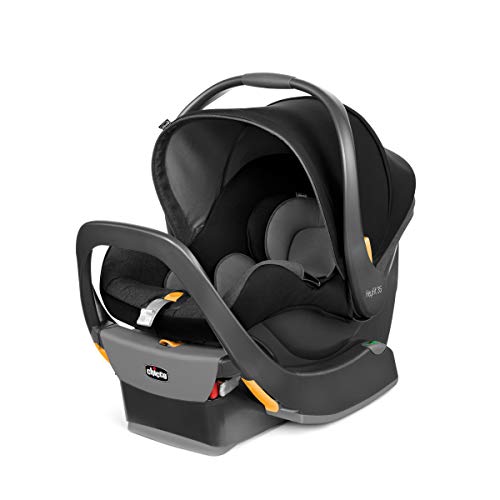
Skip: used car seats for crib use or cushioning. This sounds unusual but does come up: car seats used outside vehicles as sleep surfaces carry the same positional suffocation risk as any inclined surface over 10 degrees. The Fisher-Price Rock ‘n Play was recalled in 2019 after being linked to over 90 infant deaths when used for sleep.

Skip: any recalled crib, bassinet, or sleep product. The CPSC recall database at cpsc.gov/Recalls is searchable by brand and model. Run a search before buying any secondhand nursery item.


Bottom line

The safest nursery is not the most decorated one. It is the one built around four decisions made before anything else: a firm, bare sleep surface inside a CPSC-compliant crib or bassinet; all furniture anchored to wall studs; cords and blind pulls eliminated from the room; and paint and materials chosen to keep VOCs below meaningful thresholds. Every other nursery product sits downstream of those four decisions.

Spend the most time and budget on the mattress and crib, anchor the dresser the same day it goes up, replace corded blinds before birth if at all possible, and follow AAP’s back-to-sleep guidance for every single sleep, including naps. The rest of the nursery can be upgraded over months as the baby grows and budget allows.

For further reading on safe sleep standards, see the AAP’s full guidance at aap.org/en/patient-care/safe-sleep/ and the CPSC nursery product safety center at cpsc.gov/Safety-Education/Safety-Education-Centers/cribs.