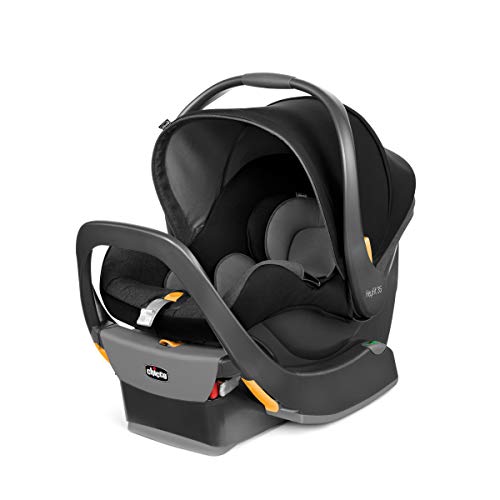
Quick answer: The non-negotiable gear list

Before the first day home from the hospital, four categories of safety equipment are genuinely non-negotiable: a correctly installed infant car seat, a firm flat sleep surface meeting CPSC 16 CFR 1220 for cribs, a carbon monoxide and smoke detector within 10 feet of the nursery, and a baby gate if your home has stairs. Every other item on this guide is high-value but can be added in the first 3-6 months as your baby becomes mobile.

This guide is written for parents of children aged 0-4 years. It covers what the evidence actually supports, what the CPSC and AAP actually say, and which specific products from established brands like Britax, Graco, Chicco, and Angelcare are worth your money. It is not a comprehensive product review; for that, see the linked reviews in each section.

Not a substitute for professional medical or safety advice. Always check cpsc.gov/Recalls before using any product.


Car seat safety: The stakes and the standards

A correctly used car seat reduces the risk of fatal injury by approximately 71% for infants and 54% for toddlers in crashes, according to NHTSA data. That number drops sharply when the seat is installed incorrectly, which NHTSA estimates happens in roughly 46% of observed installations.

What to buy: The AAP recommends keeping children rear-facing as long as the seat’s height and weight limits allow, not until a specific age. Most convertible seats from Britax, Graco, Chicco, and Nuna accommodate rear-facing to at least 40 pounds, which for most children means staying rear-facing through age 3 or beyond.

Search Britax infant car seats on Amazon

Search Graco convertible car seats on Amazon

What parents frequently get wrong:

  • Chest clip at armpit level, not stomach. A chest clip at the stomach can cause serious abdominal injury in a crash.
  • Harness straps at or below shoulder level for rear-facing children (at or above for forward-facing).
  • Seat installed too loosely: at the belt path, it should move no more than 1 inch in any direction.
  • Expired seats: most car seats have a 6-10 year expiration date printed on the base or side label. Using an expired seat voids its tested safety ratings.

Who installs it: Find a certified Child Passenger Safety Technician (CPST) for a free inspection at nhtsa.gov. Many fire stations and children’s hospitals offer free check events.

Substantive cons to know:

  • Infant bucket seats (like the Chicco KeyFit 30) are convenient but must be replaced when your child hits the seat’s weight or height limit, typically around 22-30 pounds. That transition often happens between 9-15 months, and parents underestimate how fast it arrives.
  • Convertible seats with higher rear-facing limits (Britax One4Life rear-faces to 50 pounds) cost between $250-$400 at current Amazon pricing. The safety benefit is real, but so is the cost.
  • Installing in older vehicles with lap-only belts (no shoulder belt) requires specific technique; consult a CPST rather than guessing.

Baby gates and outlet covers: Mobility-stage safety

Outlet covers and baby gates are not “day one” items. They become critical when your baby begins to scoot or crawl, typically between 6-9 months, and remain important through age 4 when most children develop the judgment to avoid these hazards on their own.

Baby gates:

Hardware-mounted gates are required at the top of stairs. Pressure-mounted gates will not hold the force of a falling toddler and should be used only for doorways and room dividers at floor level. Look for ASTM F1952 or ASTM F2096 certification marks.

The Regalo Easy Step Walk-Thru gate fits openings from 29 to 32 inches standard (with included extension hardware reaching 37 inches) and is hardware-mountable. The Evenflo Position & Lock Tall Gate hardware-mounts at up to 42 inches wide, which covers most stair openings. Both brands are established and produce ASTM-certified products.

Search Regalo baby gate on Amazon

Search Evenflo baby gate on Amazon

Cons:

  • Even well-installed hardware gates damage drywall anchoring points over time. Use proper wall anchors, not just drywall screws.
  • Gates with horizontal bars or rungs can be climbed by determined toddlers around age 2. Opt for gates with vertical bars only.
  • Walk-thru gates require a two-step latch for adult convenience but this mechanism confuses some grandparent caregivers; test with all regular caregivers before relying on it.

Outlet covers:

The CPSC recommends tamper-resistant (TR) outlets as a permanent upgrade over plug-in plastic caps. Standard plastic outlet caps are a choking hazard because toddlers 18 months and older can remove them. TR outlets require two simultaneous prongs to open the shutter, making them child-resistant. If you rent and cannot replace outlets, sliding outlet cover plates (not removable plug caps) are the safer second choice.


Baby monitors: What the research supports and what it does not

Baby monitors do not reduce the risk of SIDS. No monitor marketed to parents, including pulse-oximetry sock monitors like Owlet, has been cleared by the FDA for medical monitoring in healthy infants. The AAP position is that home cardiorespiratory monitors should not be used as a strategy to reduce SIDS risk in healthy term infants.

What a good baby monitor does do: it lets you hear or see your baby from another room, which reduces unnecessary trips in that exhausted newborn phase and lets you respond quickly when your baby wakes or needs you.

What to buy: A video monitor with infrared night vision is more useful than audio-only in the first year because you can visually confirm your baby’s position without entering the room. The Infant Optics DXR-8 Pro has a 1,000-foot rated wireless range and operates on its own dedicated radio frequency rather than WiFi, which means it is not vulnerable to router outages or home network interference. The Angelcare AC327 adds an under-mattress movement sensor that triggers an alert if no movement is detected for 20 seconds; while this does not prevent SIDS, some parents find it reduces anxiety during the newborn period.

Search Infant Optics DXR-8 Pro on Amazon

Search Angelcare baby monitor on Amazon

Cons:

  • WiFi-connected smart monitors (Nanit, Motorola Halo) require a functioning home network and a phone app. If your router goes down overnight, the monitor goes down. For parents who travel or have unreliable WiFi, a dedicated radio-frequency monitor is more reliable.
  • Movement sensor pads generate false alarms when the mattress is not flat or when a heavier blanket is placed on top. The noise can trigger anxiety rather than relieve it.
  • No monitor replaces the AAP safe sleep guidelines: firm flat mattress, no soft bedding, no inclined sleepers, back-to-sleep position for every sleep.

Smoke, CO, and drawer safety: The overlooked category

New parents focus heavily on cribs and car seats, which is appropriate. But the hazards that actually injure toddlers most frequently in the home are falls from furniture (approximately 3.2 million emergency visits per year for children under 5, per CPSC data), burns, and poisoning.

Smoke and carbon monoxide detectors:

The CPSC recommends a combination smoke and CO detector on every level of the home and within 10 feet of every sleeping area. For a baby’s room, mount the detector on the ceiling or high on a wall and test it monthly. Kidde and First Alert are the two established brands with Underwriters Laboratories (UL) certifications for residential smoke and CO detection.

Search Kidde combination smoke CO detector on Amazon

Replace detector batteries every 12 months or when the low-battery chirp begins. Most sealed-battery detectors have a 10-year lifespan. Note the manufacture date on the back of each detector and replace the unit at the 10-year mark.

Furniture tip-over straps:

The CPSC reports furniture and TV tip-overs injure approximately 11,800 children per year and kill an estimated 2 children per month in the US. Dressers, bookshelves, and large TVs should be anchored to wall studs with furniture straps before your child begins pulling to stand, typically around 8-10 months.

IKEA’s PATRULL furniture strap kit and Safety 1st’s anti-tip straps are widely available and support weights up to 50 pounds when correctly anchored to wall studs. Drywall-only anchors are not sufficient for furniture restraint; locate the stud.

Search furniture tip-over straps on Amazon

Cons of the overlooked category:

  • Furniture straps require drilling into studs, which some renters cannot do without landlord approval. If you cannot anchor to studs, relocate tall furniture out of the child’s reach zone rather than using a drywall anchor that will not hold.
  • Drawer locks and cabinet latches need to be tested by adults who visit your home (grandparents, babysitters) before you rely on them. A latch that a caregiver disables for convenience and does not re-engage is no latch at all.

Bottom line: How to prioritize when budget is tight

You do not need to buy everything at once. Here is a tiered approach matched to your child’s developmental stage.

Before birth (non-negotiable):

  • Infant car seat, correctly installed and inspected by a CPST. Check current Amazon prices for Britax, Graco, or Chicco options.
  • CPSC-compliant firm flat crib mattress meeting 16 CFR 1220. Graco and Newton make well-regarded options.
  • Combination smoke and CO detector for the nursery.

At 6-9 months (when baby becomes mobile):

  • Hardware-mounted baby gate for any staircase.
  • Outlet cover plates or tamper-resistant outlet upgrades.
  • Furniture anti-tip straps on dressers and bookshelves.
  • Drawer and cabinet locks on kitchen and bathroom storage.

Ongoing:

  • Baby monitor: useful from birth but not safety-critical for healthy term infants in the way that cribs and car seats are.
  • Infant first aid kit with an oral syringe calibrated in milliliters, a soft-tip rectal or axillary thermometer, and a nasal aspirator like the Frida Baby NoseFrida. Check current Amazon prices before purchasing.

Search Frida Baby NoseFrida on Amazon

Before purchasing any item on this list, run the product name through cpsc.gov/Recalls to verify it has not been recalled. The CPSC database is free, searchable by brand and model, and takes less than 2 minutes per product. That 2 minutes is worth doing.

For more on our approach to evaluating safety products, see our methodology page.