Quick answer: the gaps that cause the most preventable injuries
Every year, the CPSC estimates more than 100,000 emergency room visits involve nursery and children’s furniture products alone. The uncomfortable truth most baby registries ignore: the biggest risks are not exotic or expensive to fix. They are installation errors, product misuse, and a handful of overlooked categories that don’t make it onto glossy “babyproofing checklists.”
This guide covers what actually matters from birth through 36 months, which brands build products that meet published safety standards, and where parents routinely spend money on gear that provides false reassurance.
Furniture anchoring: the hazard hiding in plain sight
The CPSC reports that a piece of furniture tips over every 43 minutes in the United States, injuring a child. Between 2000 and 2022, more than 600 children under 17 died from furniture and TV tip-overs, the majority under age 6. Dressers, bookshelves, and television stands are the top culprits.
What parents do wrong: they anchor furniture to drywall alone. A single anti-tip strap rated at 100 lb pulling force means nothing when the drywall anchor pops out. The strap must reach a wall stud.
The Childproofing category has good options from IKEA (which bundles STÖDJA anti-tip straps with their HEMNES and MALM dressers), and third-party straps from Safety 1st and Sanus are CPSC-compliant. Look for straps with a load rating of at least 150 lb, metal hardware (not plastic clips), and instructions that specify stud location.
What to skip: furniture “feet” anchors that attach only to the floor. They slow tipping by a fraction of a second but do not prevent it.
The action here costs less thancurrent pricing and takes 20 minutes. It is the highest-value safety task in this entire article.
Check your specific furniture model at CPSC Recalls before relying on included straps. Several IKEA and Pottery Barn dresser models were recalled between 2016 and 2023 for tip-over risk; replacement hardware was issued free.
Baby gates: the right gate in the wrong place is not a gate
There are two gate types, and the distinction matters more than the brand.
Pressure-mounted gates use rubber feet to wedge against walls. They are appropriate for room dividers and doorways where a fall hazard does not exist on the other side. They are not acceptable at the top of stairs. Period. A child leaning on a pressure-mounted gate at a stair top can push it free.
Hardware-mounted gates screw into wall studs and require a minimum 3/4-inch screw penetration into the stud. These are the only gate type approved for top-of-stair installation by the CPSC and ASTM F1004, the standard governing expandable gates and enclosures.
Brands that consistently build hardware-mountable stair gates with dual-locking mechanisms: Evenflo (the Evenflo Position and Lock Tall Gate), Regalo (the Easy Step Extra Tall Walk Thru Gate), and Summer Infant. Munchkin’s Loft Aluminum hardware-mounted gate weighs 5.3 lb and spans openings from 28 to 40 inches in its base configuration.
What parents get wrong:
- Buying a pressure gate for the top of stairs because it was cheaper or easier to install
- Not checking the gate width against the actual opening (extensions are not universal across brands)
- Installing the gate with the swing direction toward the stairs rather than away
- Skipping the stud finder and anchoring into hollow drywall
The CPSC banned accordion-style gates with V-shaped openings larger than 1.5 inches in 1985 because children’s necks can become entrapped. If you inherit an old wooden accordion gate, do not use it regardless of its condition.
Search Amazon for hardware-mounted stair gates: Summer Infant Baby Gates or Munchkin Loft Gate.
Cabinet and drawer locks: three types, one that actually works past 18 months
By the time a child is 18 months old, standard spring-loaded cabinet latches become puzzles they solve in under two weeks. Most parents upgrade too late, after the first kitchen chemical incident.
Three categories:
-
Spring-latch adhesive catches: These attach inside the cabinet with 3M adhesive strips. Cheap, fast, and ineffective by 15 to 18 months for most toddlers. Average separation force: 8 lb.
-
Magnetic locks: A magnetic key placed on the outside of the cabinet triggers a concealed latch inside. The key must be stored out of reach. Brands: Safety 1st Magnetic Cabinet Lock (requires drilling), and KidCo Adhesive Magnetic Locks (no drill). The Safety 1st system’s locks each withstand approximately 40 lb of pull. Toddlers cannot defeat these without the magnet.
-
Sliding cable locks: These thread through cabinet handles. Easy to install, easy for 2-year-olds to pull off if the handles have any gap. Effective for 6 to 14 months; not reliable after.
For under-sink cabinets containing cleaning products, the only acceptable options are magnetic locks or hardware-mounted multi-point locks. The CPSC’s Poison Help line received more than 2.1 million calls in 2022, with household cleaners and medications topping the list for children under 5.
Check current Amazon pricing on magnetic cabinet locks: Safety 1st Magnetic Cabinet Lock.
Car seat installation: what the manual says versus what actually happens
The NHTSA estimates that roughly 46% of car seats are installed or used incorrectly. This is not a minor variation. Incorrect harness slack, wrong recline angle, and forward-facing too early each reduce the protective effect of the seat substantially.
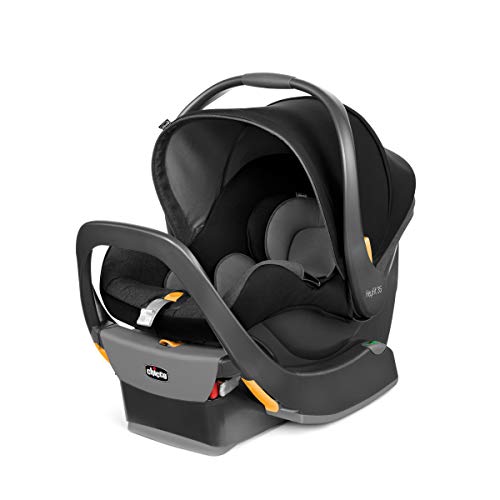
What the manual says: rear-face until the child exceeds the seat’s rear-facing weight limit, which varies by model. The Chicco KeyFit 35 rear-faces to 35 lb. The Graco Extend2Fit rear-faces to 50 lb. The Nuna RAVA rear-faces to 50 lb. The Britax Boulevard ClickTight rear-faces to 40 lb.
What parents actually do: many transition to forward-facing around age 1 or when the child seems “too tall,” based on outdated guidance the AAP formally revised in 2018. The current AAP guidance states children should remain rear-facing until they reach the highest weight or height allowed by the car seat manufacturer. There is no age-based minimum for transitioning.
Common installation errors:
- Harness chest clip placed at belly level rather than armpit level
- Harness webbing twisted between the shoulder and buckle
- More than 1 inch of side-to-side movement at the belt path
- Using the LATCH system and a seat belt simultaneously (most manufacturers prohibit combining them unless specifically stated)
- Incorrect recline angle: most infant seats require 30 to 45 degrees recline when rear-facing; a bubble level or indicator is built into quality seats for this reason
Every state has free car seat inspection events where certified Child Passenger Safety Technicians (CPSTs) check installation. The NHTSA inspection station locator at nhtsa.gov lists locations by ZIP code.
For infant seats: check current prices on the Chicco KeyFit 35 at Amazon or the Graco SnugRide at Amazon.
What does not work (and what to buy instead)
Corner guards: soft foam vs. rigid silicone
Foam corner guards sold in packs of 12 forcurrent pricing fall off within two weeks on most furniture finishes. Adhesive bond degrades with temperature and humidity changes. Once they start peeling, the partially-attached guard itself becomes a chewing hazard.
Rigid silicone corner guards with double-sided mounting tape (brands: BabyBjorn, Roving Cove) hold significantly longer. Roving Cove’s edge-and-corner guards use extra-wide foam with a silicone adhesive strip rated for painted and natural wood surfaces. Still, no corner guard survives a determined 18-month-old’s pulling. Physical rearrangement of sharp-cornered furniture out of the play zone is more effective.
Outlet covers: plug-in vs. tamper-resistant receptacles
Standard plug-in outlet covers were long considered the default solution. The CPSC has noted they can be a choking hazard for toddlers who remove and mouth them. The National Electrical Code (NEC 2008) requires tamper-resistant receptacles (TRRs) in all new construction and renovations, because TRRs have internal shutters that only open when equal pressure is applied to both slots simultaneously.
Replacing outlets with TRR outlets costscurrent pricing tocurrent pricing per outlet and a licensed electrician can swap an entire home in a half-day. This is a one-time fix that does not fall out, get swallowed, or need replacing as the child grows.
Baby helmets for walking: useful for a short window
Safety helmets designed for new walkers (brands: Baby No Bump, i play.) protect the occipital bone during the 8 to 14 month learning-to-walk phase when backward falls are frequent. These are not CPSC-mandated and not necessary for every child, but are reasonable for children with low muscle tone or balance concerns. Sizing matters: most fit head circumferences of 17 to 19 inches.
Bottom line: spend your money here first
The honest priority order for safety equipment birth to 36 months:
- Furniture anchoring (current pricing per piece, 20 minutes): highest impact for the effort invested, covering the leading furniture tip-over risk documented by the CPSC.
- Hardware-mounted stair gate (check current prices at Amazon): the single product where buying the wrong type creates a false sense of security at the exact location of greatest injury risk.
- Magnetic cabinet locks for chemical storage: spring latches fail before toddlers do; upgrade under-sink storage to magnetic locks by month 12.
- TRR outlet replacement: a one-time fix with no choking risk and no maintenance.
- Car seat CPST inspection: free, takes 30 minutes, and catches errors that reduce seat effectiveness in a crash.
What is not worth the money: baby monitors marketed as safety devices (they are convenience tools, not risk reducers), floor-mounted outlet plugs without TRR backup, and foam corner guards as the primary strategy for a sharp-cornered coffee table that can simply be moved.
Every product listed here is worth confirming against the CPSC recall database at cpsc.gov/Recalls before purchase or use. Recalls happen regularly. A 30-second search is a meaningful safety check.
For methodology behind how we evaluate safety products, see our testing methodology. For a full roundup of top-rated baby gates by age and opening width, see the Safety Equipment category.