Quick answer: what this guide covers
Most stroller content glosses over the frustrating reality: acurrent pricing stroller can still be hard to fold one-handed, and acurrent pricing model can outlast three kids with proper care. This guide walks through what actually separates a pram from a stroller, which accessories earn their space under the seat, and which brands deliver on their claims — organized by the things parents discover only after the first grocery run with a sleeping newborn strapped in.
The short answer for parents who need one: for birth to roughly 6 months, you need a stroller that reclines fully flat (170 degrees or more) or a travel system with an infant car seat. From 6 months onward, a standard seat-up position is fine once your baby has strong neck control. Budget at leastcurrent pricing tocurrent pricing for a reliable everyday stroller, more if you want longevity and resale value.
Frame types: which category actually fits your life
There are four main stroller categories, and choosing the wrong one creates months of frustration.
Full-size prams and travel systems (Bugaboo Fox 5, UPPAbaby VISTA V2, Nuna MIXX Next) weigh between 22 lb and 32 lb unfolded. They handle rough pavement well, fold large, and carry newborns safely in bassinet or flat-recline mode. They pair with infant car seats via brand-specific adapters. The Bugaboo Fox 5 weighs approximately 26.5 lb and folds to roughly 14.6 x 24.4 x 35.4 inches — manageable for an SUV trunk, tight for a compact sedan.
Lightweight and mid-size strollers (Chicco Bravo LE, Graco FastAction Fold 2.0, Babyzen YOYO2) hit the 13 lb to 20 lb range and fold more compactly. The Babyzen YOYO2 folds to carry-on airline dimensions (17.3 x 20.5 x 7.1 inches), which is genuinely useful if you fly frequently with a toddler. Most are not suitable from birth without an add-on bassinet or infant car seat adapter.
Jogging strollers (BOB Gear Revolution Flex 3.0, Thule Urban Glide 3) use a fixed front wheel and a wrist tether. The BOB Flex is rated for children 8 weeks or older with the infant car seat adapter and for running at 20 weeks and up when the child can hold their head without support. Weigh around 25 lb to 28 lb, and they do not fit in standard car trunks as easily as advertised.
Umbrella strollers (Summer Infant 3Dlite+, GB Pockit+) weigh as little as 9.5 lb (the GB Pockit+ hits that number), fold to a small handheld package, and are ideal from approximately 6 months onward for a parent who commutes on transit. They are not suitable from birth, they often lack storage, and cup holders are rare without an accessory add-on.
Safety standards: the specific rules strollers must meet
Every stroller sold in the United States since 2015 must comply with CPSC’s 16 CFR Part 1227, which incorporates the ASTM F833 voluntary safety standard by reference, making key requirements mandatory. The standard covers:
- Stability under a simulated 40 lb load in tip-back and tip-forward scenarios
- Locking mechanisms that prevent accidental fold while a child is in the seat
- Restraint system requirements — a five-point harness or crotch-pass-through strap is required on strollers for children under 1 year
- Openings and gaps that could trap a child’s head, neck, or fingers
This matters practically because some strollers sold by smaller imported brands on marketplace sites do not comply with ASTM F833. Before buying any stroller — especially secondhand — run the brand name and model through the CPSC recall search at cpsc.gov/Recalls.
Between 2020 and 2024, CPSC issued or monitored over a dozen stroller-related actions including recalls for faulty front wheel assemblies (Graco issued a 2023 FastAction recall affecting approximately 4,800 units) and restraint buckle failures. Checking takes under two minutes and is worth doing even for well-known brands.
The AAP also notes that newborns should not spend extended time in any device that places them in a semi-upright or inclined position because of the airway compression risk. If you are using a non-flat-recline stroller with a newborn, keep rides under 30 minutes and ensure the seat is reclined as far as the stroller allows.
Weight and fold: the numbers that matter at 7 a.m
This is the section no review article leads with, but it is the one you will care about most by week two.
If you live in a house with a garage, you can tolerate a 28 lb stroller. If you take public transit, carry the stroller up apartment stairs, or load it into a small car daily, anything over 17 lb becomes a physical problem within three months.
A one-handed fold is not a marketing claim — it is a physical requirement when your baby is asleep on your shoulder. The UPPAbaby Cruz V2 weighs 20.5 lb and folds in a single motion with one hand. The Nuna TRVL weighs 13.9 lb and folds in roughly 3 seconds without lifting the seat. Both are meaningful benchmarks. The Bugaboo Butterfly weighs 13.2 lb — the lightest full-recline travel stroller in its class as of 2026 — but its compact fold does not include the seat, which you remove first.
Storage basket capacity matters more with a baby than with a toddler. A basket under 10 liters is largely decorative. The UPPAbaby VISTA V2 basket holds approximately 30 lb and 20+ liters. The Chicco Bravo LE holds a diaper bag and not much more. Neither spec appears on the product listing — you find it in owner forums and product specs buried in the FAQ.
When comparing strollers, ask for the folded dimensions in inches (not just “compact fold”), the basket weight limit, and whether the fold requires removing accessories. For reference:
- UPPAbaby VISTA V2: folded 36.6 x 22.4 x 17.1 inches, 27.1 lb
- Nuna MIXX Next: folded 29.9 x 24.8 x 13.4 inches, 26 lb
- Babyzen YOYO2 (frame only): folded 20.5 x 17.3 x 7.1 inches, 13.6 lb
Accessories: what earns its keep and what wastes drawer space
The accessories market for strollers generates roughly as much revenue as strollers themselves. Most of it is optional. Here is a practical breakdown.
Worth buying for most families:
A rain cover or weather shield is the single highest-utility add-on. Universal-fit covers by brands like Diono and J.L. Childress fit most full-size strollers and weigh under 1 lb. Without one, a stroller trip in light rain requires a reroute or a soaked seat pad.
A cup holder for the parent side is included on most full-size strollers but absent on compact and umbrella models. The Chicco TravelFit and UPPAbaby carry-along cup holder both fit handlebars 0.75 to 1.5 inches in diameter and hold 32 oz bottles securely. Price is current pricing tocurrent pricing.
A footmuff or sleeping bag insert extends the stroller season into fall and winter without bundling the baby in a thick coat, which compresses harness straps and reduces restraint effectiveness. The Bugaboo Footmuff fits all Bugaboo models; the Maxi-Cosi Cozy Toes fits most mid-size strollers. Recommended for climates that drop below 50 F regularly.
A travel bag protects the stroller frame when checking it at an airport. Gate-checked strollers are handled roughly — a bag extends the life of the frame joints by at least one to two years of travel use. The J.L. Childress Gate Check Bag fits most full-size strollers and folds to roughly 11 x 15 inches when empty.
Useful for specific situations:
A buggy board (Lascal BuggyBoard Maxi, Joovy Caboose) attaches to the back of most full-size strollers and carries a toddler standing while the new baby rides in the seat. Fits children up to approximately 66 lb. Requires verifying compatibility with your stroller’s wheelbase before buying.
A stroller organizer or parent console provides a hands-free way to carry keys, a phone, and two cups. The Skip Hop Stroll-and-Go and OXO Tot Stroller Organizer are the most commonly recommended. Both attach in under two minutes and accommodate a standard phone without a bulky case.
Skip for most families:
Clip-on toys that attach to the stroller bar pose a strangulation and choking risk if the clip loosens and falls into the seat. The CPSC has recorded incidents involving clip-on stroller accessories. If you want engagement toys, opt for ones that attach with a short tether to the harness buckle housing rather than overhead.
Handlebar warmers and padded bar covers add bulk without meaningful benefit in most climates and can interfere with your grip on the handlebar if they shift.
Bottom line: how to choose without regretting it
Buy the stroller that matches your daily environment, not the one with the most features. If you walk on pavement daily, a 22 lb full-size model like the Graco Modes Pramette (starts current pricing check current Amazon price) or the Chicco Bravo LE handles real use well at a price that leaves room in the budget for the accessories that matter.
If you travel, commute by transit, or need a lightweight option by month 6, the Babyzen YOYO2 or Nuna TRVL justify their higher price through portability. Both meet ASTM F833 requirements and have no open CPSC recalls as of this writing.
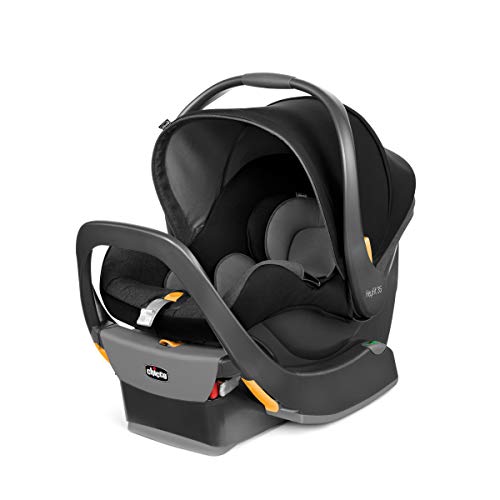
For newborns specifically: either use a travel system with an infant car seat (Graco SnugRide 35 Lite LX, Chicco KeyFit 35) that clicks onto your stroller frame, or choose a full-size stroller with a certified flat-recline bassinet mode. Do not use a standard seat-up position with a baby under roughly 6 months without confirming the specific model is cleared for that use from birth.
Check the CPSC recall database before any stroller purchase. Confirm the five-point harness buckles properly and the crotch strap is always in use. And ignore any accessory with a clip that hangs above your baby’s face.
Browse current stroller options on Amazon — use the links below to search by brand and confirm availability and current pricing before buying:
- UPPAbaby VISTA V2 on Amazon
- Nuna MIXX Next on Amazon
- Babyzen YOYO2 on Amazon
- Bugaboo Fox 5 on Amazon
- Graco FastAction stroller on Amazon
For related reading, see our strollers and prams buying guide and our testing methodology.