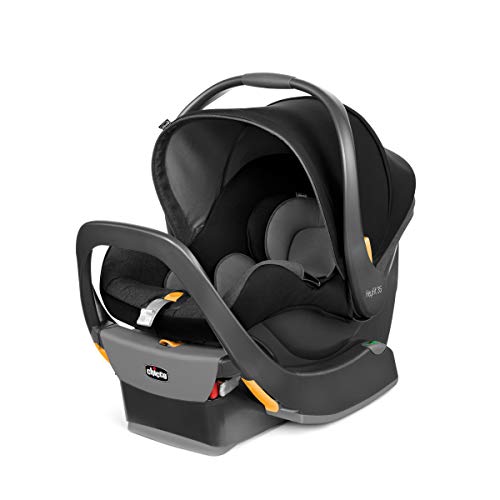
Quick answer: what parents need to know first
If you read nothing else, read this: the single biggest risk with baby carriers is not brand or price, it is positioning. A newborn’s airway can become compromised in under two minutes when their chin drops to their chest. The CPSC has documented fatalities linked to carriers, particularly bag-style slings, where the infant’s face was not visible to the caregiver.
For carriers and accessories used from birth to 36 months, three rules apply at every age:
- The baby’s face must be visible and the chin must stay off the chest.
- The product must meet or exceed the manufacturer’s stated minimum weight, typically at least 7 lb for most structured carriers.
- Any accessory (stroller bar, footmuff, rain cover) must be approved by the original product manufacturer, not aftermarket.
The rest of this guide walks through each major product category with specific numbers, brand examples, and the safety standards that matter.
Carrier types: what the differences actually mean for safety
Not all carriers work the same way mechanically, and the safety profile shifts with each type.
Soft-structured carriers (SSCs) like the Ergobaby Omni 360 or LILLEbaby Complete All Seasons use buckle and strap systems with defined fit points. They are the most forgiving for new parents because fit is more repeatable. The Ergobaby Omni 360 supports babies from 7 lb (with the infant insert) up to 45 lb. Its six carry positions mean the ergonomic fit should stay correct as the child grows, keeping knees above hips in the M-position that pediatric physiotherapists recommend for healthy hip development.
Woven wraps offer excellent load distribution because the fabric spreads weight across the wearer’s torso and shoulders, but they require 30-60 minutes of practice before a caregiver can tie one safely with a newborn. Brands like Didymos use tight-woven cotton or linen fabrics; always check that the wrap is long enough to complete your chosen carry without leaving tails that could snag.
Ring slings from brands like Maya Wrap or Nalakai can work from birth but come with the steepest learning curve of the three types. The fabric tail must be fanned across the ring carrier’s back fully, and the sling pocket must hold the baby in a seated, not hammocked, position.
Mei tais and half-buckle carriers from brands like Tula (Tula Free-to-Grow) sit between woven wraps and SSCs in complexity. They offer a wide panel that supports the M-position and tie-based shoulder straps that distribute weight well for longer carries.
Cons to know before buying any carrier:
- Structured carriers with padded hip belts can be uncomfortably hot in summer; look for mesh panels (as on the Ergobaby 360 Cool Air Mesh version) if you carry frequently in warm climates.
- Woven wraps are difficult to use one-handed, so they are less practical for caregivers who frequently carry while managing older siblings.
- Ring slings shift load asymmetrically onto one shoulder, which can cause shoulder and neck strain during carries longer than 45 minutes.
- Back carries (facing away from caregiver) are not recommended for babies who cannot sit independently, regardless of carrier type.
Age and weight checkpoints: a stage-by-stage breakdown
Carrier safety is not a one-time setup. The fit, position, and appropriate accessory load all change as your baby grows.
Birth to 4 months (approx. 7-14 lb): at this stage, head and neck control is absent. The baby must be held in the fetal tuck position, with knees drawn up and the back rounded in a C-curve. The caregiver’s sternum should be at the baby’s nose level so they can monitor breathing without looking down.
Use an infant insert if your carrier requires one. The Ergobaby Infant Insert is designed for babies under 12 lb. LILLEbaby’s Complete Original is one of a smaller group of SSCs that claim to fit newborns without an insert, because its seat narrows to 6 inches for the smallest babies; verify your specific unit meets current specs before relying on this.
Do not use a carrier with a narrow crotch strap at this stage. A narrow strap dangles the baby by the crotch rather than supporting a full seated position, which places stress on the developing hip joint. The International Hip Dysplasia Institute lists wide-base carrier positioning as a hip-healthy practice.
4 to 8 months (approx. 14-18 lb): as head control develops (typically around 4 months), you can transition out of the infant insert for carriers that required one. The M-position remains the correct seated position. Forward-facing-out carries become anatomically possible but are debated; even carriers that support the position (like Ergobaby 360) recommend limiting forward-facing time because the baby cannot turn away from stimulation and the parent cannot easily monitor the face.
8 to 18 months (approx. 18-26 lb): back carries become appropriate once the child sits independently and has strong trunk control. Back carries shift the weight distribution dramatically for the wearer and allow longer, more comfortable carries. The Tula Free-to-Grow, Ergobaby Omni 360, and LILLEbaby Complete All Seasons all support back carries within this weight range.
At this stage, accessory fit matters more. Clip-on toys, teethers, or straps that hang from the carrier create a choking and entanglement risk. Keep the carrier clear of loose attachments.
18 to 36 months (approx. 26-35 lb): most children can use a carrier through this stage if the carrier’s weight limit allows. The Tula Toddler carrier, for example, supports children from 25 to 60 lb with a wider, taller back panel designed for the longer torso of older toddlers. At this age, the bigger safety risk is the child’s movement: toddlers can lean, reach, and shift weight suddenly, which can affect the wearer’s balance, especially on stairs or uneven ground.
Accessories that matter: strollers, car seat adapters, and add-ons
Baby carrier accessories and stroller add-ons are a distinct category with their own risk profile.
Car seat adapters: Many travel systems allow parents to click a car seat onto a stroller frame using a brand-specific adapter. Graco SnugRider stroller frames, for example, are designed to work with Graco SnugFit and SnugRide car seats. Cross-brand adapters that claim universal fit are higher risk; if the connection point shifts during motion, the car seat can eject from the frame. Stick to adapter combinations the stroller manufacturer explicitly lists as compatible.
Footmuffs and bunting: Products like the UPPAbaby CozyGanoosh and Bugaboo Comfort Footmuff are designed to fit specific stroller models. Aftermarket footmuffs can interfere with the harness, preventing the five-point harness from lying flat against the child’s body. The NHTSA has noted that bulky clothing and incompatible bunting in car seats is a common harness error; the same principle applies to strollers.
Rain covers: Stroller rain covers from brands like Diono and Chicco snap over the seating area. The primary safety consideration is ventilation. A sealed rain cover in warm weather creates a heat trap; ensure the cover has adequate air vents and never leave a child unattended in a covered stroller. The CPSC does not have a specific standard for rain covers, so the manufacturer’s ventilation design is the only reference available.
Carrier teething pads: Drool pads and teething covers from brands like Copper Pearl and Itzy Ritzy attach to carrier straps. These must be checked monthly for loose stitching or detached edges that could become a choking hazard. They are not regulated under a specific CPSC standard, so rely on the carrier manufacturer’s guidance on approved attachments.
Cons for stroller accessories overall:
- Car seat adapters add 1.5-3 lb to the stroller system depending on the adapter, which raises the overall height and affects maneuverability, particularly on narrow thresholds.
- Footmuffs rated for car seat use are a different product from stroller footmuffs and are not interchangeable.
What the CPSC and safety standards actually cover
Parents often assume that if a product is sold in the US, it passed a federal safety test. The reality is more nuanced.
The CPSC covers baby carriers under 16 CFR 1226, which applies to soft infant and toddler carriers. This standard sets requirements for structural integrity, load testing, and labeling. It does not tell you whether the carrier is a good ergonomic fit for your baby’s developmental stage.
Strollers fall under ASTM F833, a voluntary standard (not federal law) that covers structural strength, braking, restraints, and stability. Graco, UPPAbaby, and Chicco all certify against this standard, but certification is conducted by the manufacturer, not an independent federal body.
Car seats are the most tightly regulated product in this category, covered under FMVSS 213. Every car seat sold in the US must meet this federal standard, and NHTSA conducts crash testing independently. Accessories added to car seats (mirrors, seat protectors, back seat organizers) are not researched as part of this standard, which is why the AAP advises using only manufacturer-approved accessories with car seats.
Recall check: Before purchasing any carrier or accessory, search the CPSC Recalls database by brand name. As of this writing, Infantino and Bjorn have had past recall events for carriers; verify any pre-owned or older-model carrier against current recall records. Do not use any recalled product, even if the visible defect is not apparent.
Bottom line: the checklist for buying and using carriers safely
Carriers and accessories are not a set-and-forget purchase. Here is a parent-practical summary:
- Check CPSC recalls before first use and when handing a product to another family.
- Verify weight minimums before each stage. A carrier rated for 7 lb newborns is not necessarily safe at exactly 7 lb if the baby is premature with reduced muscle tone; ask your pediatrician when in doubt.
- Practice the TICKS rule every carry: Tight, In view, Close enough to kiss, Keeping chin off chest, Supported back.
- Stick to manufacturer-approved accessories. Cross-brand adapters and universal attachments are the most common source of accessory-related incidents.
- Replace, do not repair, damaged carriers. A frayed strap or cracked buckle on an Ergobaby or Tula carrier is not a sewing project; contact the manufacturer for replacement parts or retire the carrier.
- Register your product. Registration through the brand allows the manufacturer to contact you directly in a recall. Ergobaby, Graco, UPPAbaby, and most major brands have online registration.
The good news: the major brands in this space (Ergobaby, LILLEbaby, Tula, Graco, UPPAbaby, Chicco, Nuna) invest heavily in safety testing and respond quickly to CPSC inquiries. Buying from an established brand and verifying against current recall records puts you in a substantially stronger position than buying generic.
For current pricing and availability of specific carriers, check the current Amazon price for the models mentioned in this guide:
- Ergobaby Omni 360 carrier on Amazon
- LILLEbaby Complete All Seasons carrier on Amazon
- Tula Free-to-Grow carrier on Amazon
- UPPAbaby stroller accessories on Amazon
For more on how we evaluate products in this category, see our methodology page.