Quick answer: what every parent needs in place by 6 months
If your baby is approaching the crawling window, you need five categories covered: a properly installed car seat, hardware-mounted stair gates, tamper-resistant outlets or outlet covers rated for your child’s age, a reliable baby monitor, and corner or edge protection on low furniture. Miss one and you have a gap. The sections below break down each category with specific product guidance, measurements, and the safety standards that actually matter.
This is not a substitute for professional medical or safety advice. For car seat installation, work with a certified Child Passenger Safety Technician (CPST). Locate one at no charge through NHTSA’s CPST locator.
Car seats: the category where installation errors cause injuries
A car seat is the single most safety-critical piece of equipment you will buy. The NHTSA estimates that 59 percent of car seats are misused in a way that could reduce their protection in a crash. That number comes from NHTSA’s National Child Passenger Safety Survey, not a brand’s marketing sheet.
Rear-facing infant seats (birth to approx. 30 lb)
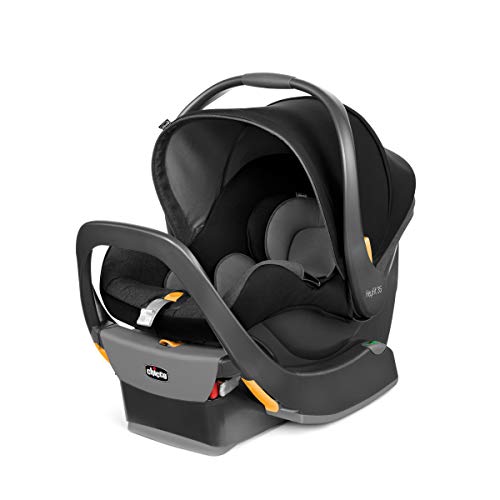
The Chicco KeyFit 35 weighs 9.9 lb without the base, fits newborns from 4 lb, and has a 35 lb rear-facing limit. The Nuna PIPA RX comes in at 7.7 lb carrier weight and is one of the lightest certified infant seats available. Both carry current FMVSS 213 certification, the federal safety standard governing car seat crash performance.
The Britax B-Safe Gen2 FlexFit+ adds a load leg that contacts the vehicle floor, reducing forward rotation in frontal crashes by reducing seat rotation. Britax publishes independent side-impact test data on their site; check that before purchase.
Convertible seats (rear-facing from birth, forward-facing later)
The Graco Extend2Fit 3-in-1 rear-faces to 50 lb and has a 4-position extending panel that adds 5 inches of leg room. This is relevant because many children outgrow rear-facing leg room before they hit the weight limit, and the extension panel resolves that. The UPPAbaby MESA V2 and the Chicco NextFit Max ZIP both rear-face to 40 lb and have LATCH limits of 40 lb combined child-and-seat weight.
What to avoid: No car seat is appropriate if it has been in a moderate or severe crash, is past its expiration date (typically 6 to 10 years from manufacture date, stamped on the shell), or has a current CPSC recall. Search cpsc.gov/Recalls by brand name before every purchase.
Cons to know:
- High-quality convertible seats like the Britax Marathon ClickTight weigh 25 lb installed, making them impractical for frequent car swaps.
- LATCH anchors have combined weight limits (usually 65 lb including the child), after which you must use the vehicle seat belt to install.
- No infant seat fits every vehicle; always verify fit in your specific car before buying, ideally at a retail store with a return policy.
Baby gates: hardware-mount versus pressure-mount matters more than brand
The CPSC has documented multiple incidents where pressure-mounted gates failed at the top of stairs, leading to falls. The rule is straightforward: hardware-mounted gates at the top of stairs, pressure-mounted acceptable only at the bottom or in doorways.
The Evenflo Position and Lock Tall Gate is hardware-mounted, stands 30 inches tall, and fits openings 28 to 42 inches wide. The Regalo Easy Step Walk-Through Gate is pressure-mounted and appropriate for doorways and room dividers, not stair tops.
For wide openings, the Summer Infant Multi-Use Deco Extra Tall Walk-Thru Gate pairs with extension panels and covers openings up to 60 inches. For staircases with banisters rather than walls, you need banister kits that clamp to the post rather than requiring wall studs.
Specific measurements that matter:
- Standard gates are 28 to 30 inches tall. Taller gates (32 to 36 inches) are worth the extra cost once your child is above the 75th percentile for height at 18 months, as tall toddlers can pull themselves over 28-inch gates.
- Bar spacing must be no greater than 2.375 inches, the same standard used for crib slats (16 CFR 1220 for full-size cribs), to prevent head entrapment.
- The Munchkin Pressure-Mounted Loft Gate has bar spacing of 1.85 inches and fits openings 28.5 to 51.5 inches.
Cons to know:
- Hardware-mounted gates leave screw holes in your door frames or walls.
- Walk-through gates with one-hand operation latches can fatigue over time; check the latch mechanism every 3 months.
- No gate is suitable if your child weighs enough to pull it from the wall anchor points. For children over 30 lb who push hard on gates, re-check anchor torque.
Outlet covers and tamper-resistant outlets: why the AAP changed its guidance
The American Academy of Pediatrics updated its household safety guidance to note that plug-in outlet covers themselves can be a choking and ingestion hazard if young children learn to remove them. Research published in peer-reviewed pediatric literature has found that children as young as 2 years can remove the most common sliding plug-in covers in under 10 seconds.
The AAP now recommends tamper-resistant receptacles (TRRs) as the preferred solution. TRRs have spring-loaded shutters inside the socket that only open when equal pressure is applied to both slots simultaneously, which a single-prong or pointed object cannot do. National Electrical Code (NEC) 2008 required TRRs in all new construction; if your home was built before 2008, your outlets may not have them.
If you are renting or cannot rewire:
The Jool Baby Outlet Covers with sliding panels use a rotational cover that requires two simultaneous motions to open. These are harder for toddlers to defeat than flat plug-in covers. The Child Safety Store sliding plate covers are ASTM-tested and require a tool-like two-step motion.
If you own your home:
Upgrading to TRR outlets runs approximately $2 to $4 per outlet for the receptacle itself. A licensed electrician typically charges $6 to $12 per outlet for installation in a standard remodel scenario. For a 1,200 sq ft home with roughly 40 outlets, total cost runs $320 to $640 installed. This is a one-time fix that covers the full birth-to-36-month window and beyond.
Cons to know:
- TRR outlets require a licensed electrician to install properly; DIY installation that is not up to code can create fire hazards.
- Sliding plate outlet covers wear out; inspect them every 6 months for smooth operation.
- No outlet cover protects against extension cords or power strips; those need separate cord management.
Baby monitors: what the features mean for actual safety
The core function of a baby monitor is ambient audio and video awareness, not medical monitoring. No consumer baby monitor is an FDA-regulated medical device unless specifically cleared. Monitors with breathing or movement sensors market themselves as adding safety, but the AAP is explicit that no device has been proven to reduce SIDS risk, and the AAP does not recommend home cardiorespiratory monitors for healthy infants.
With that context, here is what the features actually mean:
Video resolution and range:
The Nanit Pro streams 1080p HD video and has a 1,000-foot range in open areas. The Infant Optics DXR-8 PRO is a 720p local-network monitor with no cloud requirement, which matters if you have privacy concerns about streaming baby footage through a third-party server. The Eufy SpaceView Pro covers 700 feet of range, uses a 5-inch display, and has no subscription fee for cloud storage because it stores locally.
Temperature monitoring:
Room temperature for infant sleep should be between 68 and 72 degrees Fahrenheit, per AAP safe sleep guidelines. The Nanit Pro includes ambient temperature display. The Motorola MBP36XL does not include a room thermometer; you would need a separate device.
What to consider beyond brand:
- The Owlet Dream Sock uses pulse oximetry to track heart rate and oxygen levels and communicates with parents via an app. It is not FDA-cleared as a medical device for diagnosis or treatment, and the AAP advises that parents not use it as a substitute for medical evaluation.
- Wifi-connected monitors can be vulnerable to security breaches; use monitors on a separate password-protected network segment if possible.
Cons to know:
- Cloud-dependent monitors (Nanit, Wyze) require active internet and ongoing app support; if the company discontinues the service, the smart features stop working.
- Battery-powered handheld receiver units (Infant Optics, Motorola) add a device to charge; parents frequently miss alerts when the receiver battery dies overnight.
- Motion-sensor movement monitors generate false alarms that cause anxiety; a 2019 study in JAMA Pediatrics found commercially available infant monitors frequently alarmed falsely.
Bottom line: build your safety layer in order of developmental stage
A newborn’s highest risk is in a car and in the sleep environment. Get a correctly installed car seat and follow AAP safe sleep guidelines before everything else. By 6 months, add stair gates before crawling begins. By 9 to 12 months, audit every outlet and add corner/edge protection to coffee tables, hearths, and TV stands. By 18 months, re-evaluate your gate heights and latch mechanisms because toddler strength grows fast.
Brands worth trusting in this space because they publish independent test data and have low recall histories: Britax (car seats), Chicco (car seats and gates), Graco (car seats), Nuna (car seats), Evenflo (gates), and the outlet brands are less differentiated on safety since the TRR standard governs performance regardless of brand.
The single highest-leverage action you can take is getting your car seat checked by a certified Child Passenger Safety Technician. NHTSA lists free inspection events at nhtsa.gov/equipment/car-seats-and-booster-seats. It costs nothing and takes about 20 minutes.
For outlet safety, check cpsc.gov/Safety-Education for current guidance. For up-to-date recall status on any product in this guide, search cpsc.gov/Recalls before you buy.
Related reading: Kiddopicks Methodology | Safety Equipment Buying Guide