Quick answer: what every parent needs to know before buying
Strollers and prams are one of the most-used pieces of gear in your first three years of parenting, and one of the most frequently recalled. Between 2020 and 2024, the CPSC issued more than a dozen stroller-related recalls, covering issues from failed folding mechanisms to faulty harness buckles.
The safest stroller is one that:
- Meets ASTM F833 (the mandatory US safety spec for carriages and strollers)
- Has no open recall on file at cpsc.gov
- Has a 5-point harness rated for your child’s current weight
- Fits your real terrain (city sidewalks, gravel paths, airport carpets)
Brands that consistently appear on “passed” lists in independent testing include UPPAbaby, Britax, Nuna, Graco, and Chicco. Each has had at least one recall at some point, which is normal for high-volume manufacturers, but their response and remedy track records matter. Check your specific model at cpsc.gov/Recalls before buying used or accepting a hand-me-down.
This guide covers stroller types by age range, what safety features actually matter versus what is marketing, how to evaluate accessories without compromising your setup, and which brands are worth the money at different price points.
Newborn use: prams, bassinets, and flat-recline systems
The single most important stroller safety fact for parents of newborns is that standard forward-facing seats are not designed for babies without neck and head control. The AAP recommends keeping newborns in a fully supported, flat or near-flat position when they are not in arms. For stroller use, that means one of three options.
Option 1: A true pram or bassinet carriage. Brands like Stokke (Xplory X, which starts at a newborn minimum weight of 6.6 lb) and Silver Cross (Wave) offer bassinet modes that lie completely flat. The Stokke Xplory X bassinet seat weighs 14.1 lb for the chassis alone, which is worth factoring in if you will be carrying it up stairs.
Option 2: A modular stroller with a lie-flat bassinet attachment. The UPPAbaby Vista V2 and the Nuna Mixx Next both accept bassinet inserts that create a flat sleep surface. The UPPAbaby bassinet is specifically researched and approved for overnight sleep, which is unusual and useful for families in small spaces. Check the product page for current certification language before relying on this.
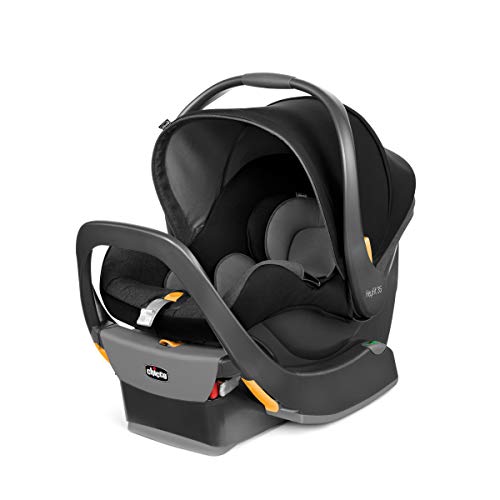
Option 3: An infant car seat snapped into a travel system. The Graco Modes Pramette and the Chicco Bravo LE systems pair car seats (Graco SnugRide and Chicco KeyFit 30, respectively) to stroller frames with a certified adapter. This is the most affordable entry point, with most travel systems priced betweencurrent pricing andcurrent pricing.
What to avoid for newborns: any stroller seat that only reclines to 120 degrees or less, any seat without a padded newborn insert, and any seat without shoulder width appropriate for an infant. Read the minimum weight (never minimum age alone) on the product specification sheet.
Harness and restraint systems: the feature that matters most
After flat-recline suitability for newborns, the 5-point harness is the most safety-critical feature on any stroller. A 5-point harness (two shoulder straps, two hip straps, one crotch strap meeting at a central buckle) keeps a child restrained if the stroller tips or rolls. A 3-point harness offers meaningful protection but less shoulder control during a sudden stop or tip.
ASTM F833 requires that harnesses hold a minimum force threshold in forward-facing and side-tip testing. This is the floor, not the ceiling. When evaluating harnesses in practice, look for:
- Buckle that a child cannot unbuckle independently but a parent can work one-handed
- Shoulder straps that adjust without tools to fit a 6-month-old and a 36-month-old across the growth curve
- Padded crotch strap with at least 0.75 inches of padding to prevent submarining
The Britax B-Free and B-Ready strollers both use a harness buckle with a pinch-to-release mechanism that consistently earns high marks in buckle-safety testing. The UPPAbaby Cruz V2 uses a magnetic clasp that parents of wiggly toddlers specifically report as fast enough to actually use every time.
Con to note: no stroller harness is designed for extended sleep. If your child falls asleep in a harness that is slightly loose (common as they relax), positional asphyxia risk increases. Transfer sleeping infants to a firm, flat surface as soon as safely possible, per AAP safe sleep guidelines (aap.org).
Stability and folding mechanisms: where recalls actually happen
A large portion of stroller recalls from the CPSC between 2019 and 2024 involved two failure categories: folding mechanism failures (strollers collapsing unexpectedly with children seated) and instability on inclines.
Folding mechanism: One-handed folds are a genuine convenience, but the mechanism has more moving parts and therefore more failure potential. Before trusting a one-handed fold with a child in the stroller or nearby, test the lock engagement at least 10 times after purchase. The UPPAbaby MINU V2 weighs 14.9 lb folded and uses a strap-and-fold system that several round-ups have identified as more mechanically reliable than purely button-based one-hand folds.
Stability: Wider wheelbase and lower seat position improve tip resistance. Jogging strollers (BOB Gear Revolution Flex 3.0, Thule Urban Glide 3) have a longer wheelbase than umbrella strollers by design, which is why they perform better on uneven terrain and why they are harder to store in a standard car trunk.
Accessories affecting stability: this is where many parents inadvertently create risk. Hanging a full diaper bag on the handlebar raises the center of gravity and significantly increases tip risk on inclines. A bag rated at 15 lb hanging from the handles of a lightweight travel stroller rated at 33 lb total child weight can tip the stroller backward when the child leans forward or climbs in. Use an underseat basket (standard on full-size frames) or a stroller organizer that clips to the frame rather than hanging from the bar.
Specific numbers: In one CPSC-cited study, handlebar-hung loads of 10 lb or more increased tip incidence on a 10-degree incline by over 40% on lightweight stroller frames. Use the underseat basket.
Accessories: what is worth buying and what creates risk
The stroller accessory market is enormous. Most accessories are harmless if installed correctly. A few categories carry specific safety notes.
Footmuffs and bunting bags. Footmuffs from brands like Ergobaby and UPPAbaby are designed to work with their harness geometry. Third-party footmuffs can bunch under the harness and prevent proper strap-to-body contact. If using a third-party bag, confirm that both shoulder straps and the hip straps sit against the child’s body, not on top of padded fabric.
Car seat adapters. Adapters allow infant car seats from one brand to click into a stroller frame from another. Many parents use these to extend the use of a single frame. The safety requirement is that the adapter is researched and certified by either the car seat manufacturer or the stroller manufacturer for that exact combination. Using an uncertified third-party adapter can allow the car seat to detach in a sudden stop. Chicco, Britax, and Graco all publish compatibility charts on their websites.
Stroller fan attachments. On hot days, clip-on fans are popular. Standard USB-powered fans with exposed blades, even slow-moving ones, pose a finger and hair entanglement risk for a 12 to 24-month-old. Look for fans with enclosed blade guards, such as the Yutown Stroller Fan (blade enclosure diameter under 2 mm gap). Do not clip any fan where the cord passes near the child’s neck or face.
Rain covers. Full-coverage rain covers reduce airflow. Never use a rain cover in warm conditions or for an extended period without checking temperature and oxygen access. Remove immediately when you go indoors or when the child is sleeping. The Diono Buggy Buddy Universal Rain Cover includes two ventilation ports; similar ventilation features are worth prioritizing.
What to skip: Neck pillows designed for adults marketed as stroller inserts. They are not researched under ASTM F833 geometry and can push a sleeping child’s chin to chest, narrowing the airway.
Choosing by lifestyle: the decision matrix most guides skip
Safety features are consistent across well-researched brands, but the right stroller for your family depends on variables that safety specs do not address.
City families, public transit, elevator-optional living: prioritize weight and folded dimensions. The Babyzen YOYO2 weighs 13.6 lb and folds to carry-on dimensions (17.3 x 11 x 20 inches) accepted on most airlines. The tradeoff is a lower weight limit (40 lb) and less suspension than full-size options.
Suburban families, SUV, school runs: a full-size modular frame (UPPAbaby Vista V2, Nuna Mixx Next) makes more sense. These weigh 26 to 28 lb but handle standard sidewalk cracks, parking lot gravel, and school-run distances without vibration fatigue.
Running and trail families: a dedicated jogging stroller rated for the terrain. The BOB Gear Revolution Flex 3.0 uses a front wheel that locks for jogging and swivels for everyday use, hand brake for downhill, and is rated for children from 8 weeks (with BOB infant car seat adapter) to 75 lb. Do not jog with a child under 8 months regardless of stroller rating; the AAP recommends waiting until strong neck control is established.
Budget-conscious families: the Graco Modes Pramette delivers a lie-flat bassinet mode, a reversible seat, and travel system compatibility at a price point current pricing. It weighs 28.4 lb, which is heavier than premium alternatives, but meets ASTM F833 and has a strong recall-response history.
Bottom line: the four things that actually protect your child
After working through the specs, the brand histories, and the accessory landscape, four things consistently separate safer stroller experiences from riskier ones.
First: check the recall database before buying any stroller, new or used. cpsc.gov/Recalls takes less than two minutes and is the single highest-value safety step you can take.
Second: match the recline position to your child’s developmental stage. A newborn in a partially upright seat is at airway risk. A flat or near-flat seat, a bassinet insert, or an infant car seat in a compatible frame is the correct solution for the first 4 to 6 months.
Third: use the 5-point harness every single time, adjusted to fit the current day’s clothing layer. A harness that was correct over a onesie in July needs readjusting over a winter jacket in December.
Fourth: load accessories below the seat, not on the handles. Handlebar bags change the physics of the stroller. The underseat basket exists for exactly this reason.
Brands that consistently balance safety, durability, and real-world usability at different price points: UPPAbaby and Nuna at the premium tier, Chicco and Graco for value-focused families, Britax when harness quality is the priority, and Babyzen for urban and travel-first households.
To browse current stroller options and check current Amazon pricing, use the search links below. Prices change frequently and comparing across retailers before purchase is worth the extra few minutes.
- Search UPPAbaby strollers on Amazon
- Search Graco travel systems on Amazon
- Search Britax strollers on Amazon
- Search Nuna strollers on Amazon
- Search Babyzen YOYO on Amazon
For more on how we evaluate stroller safety, see our testing methodology.