Quick answer: Most car seats expire 6 to 10 years from manufacture

Check the bottom or back of the shell right now. If the stamped expiration date has passed, the seat must be retired regardless of how it looks. After any crash that does not meet NHTSA’s strict five-criteria “minor” definition, replace the seat immediately. Harness straps, chest clips, and base components follow the same expiration as the seat itself. Third-party accessories like aftermarket strap covers and non-approved head inserts should not be used at all.

This checklist covers every replacement trigger, by item type, for children from birth through approximately 7 years old.


Expiration dates: every seat has one and it is not optional

Car seat plastic is engineered to withstand crash forces within a defined performance window. Over years of heat cycling inside a parked car (interior temperatures can exceed 150 degrees Fahrenheit in summer), UV exposure, and normal compression from daily use, the polypropylene shell slowly degrades even when no visible cracks appear.

Manufacturers set expiration timelines based on their own materials testing. Common timelines in 2026:

  • Graco SnugRide 35 infant seat — 6 years from manufacture date
  • Britax B-Safe Gen2 infant seat — 7 years from manufacture date
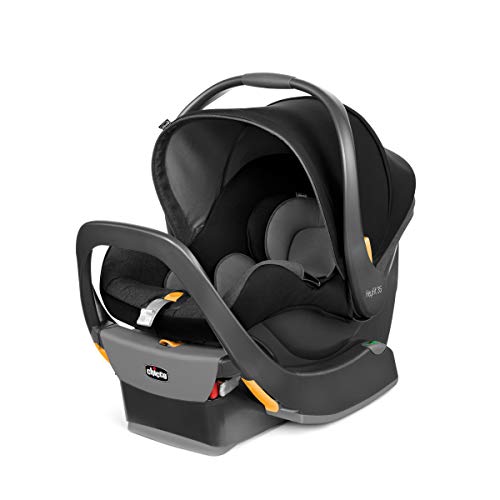
  • Chicco KeyFit 35 ClearTex — 6 years from manufacture date
  • Nuna PIPA rx — 7 years from manufacture date (base: 10 years)
  • Britax Boulevard ClickTight convertible — 10 years from manufacture date
  • Graco Extend2Fit convertible — 10 years from manufacture date
  • UPPAbaby MESA V2 — 8 years from seat, 10 years from base

These numbers come directly from each brand’s owner manual. If your seat is not listed here, find the sticker on the shell or call the manufacturer. NHTSA maintains a car seat resource page at nhtsa.gov that also covers expiration basics.

What to do when the date passes: Write “EXPIRED — DO NOT USE” on the shell with a permanent marker and remove the harness straps before placing the seat in the trash or a recycling drop-off. Many retailers including Target and Walmart run periodic car seat trade-in events where expired seats are accepted. Do not donate an expired seat to a thrift store or pass it to another family.


Crash replacement: when you must replace even a “new” seat

A crash does not have to feel severe to compromise a seat’s structural integrity. The harness webbing and locking mechanisms absorb crash energy in ways that are not visible to the eye.

Replace immediately after any crash EXCEPT one that meets ALL five of NHTSA’s minor-crash criteria:

  1. The vehicle was drivable and was driven away from the crash scene under its own power.
  2. The vehicle door nearest the car seat was undamaged.
  3. No one in the vehicle was injured.
  4. Airbags did not deploy.
  5. The car seat shows no visible damage (no cracks, warping, missing parts).

If even one criterion is not met, the seat must be replaced before the next trip. This applies whether the seat had a child in it at the time of the crash or not. The structure is stressed by the forces traveling through the vehicle frame.

Insurance and replacement costs: Many auto insurance policies cover car seat replacement after a crash under the property damage portion of the claim. File the claim with photos before disposing of the damaged seat, and keep your receipt for the replacement. Britax replacement seats run approximately $200 to $350; Chicco KeyFit replacement units are generally $200 to $280; Graco convertibles range from $150 to $400 depending on model.

Check current Amazon prices:


Harness straps, chest clips, and bases: replacement triggers by component

The seat shell is not the only part that wears out. Here is what to check on each component:

Harness webbing: replace when faded, frayed, or washed in a machine

Harness webbing is a precisely woven nylon rated to a specific tensile strength. Once it is cut, frayed, or cleaned with anything stronger than a damp cloth, the fibers break down in ways that reduce peak load capacity.

Replace harness webbing if:

  • Any visible fraying, cuts, or nicks are present
  • The color has faded significantly from original (UV degrades nylon fibers)
  • The straps were submerged or machine washed (against every major manufacturer’s instructions)
  • The strap has a knot or crease set from improper storage

Replacement harness sets are available directly from Britax, Graco, Chicco, and Nuna through their customer service lines. Do not substitute aftermarket webbing. Prices range from approximately $15 to $45 depending on the seat model.

Chest clip: replace if cracked, bent, or missing the retainer

The chest clip holds the harness straps at armpit level (not over the stomach). It is made of a thermoplastic that becomes brittle with age and repeated temperature cycling. A broken chest clip can allow the harness to splay open in a crash, increasing the risk of ejection.

Replace the chest clip if:

  • The plastic shows any crack, even a hairline
  • The clip does not stay latched without force
  • The seat has been in any crash meeting the moderate-to-severe threshold
  • The clip was chewed by a toddler (common on the Graco 4Ever and UPPAbaby MESA)

Replacement chest clips from the original manufacturer cost approximately $5 to $12 and ship within a few days. Never use a third-party clip, as clip geometry must match the harness slot spacing.

Infant seat base: check the indicator bubble and re-level after every vehicle switch

The base’s recline angle must stay within the manufacturer-specified range for rear-facing protection to work correctly. After 3 to 4 years of daily use, the anti-rebound bar (present on Nuna PIPA rx and Britax B-Safe Gen2 bases) can develop micro-cracks at its attachment points that are invisible during normal inspection.

Replace the base if:

  • It has been in a crash that does not meet all five NHTSA minor-crash criteria
  • The level indicator bubble cannot be centered even after adjusting the recline angle (indicates a warped base foot)
  • The seat clicks into the base but rocks more than 1 inch side-to-side or front-to-back
  • The base has reached the expiration date printed on its own label (separate from the seat)

The Nuna PIPA rx base expires 10 years from manufacture; the Chicco KeyFit 35 base expires 6 years from manufacture. These dates are on labels attached to the base, separate from the seat shell label.


Accessories and add-ons: what is safe and what to skip

The aftermarket car seat accessories market is large and mostly unregulated. Products sold as “compatible” with a specific seat may have never been crash-tested with that seat. NHTSA and CPSC both state that adding any accessory not included or explicitly approved by the seat manufacturer can void FMVSS 213 compliance.

Use only if it came in the box or the manufacturer explicitly approves it in writing:

  • Infant head and body inserts (Graco SnugRide 35 includes a two-piece infant insert rated for use from birth to 11 pounds; remove it at 11 pounds per the manual)
  • Tether strap (always attach the top tether when forward-facing; Britax and Graco include a tether on every convertible seat)
  • Vehicle seat protectors — only mats explicitly listed in the seat’s approval documentation. Britax has an approved seat protector; Graco has approved a specific model. Generic mats from other brands are not sanctioned.

What to avoid entirely:

  • Third-party strap covers (fleece, terry cloth, padded covers slip over harness webbing and can compress in a crash, creating slack)
  • Aftermarket head support inserts not included in the box
  • Bunting bags or footmuffs threaded through harness slots
  • Window shades clipped to the door frame above the seat (these can become projectiles)
  • Mirror clips attached to headrests in rear-facing positions (they loosen with vibration)

If you purchased a Britax, Graco, Chicco, UPPAbaby, or Nuna seat and want additional padding, contact the manufacturer and ask specifically which accessories are included in their crash-test program for that model number.

Shop Britax-approved accessories


Seat size transitions: when your child has outgrown the current seat

Beyond expiration and crash damage, the most common reason to replace a car seat is that the child has grown past the seat’s weight or height limit. Every transition carries specific checks.

Infant seat to convertible (typically at 22 to 35 pounds, depending on model): The Chicco KeyFit 35 rear-faces to 35 pounds. The Graco SnugRide 35 XT rear-faces to 35 pounds. When the child reaches the weight limit OR the top of the head is within 1 inch of the seat’s shell top (whichever comes first), transition to a convertible. AAP recommends keeping children rear-facing as long as the seat allows, not switching to forward-facing at age 2 as a hard rule.

Convertible to combination/booster (typically at 40 to 65 pounds forward-facing with harness): The Britax Grow With You ClickTight harnesses to 65 pounds. The Graco Nautilus harnesses to 100 pounds. Children should stay harnessed as long as the seat’s harness limit allows. At the harness weight or height limit, transition to a high-back booster with a vehicle belt.

Booster graduation (typically at 40 to 120 pounds, or when the shoulder belt fits correctly without the booster): A child is ready to use only the vehicle seat belt when they can sit against the seat back with knees bent at the seat edge, feet flat on the floor, and the shoulder belt crossing the center of the chest and collarbone — not the neck. Most children meet this geometry between 10 and 12 years old, well past the 0-7y range covered here.

Check current Amazon prices for convertible seats: Graco convertible car seats Nuna RAVA convertible car seat


Bottom line: the replacement checklist you need right now

Pull your car seat out and run through these checks:

Step 1 — Expiration date. Find the sticker or molded stamp on the shell bottom or back. If the expiration date has passed, retire the seat today.

Step 2 — Crash history. Has the seat ever been in a crash? Apply NHTSA’s five-criteria minor-crash test. If any criterion fails, replace the seat.

Step 3 — Visual shell inspection. Look for cracks, warping, or missing parts on the shell, base, and anti-rebound bar. Any structural damage = retire.

Step 4 — Harness and clip condition. Run your fingers along every inch of harness webbing. Check the chest clip for hairline cracks. Machine-washed straps must be replaced.

Step 5 — Size check. Verify the child has not outgrown the current seat’s weight and height limits. Check headroom: top of head must remain at least 1 inch below the shell top.

Step 6 — Accessories audit. Remove any accessory that did not come in the manufacturer’s box or is not explicitly approved in writing for your seat model.

If you find an issue with any step, the fix is straightforward: contact the manufacturer for replacement parts, or retire the seat and choose a new one that matches your child’s current weight and height range.

For a full methodology on how we evaluate car seats and accessories, visit our testing methodology page.

Need help choosing a replacement seat? A certified child passenger safety technician (CPST) can inspect your installation for free. Find one near you through the SafeKids Worldwide inspection station locator at safekids.org.