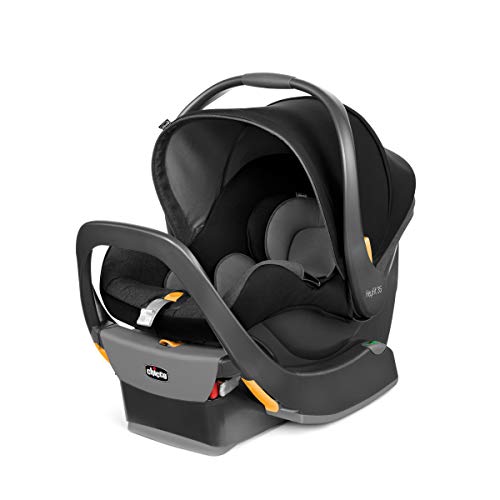
Quick Answer: Replace safety gear when it expires, after any impact, or when your child outgrows it

Most baby safety gear has a shorter useful life than parents expect. Car seats expire in 6 to 10 years from manufacture. Bike helmets are single-use after any significant impact. Baby monitors need replacing roughly every 3 to 5 years as hardware and security firmware age out. Crib rails, bed rails, and play yard mesh should go the moment they show a tear, bent hardware, or a gap wider than 2.375 inches (the CPSC standard for crib slat spacing).

The short version: check the label, check the date, check for damage after every incident. The checklist below walks through each category.

Car Seats: Expiration Dates Are Not Optional

Car seats from Graco, Britax, Chicco, Nuna, and every other major brand carry a printed manufacture date and an expiration date on a sticker on the shell or base. Most infant bucket seats expire 6 years from manufacture. Convertible and all-in-one seats (like the Britax Advocate or Graco Extend2Fit) typically carry a 10-year window.

Replace your car seat when:

  • It has reached its printed expiration date, even if it looks fine. Polypropylene plastic becomes brittle under temperature cycling and UV. Harness webbing weakens. NHTSA notes that the materials that protect your child in a crash degrade over time regardless of appearance.
  • It has been in a moderate or severe crash. A seat that absorbed crash forces may look structurally intact but have hidden damage. NHTSA defines a moderate-to-severe crash as one where the vehicle could not be driven away, a door near the seat was damaged, airbags deployed, anyone was injured, or the seat was occupied at the time. In any of those cases, retire the seat.
  • Your child has exceeded the height or weight limit. This is not a judgment call. The Graco 4Ever, for example, has a rear-facing weight limit of 40 lb and a forward-facing harness limit of 65 lb. Exceeding the printed limit means the harness geometry and energy-absorbing materials were not designed for that load.
  • It has been recalled. Search your seat’s model at CPSC Recalls and register your seat with the manufacturer so recall notices reach you automatically.

What you do not need to do: replace a seat after a minor fender-bender where the vehicle drove away, no airbags deployed, no one was injured, and the seat was unoccupied. NHTSA’s guidance specifically carves out minor crashes for most modern seats, but verify with the manufacturer for your specific model.

One practical note: check the date stamped on the shell before buying a new-in-box seat from a discount retailer or online marketplace. A Chicco KeyFit 35 sitting in a warehouse for 4 years still has only 2 years of usable life left when you buy it.

Bike Helmets and Ride-On Safety Gear: One Impact, One Helmet

EPS foam, the white expanded polystyrene inside every CPSC-compliant bike helmet, is designed to crush and absorb energy in a single impact. After it crushes, it does not return to its original shape. A helmet that took a hit during a stroller tip-over, a fall off a balance bike, or a drop from a shelf has used its protective capacity whether or not you can see a crack.

Replace the helmet when:

  • Any significant impact occurs, including falls from changing tables, stroller tips, or any crash during use. The CPSC standard 16 CFR 1203 governs bicycle helmets, and the underlying engineering principle is single-use absorption.
  • The retention system (the dial adjuster at the back) no longer holds the helmet snugly. A helmet that wobbles more than one inch in any direction is not properly fitted and should be replaced with a correctly sized unit.
  • Straps are frayed, buckles crack, or the foam shows compression marks.
  • Your child outgrows the fit range. Helmets from Nutcase, Joovy, and Lazer list head circumference ranges in centimeters on the packaging. Measure with a soft tape measure at the widest point above the ears.
  • The helmet is more than 5 years old. Many manufacturers recommend replacement at 5 years from the date of first use due to degradation of adhesives and foam.

For balance bikes like the Strider 12 Sport, the same helmet rules apply from the first day of riding. Children aged 12 months to 3 years are using these bikes, and falls are frequent at this developmental stage.

Sleep Safety Equipment: Crib Rails, Mattresses, and Monitors

Sleep safety is the highest-stakes category for infants. The AAP’s safe sleep guidelines specify a firm, flat surface with no gaps, no soft bedding, and no inclined sleep surfaces for infants.

Replace crib hardware and mattresses when:

  • Any crib rail, corner post, or hardware shows cracks, bends, or missing hardware. The CPSC bans drop-side cribs. If you own one of these, it cannot be repaired to meet current standards and must be retired.
  • The mattress is soft or has body impressions. A firm crib mattress (from Naturepedic, Newton, or Newton Baby) should not depress more than 1 inch under your palm. A mattress that sags or has visible impressions is no longer flat and firm.
  • The mattress gap between the mattress edge and crib rail is more than 2 fingers wide (roughly 1 inch). Gaps allow head entrapment.
  • A portable play yard mesh (like the Graco Pack ‘n Play) has any tear, hole, or loose seam larger than the width of a finger. Even small openings can expand under the weight of a sleeping infant.
  • The play yard frame has bent, cracked, or does not lock securely into the open position.

Baby monitors: Video monitors from Infant Optics, Nanit, and Eufy have hardware lifespans of 3 to 5 years. Beyond hardware degradation, Wi-Fi-connected monitors that no longer receive firmware updates become security vulnerabilities. Check your manufacturer’s support end-date. A monitor that cannot be patched against known exploits should be replaced even if the video feed still works.

Stroller and Carrier Safety: When Wear Becomes Risk

Replace or retire strollers when:

  • Any wheel no longer locks securely, or the brake does not hold the stroller in place on a 15-degree slope.
  • The harness shows fraying at the buckle or shoulder connection points. The 5-point harness on strollers from UPPAbaby, Bugaboo, and Nuna is load-bearing in a tip-over. Frayed webbing compromises that load.
  • The canopy frame has a broken spoke that leaves a sharp edge reachable by the occupant.
  • The stroller has been recalled. Major recalls have affected models across brands; check CPSC Recalls by brand name at least annually.

Baby carriers and wraps: Soft-structured carriers from Ergobaby, Tula, and LILLEbaby should be retired when stitching separates at load-bearing seams, buckles crack, or the fabric has thinned to the point where light passes through woven sections. There is no fixed expiration date, but visible structural wear is a clear retirement trigger. For ring slings, inspect the rings annually for metal fatigue (check for hairline cracks by running a fingernail around the inner curve) and retire any sling where the tail fabric shows fraying within 6 inches of the ring.

Bottom Line: Build a 6-Month Safety Gear Audit Habit

The most dangerous piece of baby safety equipment is the one you assumed was still fine. Set a recurring reminder every 6 months to run through this checklist:

  1. Pull out every car seat and locate the expiration date. Write it on a piece of tape inside your glove box.
  2. Inspect every helmet buckle, strap, and foam liner. Replace any that had an impact you are not 100% sure was minor.
  3. Check crib and play yard hardware for cracks, bent rails, and loose mattress fit.
  4. Check all carrier and stroller harness webbing at the buckle connection points.
  5. Confirm your baby monitor is still receiving firmware updates from the manufacturer.

Gear from brands like Britax, Graco, Chicco, Nuna, Ergobaby, UPPAbaby, and Naturepedic is generally well-made, but no product is immune to wear, impact damage, or expiration. The CPSC maintains a searchable recall database at cpsc.gov/Recalls where you can search by brand and model. Register every piece of safety equipment you own with the manufacturer so recall notices find you before an incident does.

If you are unsure about a car seat installation or whether your seat is still serviceable, a certified child passenger safety technician (CPST) can inspect it for free at most fire stations and hospital child safety programs. Find a local technician at NHTSA’s seat inspection locator.