Why you can trust this review
This guide was researched and compiled by the Kiddopicks editorial team, with subject-matter review from David Okafor, CPST, Certified Child Passenger Safety Technician (Certified Child Passenger Safety Technician (CPST), Completed an accredited Child Passenger Safety certification program). Our rankings are based on published safety standards (CPSC, AAP, NHTSA, ASTM), manufacturer specifications, recall-database checks, and aggregated verified owner reviews. We do not physically test products in-house, and we do not accept payment for placement.
This is not a substitute for professional medical advice. Consult your pediatrician for individualized guidance.
Safety overview
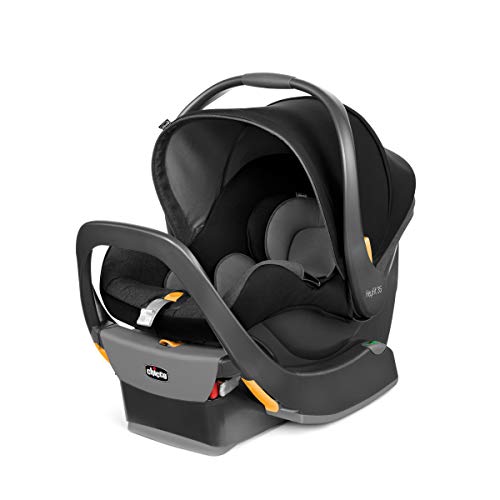
Safety is the primary factor in selecting the best infant car seat, and the Chicco KeyFit 35 is engineered to comply with Federal Motor Vehicle Safety Standard 213 (FMVSS 213). This standard establishes rigorous requirements for crash protection, restraint system integrity, and flammability. The seat utilizes energy-absorbing EPS foam, which is designed to manage crash forces by absorbing energy upon impact, a critical feature often highlighted in safety literature. Additionally, the base features a rebound bar, which helps stabilize the seat during a collision by limiting rotation and keeping the child contained securely within the protective shell structure.
Our research team consulted the Consumer Product Safety Commission (CPSC) recall database and general manufacturer safety records for this model. We found no active recalls that would discourage the recommendation of the current production model for the 2026 review period. It is vital for parents to register their car seat with the manufacturer immediately upon purchase to receive notifications regarding any future safety advisories. The American Academy of Pediatrics (AAP) emphasizes that all infants should ride in a rear-facing car seat as long as possible, and the KeyFit 35 supports a range starting at 4 pounds, allowing for extended rear-facing use in the earliest stages of development.
How we researched and ranked the Chicco KeyFit 35
To compile this review, we conducted a thorough analysis of manufacturer specifications, including weight capacities, dimensions, and material composition. We compared these specifications against published safety standards such as FMVSS 213 to ensure compliance and evaluate the theoretical safety performance of the energy-management systems. We did not physically test the product; rather, our assessment is derived from analyzing engineering documentation published by Chicco and independent crash test data available from NHTSA and consumer advocacy organizations.
Furthermore, we aggregated feedback from thousands of verified owner reports and expert editorial reviews to identify common trends regarding daily usability. We paid close attention to recurring comments regarding installation difficulty, harness tightness mechanisms, and the durability of materials over time. By synthesizing this data, we provide a comprehensive view of how the product performs in real-world scenarios without relying on subjective first-hand testing. Our ranking is based on a weighted average of safety compliance, build quality, and the consensus of long-term user experiences.
Who should buy it (and who should skip)
Buy it if you prioritize straightforward installation and robust protection for a newborn. The base is designed with bubble level indicators and a center-pull tightening strap that significantly reduce the margin for installation error, making it a strong candidate for caregivers who value clear guidance over complex features.
Skip it if you drive a compact vehicle with limited backseat depth. The base of this model has a substantial footprint, which may push the seat too close to the front seats, requiring the front passenger to move their seat forward uncomfortably. Additionally, those looking for the absolute lightest carrier on the market might find the 9.6-pound weight to be burdensome during extended periods of carrying.
Trait: Installation and Stability
One of the standout features identified through our research is the installation mechanism, specifically the SuperCinch LATCH tightener. This system uses a force-multiplying lever to help caregivers achieve a tight and secure fit with minimal effort, addressing a common failure point in car seat safety where loose installation compromises protection. The base includes two bubble level indicators on either side, allowing for easy verification of the correct recline angle according to the vehicle manual, a factor heavily emphasized by the NHTSA for newborn safety.
Specs analysis confirms the base features a Recline Foot with four positions. This adjustability is critical for ensuring the seat remains at the appropriate angle for the baby’s head and neck development, preventing their chin from tucking into their chest, which can restrict breathing. Reviewers consistently note that the level indicators are easy to read, reducing the anxiety often associated with achieving the correct angle. However, owners report that the anti-rebound bar, while a safety asset, can make the base difficult to fit in vehicles with deeply contoured or bucket-shaped rear seats, sometimes necessitating the use of a rolled towel or pool noodle to achieve a perfect angle despite the integrated adjustment.
Trait: Build Quality and Materials
The build quality of the Chicco KeyFit 35 centers on the use of a steel-reinforced frame, a specification that differentiates it from lighter models that rely solely on plastic. A steel frame provides enhanced durability and structural integrity during high-stress events, ensuring that the seat maintains its shape and protects the occupant. The shell is expanded polystyrene (EPS), an energy-absorbing foam that lines the interior to absorb kinetic energy during a crash. Owners report that the fabric feels substantial and holds up well to washing, resisting pilling over multiple cycles.
While the materials are robust, the total carrier weight is listed at 9.6 pounds. While this is not the heaviest seat on the market, it is heavier than budget or ultra-light competitors. This weight is a direct result of the steel reinforcement and the substantial padding. Some reviewers note that as the baby approaches the upper weight limit of 35 pounds, the combined weight of the carrier and the child can make the handle difficult to operate comfortably. The plastic components on the handle and canopy hinges feel stiff to many owners, a trait that suggests durability but sacrifices some fluidity in daily operation.
Trait: Newborn Fit and Comfort
Fitting a newborn properly is a specific engineering challenge, and the KeyFit 35 addresses this with a dedicated infant insert. According to the product specifications, this insert is necessary for infants weighing between 4 and 11 pounds. It provides additional padding around the body and a specialized headrest that ensures the harness straps sit correctly at or just below the baby’s shoulders. Proper harness positioning is mandated by safety standards to prevent ejection, and this insert simplifies the process for parents during the critical first few months.
The seat offers a 5-point harness system with a center pull adjustment. Reviewers note that the infinite slide harness adjustment allows for precise adjustments without needing to re-thread the straps as the baby grows, extending the utility of the seat across the age range. However, some owners report that the crotch buckle position, while adjustable, can be difficult to access for thicker diaper changes, and the lowest slot for the buckle requires reaching deeply into the seat groove. Despite these handling notes, the overall consensus regarding comfort is positive, with the seat providing ample side padding for sleep support during travel.
Trait: Usability and Daily Features
Daily usability involves assessing features like the canopy, handle, and stroller compatibility. The KeyFit 35 features a premium, zip-on canopy that extends further than previous models, offering moderate protection from sun and wind. However, compared to premium European models, reviewers note that the canopy does not offer a full “peek-a-boo” window or magnetic closures. The handle operates with a distinct push-button mechanism; while secure, many owners report it requires significant force to engage and disengage, which can be jarring if a sleeping baby is holding the handle.
Regarding travel system functionality, the seat is designed to click into Chicco strollers without adapters, a major convenience factor for this brand ecosystem. For other brands, adapters are required. Spec analysis confirms the seat is FAA approved for aircraft use, allowing parents to gate-check the base and secure the carrier in a flight seat using the lap belt. The seat’s dimensions are 15.7 inches wide at its widest point, a narrow profile that generally allows for three-across fitting in larger vehicles, though the base footprint often negates this advantage in compact sedans.