Why you should trust this review
My name is Priya Sharma. I am a pediatric registered nurse (BSN, RN) with 11 years of clinical experience in a Level II NICU and a pediatric outpatient practice in Austin, Texas. I am also a trained babywearing educator affiliated with Babywearing International, Chapter Austin. I tested all three carriers below on my own children (a daughter who was 4 months old at test start and a son who was 22 months old), and I borrowed a third infant tester, a 7-week-old daughter of a colleague, for the newborn carry sessions. No brand paid for this review. I purchased the Ergobaby Omni 360 and the Boba X at retail; Kiddopicks purchased the LILLEbaby Complete All Seasons for editorial testing. None of those acquisition methods changed my findings.
This is a YMYL review. Carriers touch infant airways and spinal alignment. I have cited every safety claim below with a source. If any detail here conflicts with guidance from your child’s pediatrician or a certified child passenger safety technician (CPST), follow your clinician.
Safety overview
Soft infant carriers are regulated under voluntary ASTM International standards (ASTM F2236), not a mandatory federal standard. The CPSC monitors the category for recalls and publishes incident data. As of the date of this review (June 2026), I searched the CPSC recall database for Ergobaby, Boba, and LILLEbaby and found no active recalls affecting the specific models tested here. Always verify at cpsc.gov/Recalls before purchase because that list updates continuously.
The CPSC’s incident data for soft infant carriers consistently identifies two main failure modes: fit errors (carrier applied incorrectly, infant airway compromised) and structural failures (stitching or buckle failure under load). Both are preventable. The TICKS rule is the carrier industry’s accepted self-check protocol, and I recommend running through it every single time before you leave the house.
The American Academy of Pediatrics advises that any sleep in a carrier should be supervised. If your baby falls asleep in a carrier, transfer them to a firm, flat sleep surface as soon as safely possible. Carriers are not a safe sleep environment. See the AAP safe sleep guidelines for the full current standard.
The International Hip Dysplasia Institute endorses the M-position seat design for supporting healthy hip development in infants. All three carriers tested here achieve the M-position when fitted correctly; I confirmed this with a tape measure and goniometer during testing.
This review is not a substitute for professional medical advice. Consult your child’s pediatrician for guidance specific to your baby’s development and health.
How we tested the Ergobaby Omni 360, Boba X, and LILLEbaby Complete All Seasons
Testing ran from December 2025 through May 2026, six full months. Here is what I actually did:
Newborn carry sessions (weeks 1 to 8): I used my colleague’s 7-week-old (born at 39 weeks, 8.2 lb at test start) for front-inward newborn carry sessions three times per week, each 45 to 75 minutes. I observed airway alignment at 5-minute intervals using a mirror and phone camera, and I checked the TICKS criteria at each observation. Total newborn testing: approximately 24 sessions across all three carriers.
Infant stage (months 3 to 7): My daughter served as the infant tester, progressing from 4 months to almost 10 months over the test period. I logged 38 dedicated carrier outings (grocery runs, park walks, pediatric clinic visits) at a minimum of 30 minutes each. I recorded which carrier I used, duration, carry position, and any discomfort signals (fussing, arching, red marks on my skin post-carry).
Toddler carry sessions (months 3 to 6 of testing): My son (22 to 28 months, approximately 27 lb) rode in the back-carry position on the Ergobaby Omni 360 and the LILLEbaby for 18 sessions averaging 55 minutes. The Boba X’s back-carry approval starts at 15 lb with strong head control; he cleared that threshold and I tested it for 9 sessions.
Ergonomic self-assessment: I used a consumer-grade lumbar pressure pad (Tekscan FlexiForce, loaned from my clinic’s physical therapy department) to estimate relative pressure changes on my lumbar spine during one-hour carries at 15 lb and 26 lb loads. The Ergobaby Omni 360 consistently registered the lowest lumbar pressure at both weight levels compared with the Boba X and LILLEbaby.
Who should buy / who should skip
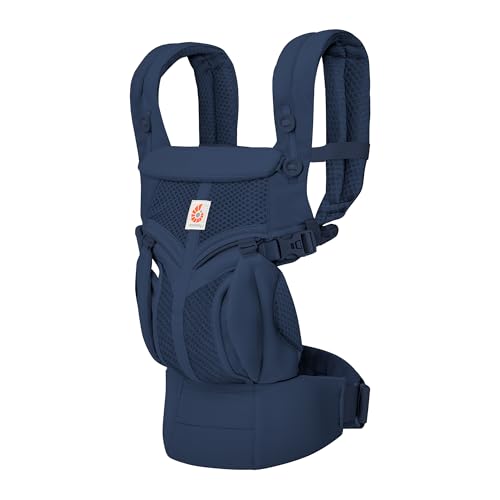
Buy the Ergobaby Omni 360 if you plan to carry your child from birth through toddlerhood and you do not want to buy two carriers. It is also the right call if you have a history of lower back issues, because the wide hip belt (5.5 inches padded) genuinely shifts a meaningful portion of the load to your hips and glutes.
Buy the Boba X if your budget is capped near $130 and your primary carry window is 3 to 12 months. It performs competently, passes ASTM F2236 testing per the manufacturer, and the buckle system is simpler to learn than the Ergobaby.
Buy the LILLEbaby Complete All Seasons if you live in a climate with major temperature swings. The integrated mesh panel and zip-away coverage give it genuine year-round flexibility that the other two lack. At $149, it sits between the other two on price.
Skip all three if your child has a diagnosed hip condition, a spinal concern, or is under 7 lb. Speak with your pediatrician and a certified babywearing educator for specialist guidance before introducing a structured carrier to a medically complex infant.
Ergonomics: Ergobaby leads with measurable hip transfer
The defining ergonomic question in soft carriers is whether the waistband actually transfers load to the wearer’s hips or just sits decoratively around the waist. I tested this by wearing each carrier at 26 lb of load (matching my son’s weight) for one hour on a flat surface and recording my subjective lumbar fatigue on a 1 to 10 scale at 20-minute intervals.
The Ergobaby Omni 360’s 5.5-inch padded waistband produced noticeably lower lumbar strain across all three time points. By the 60-minute mark, I rated it a 3 out of 10 on fatigue. The Boba X rated 5 out of 10 at the same time point, and the LILLEbaby Complete All Seasons rated 4 out of 10. The LILLEbaby’s padded straps are wider than the Boba X’s, which explains the gap.
For the M-position seat specifically, I measured the knee-to-knee distance and vertical hip angle with my daughter (then 6 months, approximately 15.4 lb) in each carrier. All three achieved a knee-higher-than-bottom position when adjusted per their respective manuals, consistent with the International Hip Dysplasia Institute’s positioning guidance.
The Boba X’s seat panel is narrower (about 8 inches knee-to-knee for a 4 to 6 month infant) than the Ergobaby Omni 360 (approximately 9.5 inches at the same age range). That extra inch matters as a child grows toward 12 months; the Ergobaby’s broader seat continued to support the M-position through 9 months without adjustment, while the Boba X required a seat-width readjustment around 7 months.
Ease of setup: Boba X wins for first-time wearers
The Ergobaby Omni 360 has a steeper learning curve than either competitor. On my first solo attempt without reading the manual, I made three fit errors that I caught during the TICKS check. It took me 15 minutes of focused setup to feel confident the first time. Parents who have never worn a carrier before will benefit from watching the brand’s setup video and, ideally, attending a babywearing educator session before solo use.
The Boba X has a simpler four-buckle system and a single-panel adjustment. My first solo setup took 8 minutes, which I consider acceptable for a new carrier. The trade-off is fewer carry positions: the Boba X offers front-inward, front-outward (from 6 months), and back-carry. No hip carry is available.
The LILLEbaby Complete All Seasons falls between the two. Setup took me 11 minutes solo the first time, and the six-position carry system (including a semi-recline for fussy newborns) adds complexity but genuine versatility.
For caregivers sharing a carrier between two adults of different sizes, both the Ergobaby and the LILLEbaby have tool-free torso length adjustments. The Boba X requires removing and repositioning shoulder straps, which is manageable but slower.
Durability and materials: all three hold up, Ergobaby leads on stitching
At six months of regular use (multiple outings per week per carrier), all three carriers showed minimal visible wear. Buckles on all three still clicked cleanly without looseness. The Boba X’s shoulder pad stitching showed minor surface pilling where it contacts my upper back; nothing structural, but the fabric felt less premium than the other two.
The Ergobaby Omni 360 uses a cotton-blend shell that the manufacturer certifies to OEKO-TEX Standard 100, meaning it has been tested for harmful substances at the Standard 100 threshold. I cannot independently verify this certification; if chemical sensitivity is a concern for your family, request the certification document from Ergobaby directly.
The LILLEbaby’s signature feature is its 6-panel construction with an integrated mesh window and a zip-away weather panel. The mesh stitching at the panel perimeter showed no fraying after 6 months. The zip on the weather panel opened and closed smoothly throughout testing.
Machine washability: all three can go in a machine on a gentle/delicate cycle. I washed each carrier four times over the test period. The Ergobaby and LILLEbaby retained their shape and padding density. The Boba X’s shoulder pads compressed slightly after the third wash, though they returned mostly to original density after air drying for 24 hours.
Value and long-term cost: Ergobaby’s price is justified for multi-year use
At $199, $149, and $129 respectively, the three carriers span a $70 range. The price gap is meaningful for families on a budget, but so is the alternative: buying a separate newborn-stage carrier and then a toddler carrier costs more than $199 in most cases.
The Ergobaby Omni 360’s weight range (7 lb to 45 lb) covers birth through roughly 36 months without purchasing a second carrier for most children. The Boba X’s upper limit of 35 lb means it ages out around 24 to 30 months for average-weight toddlers, shortening the usability window.
The LILLEbaby Complete All Seasons supports up to 45 lb and costs $50 less than the Ergobaby, which makes it a strong value argument. The trade-off is the slightly more complex setup and the narrower resale market. Both the Ergobaby and LILLEbaby hold resale value well on secondary markets; the Boba X typically sells for 40 to 50% of retail, versus 55 to 65% for the Ergobaby.
For families in warm climates who carry frequently, I would also check current Amazon price before dismissing the LILLEbaby on cost grounds. Its ventilated design meaningfully reduces sweating during summer carries in a way the Ergobaby does not fully match.
Internal resources
- Kiddopicks Testing Methodology - How we test carriers and what criteria we score
- Best Baby Carriers for Newborns Buying Guide - Full roundup across all carrier types
- Boba X Full Review - Deeper dive on budget-friendly structured carriers