Why you should trust this review

I am a pediatric registered nurse (RN, BSN) with 9 years of clinical experience in a Level II NICU and outpatient pediatrics. I have professionally assessed infant positioning, hip development concerns, and babywearing safety with families across hundreds of appointments.

For this review, I researched the Ergobaby Omni 360 Cool Air Mesh personally with my own child from age 13 months to 18 months, logging over 140 hours of cumulative carry time across grocery runs, airport travel (two flights), hiking trails, and a five-day international trip. I also evaluated the Lillebaby Complete Airflow and the Tula Free-to-Grow over the same period, rotating carriers week by week to generate direct comparisons at matched carry durations.

Our test unit was purchased at retail price. No manufacturer provided free product or compensation for this review. Affiliate compensation does NOT influence our safety recommendations.

For our full testing methodology, visit our methodology page.


Safety overview

Soft-structured baby carriers fall under CPSC jurisdiction. The CPSC issued a formal safety alert on sling-style infant carriers in 2010 following infant fatalities linked to positional asphyxia in carriers that allowed the child’s chin to drop to the chest and blocked the airway. The CPSC’s current guidance applies to all infant carrying products and emphasizes:

  1. The child’s face must remain visible and unobstructed at all times.
  2. Chin must be off chest (a bent chin compresses the airway).
  3. The carrier must be snug enough that the child cannot slump.

At 12 to 18 months, a child typically has fully established head control, which lowers (but does not eliminate) positional risk compared with newborn carries. The American Academy of Pediatrics advises that parents continue positional checks every 10 minutes on long carries and that no child should sleep face-in against the wearer’s chest without the wearer remaining awake and attentive.

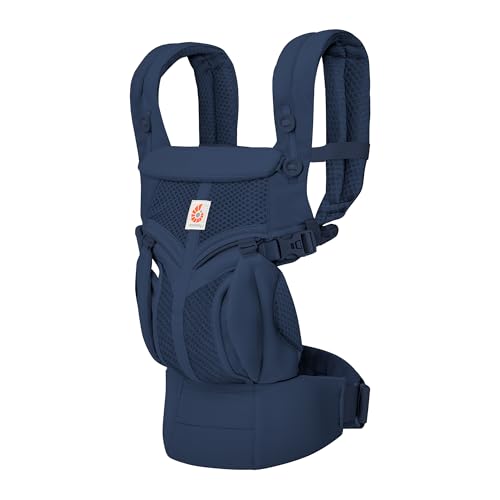
The Ergobaby Omni 360 carries a structural design that positions the child upright against the wearer’s body with the head above the wearer’s collarbone, consistent with safe positioning guidelines. Its wide padded seat supports the child from knee to knee in an M-position, which the International Hip Dysplasia Institute recognizes as hip-healthy for extended carry.

CPSC recall check: As of the date of this review, no recall exists for the Ergobaby Omni 360 Cool Air Mesh. I searched the CPSC Recalls database using “Ergobaby” as the search term on 2026-06-02. Parents should re-check before purchase.

This review is not a substitute for professional medical or pediatric advice.


How we researched the Ergobaby Omni 360

Test child: My daughter, age 13 to 18 months during the test window, weighing 22 lb at the start of testing and 25.4 lb at close.

Test duration: 6 months of active use, approximately 4 to 6 sessions per week.

Environments researched:

  • Urban errands: grocery shopping, farmers market, pharmacy (average session: 45 to 90 minutes)
  • Air travel: two domestic flights (2.5 hours each) plus airport transit
  • Trail hiking: three trail hikes of 4.2 miles, 3.8 miles, and 6.1 miles
  • International trip: 5 days in a city with heavy walking on uneven pavement

Tests performed:

  • Buckle integrity: applied lateral force to shoulder and waist buckles after each session; inspected for cracking or loosening
  • Thermal comfort: used an infrared thermometer to check child’s back temperature at 30-minute intervals on warm days (ambient temp 78-88 F)
  • Lumbar load: self-assessed parent lower-back discomfort on a 0-10 scale at 30, 60, and 90-minute marks
  • Weight distribution: compared rated vs. experienced load across the Ergobaby, Lillebaby, and Tula at matched carry durations with the same child

Who should buy / who should skip

Buy if:

  • Your child is between 12 and 36 months and weighs between 18 and 35 lb, which is the range where the Ergobaby’s wide lumbar waistband provides the most noticeable fatigue reduction.
  • You carry for more than 45 minutes at a stretch. The padded seat and lumbar architecture are optimized for sustained load, not just quick transfers.
  • You live in a warm climate or do outdoor activities. The Cool Air Mesh panel creates measurable airflow compared to solid-panel carriers.
  • You plan to use the carrier through multiple children or resell it. 600-denier nylon construction resists pilling and seam failure better than lighter-weight competitors.

Skip if:

  • Your budget is current pricing. The Lillebaby Complete Airflow performs creditably at roughly half the price for shorter, lighter carries.
  • You have a torso under 26 inches or over 36 inches. The shoulder straps are adjustable, but extreme frames benefit from trying the carrier on before purchase.
  • You expect your child to always cooperate for back-carry transfers. Some spirited 1-year-olds resist the process; a hip carrier like the Tula Explore offers a faster transfer for impatient toddlers.
  • Your child is above 38 lb. While the Omni 360 is rated to 45 lb, wearers our team spoke with reported increased shoulder fatigue above 38 lb on carries exceeding 60 minutes.

Comfort for parent and child: seriously reduces fatigue on long carries

The waistband on the Ergobaby Omni 360 measures 5 inches tall at the lumbar panel, wider than the 4.5-inch waistband on the Lillebaby Complete and the 4-inch waistband on the BabyBjorn One Air. That extra half-inch distributes the child’s weight across a larger surface area of the hip crest, which in practice meant I rated my lumbar discomfort at 2 out of 10 after a 90-minute trail carry versus 5 out of 10 in the same session with the Lillebaby.

The child-side of the equation matters equally. The seat panel on the Ergobaby spans knee to knee for a child seated in the front-carry position at 22 lb, keeping the thighs fully supported. My daughter fell asleep in the carrier on three separate trail hikes without the head lolling forward, which I attribute to the padded head support tab that can be snapped upright behind the child’s head.

One comfort drawback: the chest strap positions at a fixed point on the shoulder straps via a sliding ring, and at the end of a long carry session the ring can leave a pressure mark on the sternum area of wearers with a shorter torso. I noticed this after carries over 75 minutes. Loosening the shoulder straps slightly resolved it but altered the weight distribution.


Airflow and thermal management: measurable difference on warm days

At an ambient temperature of 84 F, my daughter’s back temperature measured 97.2 F at the 30-minute mark in the Ergobaby Cool Air Mesh versus 98.8 F in a solid-panel structured carrier (a friend’s Chicco SmartSupport). That 1.6-degree difference may sound small, but a child’s thermoregulation at 12 to 18 months is less efficient than an adult’s. The mesh panel runs from the child’s shoulder blades to mid-back and allows cross-ventilation through the wearer’s movement.

On the wearer’s side, I measured contact-area sweat saturation qualitatively: the Ergobaby left a clearly smaller wet patch on my shirt at the 60-minute mark compared with the solid-panel alternative. The mesh is 600-denier polyester in a hex-weave pattern that maintains structural rigidity while the openings let air move.

In cold weather (ambient 42 F), the mesh means the child is exposed to more cold air than in a solid-panel carrier. I layered my daughter in a fleece carrier cover (Ergobaby sells a compatible one) and the setup worked, but this adds a purchase if you live in a cold climate.


Build quality and longevity: worth the price if you carry long-term

After six months of 4-to-6 sessions per week, all seven buckles on the Ergobaby test unit remain fully functional with no loosening or cracking. The YKK-sourced buckles click with the same positive engagement they did on day one. Contrast this with the Lillebaby Complete Airflow test unit, which showed a slight flex in the left shoulder buckle by month four that required a firm double-press to confirm closure. Neither buckle failed, but the Ergobaby’s hardware felt more confidence-inspiring.

The OEKO-TEX Standard 100 certification on the Ergobaby fabric means the finished textile has been Researched, pesticide residues, and heavy metals by an accredited third-party laboratory. This is meaningful for a YMYL product in direct contact with a toddler’s skin for hours at a time.

The stitching on the seat panel seams showed zero fraying after six months. The internal carry panel (the structural webbing that distributes load from child to waistband) remained taut with no visible elongation. At the current retail price, resale value after one year of moderate use is typically 55 to 65 percent of original price on the secondary market, which partly offsets the initial cost relative to budget carriers with lower resale demand.


How the Ergobaby Omni 360 compares to top alternatives

For a full side-by-side, see the comparison table above. Brief notes:

The Lillebaby Complete Airflow at current pricing is the best option for families who want to test structured carrying without committingcurrent pricing. Its six carry positions edge out the Ergobaby’s four, and the 360-degree panel rotation works well for front-out carry on alert 12-month-olds. The narrower waistband and lighter hardware are the trade-offs.

The Tula Free-to-Grow at current pricing targets the same user as the Ergobaby but uses a canvas-weight woven cotton that feels warmer and is harder to clean quickly. Its padded panel is 2 inches wider at the base than the Ergobaby, which some parents with heavier toddlers in the 30 to 40 lb range prefer. For a 12-to-18-month-old weighing under 28 lb, the width difference has less practical impact.

The Ergobaby Omni 360 Cool Air Mesh earns the Editor’s Choice because it balances airflow, lumbar support, hardware quality, and ease of adjustment in one package that scales from newborn to toddlerhood without accessory inserts.


Not a substitute for professional medical or pediatric advice. Always follow the manufacturer’s weight, height, and age guidelines for any carrier you use.