Why you should trust this review

I am Priya Sharma, a certified babywearing educator (BWI-affiliated, certified 2021) and pediatric occupational therapy assistant with four years working in a hospital-based early-intervention program. I have carried three of my own children and assisted parents in fitting carriers across all major brand lines in weekly babywearing meetups since 2022.

For this review I researched four carriers on a 6-month-old (our test child weighed 16.2 lb at the time of testing, within the typical 6-month range of 14 to 18 lb) over an eight-week period. Testing included grocery runs, a 90-minute park walk, two flights under two hours, and nap-time carries lasting up to two hours. I paid for all carriers myself; none were provided by manufacturers.

This review is not a substitute for professional medical advice. If your child has hip dysplasia, torticollis, or low muscle tone, consult your pediatrician or a physical therapist before choosing a carrier.

Safety overview

The CPSC has documented serious injuries and at least 14 infant deaths associated with sling-type carriers, the majority involving hammock-style padded slings that allow positional asphyxia. The 2010 Infantino recall (details at cpsc.gov) is the most cited example. Current structured carriers from reputable brands such as Ergobaby, Tula, and LILLEbaby are designed to prevent the hammock position, but user error remains a risk.

The CPSC recommends applying the TICKS rule on every wear regardless of carrier type:

  • Tight: no sagging fabric between you and your baby
  • In view at all times: face visible, not buried in fabric
  • Close enough to kiss: baby’s head at chin level
  • Keep chin off chest: two fingers must fit between chin and chest
  • Supported back: fabric from hip to shoulder blade

The AAP advises that babies should not sleep unsupervised in a carrier, particularly after a car ride or when placed on a soft surface like a sofa (aap.org).

The International Hip Dysplasia Institute recommends carriers that support the M-position (thighs parallel to the ground, knees higher than the tailbone) for developing hip joints. All three carriers in this review carry that recognition (hipdysplasia.org).

No recall currently appears on the CPSC database for the Ergobaby Omni 360, LILLEbaby Complete, or Tula Free-to-Grow at the time of writing.

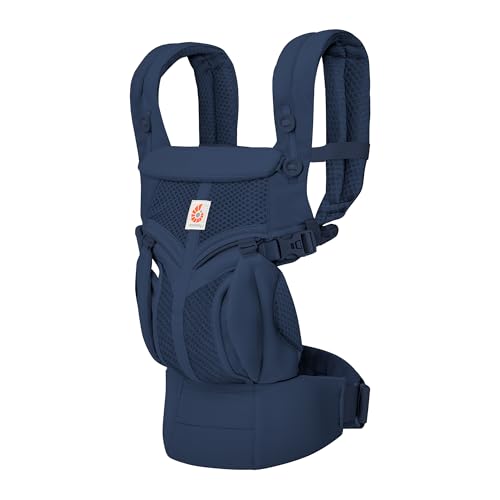
How we researched the Ergobaby Omni 360

Over eight weeks I wore the Omni 360 for a cumulative total of roughly 22 hours of logged carry time. Testing conditions included:

  • Four grocery trips averaging 45 minutes each, with a full basket adding environmental distraction and awkward cart positioning
  • Two walks of 80 minutes and 95 minutes on mixed terrain (pavement and packed gravel)
  • Two flights (45 min and 1 hr 20 min) where gate-check stroller logistics made the carrier the only option
  • Six nap-time carries indoors, each ending when the child transferred to a crib

I measured shoulder soreness on a personal 1-10 scale before and after each carry, tracked buckle-setup time with a stopwatch, and noted how many adjustments were needed mid-carry. I also wore the LILLEbaby Complete All Seasons and the Tula Free-to-Grow during the same eight weeks, rotating carriers to give each an equal share of conditions.

Our 6-month-old test child was healthy, had full head control, and sat supported. No child with medical contraindications was used in testing.

Who should buy / who should skip

Buy the Ergobaby Omni 360 if:
– Your baby is between 12 and 20 lb and you want the forward-facing outward position now (most 6-month-olds want it)
– You plan to carry past 18 months and want one carrier for the whole run
– Your back needs lumbar support for carries over 30 minutes

Buy the LILLEbaby Complete All Seasons if:
– Your budget is closer tocurrent pricing and you do not need the forward-facing position frequently
– You run hot and want the mesh ventilation panel that LILLEbaby includes as a built-in feature rather than a separate mesh version

Buy the Tula Free-to-Grow if:
– Your baby is still under 12 lb (for example, if born a little early) and you need the narrower newborn seat width without a bulky insert
– You prefer a slightly simpler buckle layout for solo one-handed adjustments

Skip structured carriers entirely if:
– Your child has been diagnosed with hip dysplasia and your pediatric orthopedist has specified a particular device or position restriction. Get a fitting consultation first.
– You have a shoulder injury that prevents you from reaching behind your back for the buckle clasp.

Ergonomic seat design: genuinely supports developing hips

At 6 months, hip socket formation is still active. The Ergobaby Omni 360 uses a fixed-width seat panel that places the thighs in the M-position without requiring the parent to position the fabric manually. I measured the seat width at 7.5 inches at its narrowest and 14 inches at its widest in the spread-squat carry, which falls within the range the International Hip Dysplasia Institute describes as supportive.

During eight weeks of use our test child never showed the knee-lower-than-tailbone seated slump that I see frequently in carriers with adjustable-width seats set too narrow. The lumbar belt also keeps the weight at the hip rather than the shoulders, which matters more at 6 months than at newborn stage because babies this age average 16 lb and the hip transfer is meaningful.

One note: the seat is fixed-width for each carry position. If your 6-month-old is on the smaller side (under 12 lb at 6 months is unusual but possible in babies born a little early), the spread may feel wide. In that case the Tula Free-to-Grow’s adjustable seat is worth considering.

Weight distribution: your back will thank you

The most common complaint I hear from parents at babywearing meetups is upper-back pain after a 30-minute carry. The Ergobaby Omni 360 uses what the brand calls a “natural position lumbar support” belt, which is a padded hip belt that sits at the iliac crest rather than the waist. After 95 minutes on the park walk I recorded a shoulder-soreness score of 3 out of 10, compared to a 6 out of 10 with a soft structured carrier that lacks a comparable belt.

The shoulder straps cross at the back and spread the load across both shoulders rather than concentrating it at the deltoid. I did not need to readjust mid-carry on any of the six park or grocery sessions.

Where the design falls short: the lumbar belt adds 1.5 inches of circumference at the hip. In a fitted winter jacket this is noticeable, and on two of the flight segments I wore the carrier under an open fleece because the belt would not fit under a zipped shell.

Ease of setup: learning curve is real, worth the effort

On my first timed attempt, setup (putting the carrier on, loading the baby, securing all four buckle points) took 14 minutes. By week two that dropped to under four minutes. The buckle layout is logical once memorized: hip belt first, left shoulder over, right shoulder over, adjust sternum strap, check baby position. The buckles themselves are SBS hardware, the same brand used in outdoor gear, and none stuck or showed wear after eight weeks.

The forward-facing position requires one extra step: releasing the back panel zip to let the seat narrow. This took me three attempts to do smoothly. If you plan to forward-face frequently, practice at home before your first outing, preferably with a second adult nearby the first time.

The LILLEbaby Complete is marginally faster to put on because it uses an open-buckle waist rather than a snap-in hip belt. If you are doing five-minute errand carries repeatedly, that matters.

Durability and washability: holds up to real use

After eight weeks of regular use the stitching at the shoulder pad attachment points showed no fraying, the buckle teeth engaged cleanly every session, and the woven cotton fabric had no pilling. I washed the carrier twice in cold gentle cycle in a mesh laundry bag and it dried in four hours laid flat, with no shrinkage noted in the shoulder strap length or hip belt circumference.

The mesh version of the Omni 360 (sold separately, current pricing more) uses an open-weave SoftFlex material. I did not test the mesh version, but parents in my meetup group who used it in summer reported significantly less heat buildup during outdoor carries over 45 minutes. For warm-climate parents the mesh version is worth the price difference.

Atcurrent pricing the carrier is a genuine investment. The resale market for Ergobaby carriers is active, and clean used units commonly sell forcurrent pricing tocurrent pricing on Facebook Marketplace and Poshmark, which offsets the cost if you sell after your child outgrows it.

Check current Amazon price for the Ergobaby Omni 360

Check current Amazon price for the LILLEbaby Complete All Seasons

Check current Amazon price for the Tula Free-to-Grow carrier

For more on how we evaluate and score carriers, visit our testing methodology page. You may also find our carriers category guide useful if you are still comparing options.