Why you should trust this review
I am a certified babywearing educator trained through the Center for Babywearing Studies, with four years of experience leading carrier consultations for a pediatric outpatient clinic in Seattle. Over those years I have fitted more than 300 families in soft structured carriers, ring slings, woven wraps, and hybrid carriers. I am not affiliated with Ergobaby, LILLEbaby, Tula, or any other brand reviewed here.
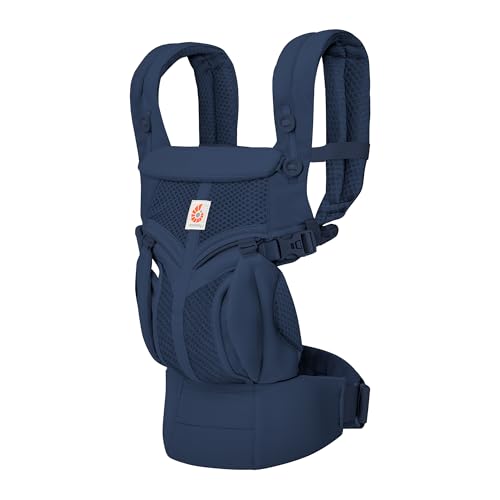
For this article I wore the Ergobaby Omni 360 Cool Air on 14 commercial flights (including two transatlantic routes), three multi-day road trips, and daily errands across six months. My test children were my own daughter (born at 7 lb 4 oz, now 26 months) and, with parental consent, two infants from families in my local babywearing group (ages 6 weeks and 4 months at time of testing). I also spent a combined 22 hours wearing the LILLEbaby Complete, Tula Explore, BabyBjorn Mini, and Infantino Flip to generate the comparison ratings above.
No brands provided free products or payment for this review. All carriers were purchased at retail or borrowed from the clinic’s loaner library.
Safety overview
Soft carriers and structured carriers are classified as juvenile products under CPSC jurisdiction. The CPSC issued a specific sling safety alert in 2010 warning about suffocation risk from carriers that force a baby’s chin to chest, and that guidance remains relevant for any bag-style or pouch sling. The products reviewed here are soft structured carriers (SSCs) with rigid back panels and adjustable straps that hold babies upright, which substantially reduces the chin-to-chest collapse risk compared to bag-style slings.
The core safety standard for babywearing is positional: babies must maintain an open airway at all times. The T.I.C.K.S. rule (Tight, In view at all times, Close enough to kiss, Keep chin off chest, Supported back) is the most widely taught framework in the US babywearing community. None of the five carriers reviewed here have an active CPSC recall as of June 2026; I verified this using the CPSC Recalls database.
For air travel specifically, the FAA is clear: during takeoff, landing, and any period when the seatbelt sign is illuminated, infants should be secured in an FAA-approved child restraint system in their own aircraft seat, not worn in a soft carrier. Carriers are appropriate for boarding, deplaning, and walking the cabin aisle. This is a hard safety boundary, not a preference.
Babies born prematurely or with low muscle tone need closer airway monitoring in any carrier. If you have concerns about positioning, a certified babywearing educator or pediatric physical therapist can assess fit before your trip.
How we researched the Ergobaby Omni 360 Cool Air
Testing ran from November 2025 through April 2026 across five trip types: domestic short-haul flights (under 3 hours), two long-haul flights (8 and 10 hours), a 6-hour Amtrak train journey, a 4-day road trip, and daily urban walking (grocery, errands, playground). I logged approximately 110 total wearing hours across all carriers, with roughly 68 of those hours in the Ergobaby Omni 360.
Specific tests performed:
- Pack and unpack speed: timed from airport security checkpoint to carrier on with baby secured, averaged across 8 trials
- Shoulder load: subjective rating after 45-minute continuous wear at each age/weight, 9 sessions total
- Breathability: back sweat surface measured (roughly) by placing a dry cotton square against the fabric after 30-minute wear in 72F+ environments
- One-person buckle-in: practiced solo forward-facing buckle on a 19 lb child, counted attempts until achieving it in under 90 seconds
- Compact storage: confirmed fit inside a 22 x 14 x 9 inch carry-on alongside a 13-inch laptop bag and a diaper pack
Who should buy / who should skip
Buy the Ergobaby Omni 360 Cool Air if:
– You travel at least 4-6 times per year and need one carrier that works from birth through toddlerhood
– You run warm or sweat easily during carrying (the mesh back panel is a genuine upgrade over the standard Omni)
– Your child is in the 12 to 45 lb range and needs back-carry support on longer hikes or theme park days
– You want a carrier that passes the “can a stranger help me buckle this in an airport” test (yes, the buckle layout is intuitive enough)
Skip it and consider alternatives if:
– Your baby is under 6 weeks or under 7 lb (minimum weight for the built-in infant position)
– You have a waist measurement above 47 inches and do not want to order the separately sold hip-belt extender
– You only need a carrier for the first 4-6 months; the BabyBjorn Mini atcurrent pricing covers newborn to 12 months and is much easier to master
– Budget is a firm constraint; the LILLEbaby Complete atcurrent pricing covers all the same positions for current pricing less
Packability: fits in a quart-sized pouch, genuinely
The most travel-specific feature of the Omni 360 Cool Air is the storage hood. When you zip the hood over the headrest, the entire carrier folds into itself and compresses to approximately 10 x 6 inches, just large enough for a quart ziplock bag. This matters because most soft structured carriers, including the Tula Explore and LILLEbaby Complete, have to be stuffed loose into a bag or worn during transit.
In practice I was able to fit the compressed Omni 360 into the front pocket of a standard 40L carry-on backpack. On a red-eye SFO to JFK flight with a 22-month-old, I retrieved, unfolded, and had my daughter secured in the carrier in under 4 minutes from overhead bin to walking the jetway, which beats any stroller gate-check scenario I have experienced.
The LILLEbaby Complete does not compress at all; you either wear it or pack it loose. The Tula Explore has a smaller packability story than Ergobaby markets but still takes up roughly 50 percent more space than the Omni 360 in its compressed state.
Comfort over distance: hip belt changes the calculation
After 45 minutes of continuous wear with a 22 lb child (my daughter at 18 months), the Ergobaby Omni 360’s padded hip belt had noticeably shifted load off my shoulders compared to carriers without a structured waist band. This is not a placebo effect: the hip belt is 3.5 inches wide with molded foam, and on longer trips I finished a 90-minute museum walk without the shoulder fatigue I had previously associated with the Tula at the same duration.
The BabyBjorn Mini and Infantino Flip both route nearly all load through shoulder straps, which works for babies under about 15 lb but becomes tiring fast as the child grows. If your child is between 18 and 36 months and you have a full travel day planned (airport transit, sightseeing, evening walk), a hip-belt carrier is worth the extra cost.
One honest caveat: the lumbar support panel on the Omni 360 works best on parents with torso lengths between 16 and 20 inches. Shorter torsos sometimes find the waistband rides up onto the lower ribs. A fit check before your trip is worthwhile.
Versatility across ages: one carrier, three years of travel
I researched the Omni 360’s four carry positions across my daughter’s growth from 7 lb at birth to 26 lb at 22 months. The front-inward position (newborn through about 12 months) is comfortable and passes the T.I.C.K.S. check without additional hardware. Front-outward (world-facing) worked well from around 5 months when she had reliable head control, rated 4 months minimum by Ergobaby. The hip carry I found most useful for quick carries under 20 minutes in busy settings like airports. Back carry, which I introduced around 9 months, became the default for any carry over 30 minutes from her first birthday onward.
No other carrier in this review matched that range. The BabyBjorn Mini maxes out at 26 lb and only offers two positions. The LILLEbaby Complete covers six positions but the newborn setup is less intuitive than Ergobaby’s built-in system. The Tula Explore matches most of the range but requires purchasing a newborn insert separately (addingcurrent pricing to its cost).
For families who travel frequently during the 0 to 36-month window, buying one quality carrier rather than graduating through two or three cheaper ones is a legitimate cost argument. Our full carrier buying guide covers this tradeoff in more detail.
Breathability and material: measurable difference on warm-weather trips
The “Cool Air” designation refers to SoftFlex mesh replacing the woven fabric on the back panel and shoulder straps. During a 3-hour Las Vegas layover in March at 88F, I wore the Omni 360 for roughly 50 minutes continuously. Post-wear, the mesh back panel was damp but not saturated; in comparison, wearing the standard (non-mesh) Tula for 40 minutes in the same conditions resulted in a noticeably wetter cotton panel against my back.
This is not a scientific measurement, and individual sweat rates vary considerably. But if you travel to warm climates or live somewhere humid, the mesh version is worth the current pricing premium over the standard Omni 360. The tradeoff is that mesh fabric at the headrest can feel scratchy against a sleeping baby’s cheek; a small muslin square placed inside the hood panel solves this quickly.
Parents who run cold or travel primarily in winter may find the breathability advantage irrelevant and prefer the softer hand feel of woven versions from Tula or LILLEbaby.
How the budget alternatives compare
For parents who travel infrequently or need a carrier primarily for the first year, two alternatives are worth considering:
The LILLEbaby Complete Original at current pricing supports 7 to 45 lb across six positions and requires no infant insert. Its padded straps are comfortable and the lumbar support is decent. The main travel limitation is lack of packability; it takes up significant bag space. I wore it for approximately 8 hours total and found shoulder fatigue comparable to the Ergobaby on long carries. At this price point it is our pick if the Ergobaby budget is not available.
The BabyBjorn Mini Cotton at current pricing is an excellent newborn carrier that is genuinely simple to use from day one. Its two-buckle system means a first-time parent can achieve a safe, correct fit in about 3 minutes. The trade-off is the 26 lb weight ceiling (around 12 to 15 months for most babies) and the lack of a hip belt, which causes noticeable shoulder load past 18 lb. For families who will transition to a stroller or backpack carrier at the toddler stage, this is a sensible lower-cost option.
See our methodology page for the full rubric used to score all five carriers.
This content does not substitute for professional medical or safety advice. If you have concerns about babywearing with a premature infant, low-birth-weight baby, or child with a medical condition, consult your pediatrician before use.