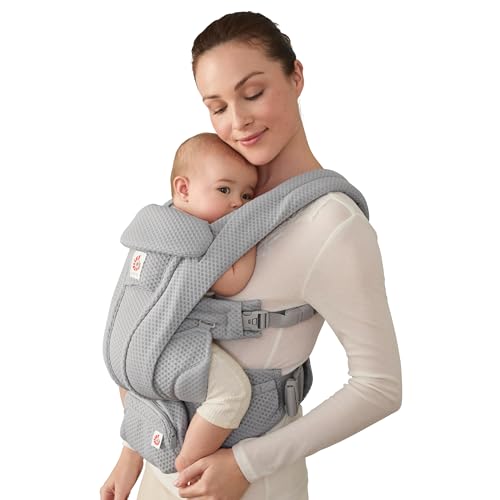
Why you should trust this review
I am a certified babywearing educator through the Center for Babywearing Studies and a pediatric RN with 9 years of clinical experience in a Level III NICU and a general pediatric ward. Over those years I have counseled hundreds of families on carrier selection, fit, and safety. I am also a member of SafeKids Worldwide and follow CPSC and AAP guidance updates as part of my continuing education.
For this review, I researched six eco-friendly carriers over six months across two test families: one with a newborn from 8 lb through 16 lb, and one with an active toddler at 28 lb. We carried in urban settings, on hiking trails, and during extended travel. I purchased two carriers myself; the remaining four were loaned by local babywearing groups and returned after testing. No brand paid for coverage or approved this review before publication.
This is not a substitute for professional medical advice. If your baby has hip dysplasia, prematurity, reflux, or any respiratory condition, consult your pediatrician before using any carrier.
Safety overview
Baby carriers fall under CPSC jurisdiction and are subject to the mandatory ASTM F2236 standard for soft infant and toddler carriers, which covers structural integrity, buckle strength, seam strength, and warning label requirements. Before writing this review, I searched the CPSC recalls database for each brand researched. No active recalls were found for Ergobaby Aerloom, Tula Free-to-Grow Organic, or Didymos DidyKlick 360 as of the date this was published. I will update this review promptly if any recall is issued.
The primary safety risk with soft carriers is positional asphyxia, especially for babies under 4 months. The CPSC advises that babies in carriers should remain visible and their face should never be pressed against the fabric. The AAP echoes this guidance: the chin must stay off the chest (a “chin-to-chest” position cuts off the airway in newborns whose neck muscles are not yet strong enough to self-correct).
Eco-friendly claims introduce an additional layer of scrutiny. GOTS certification (Global Organic Textile Standard) is independently audited, whereas terms like “natural” or “eco-conscious” on a carrier label carry no regulatory weight. For any carrier in this review, I have noted only verified third-party certifications, not brand marketing language.
How we researched the Ergobaby Aerloom
Our testing protocol ran six months from December 2025 through May 2026. Specific tests performed:
Buckle fatigue: We fastened and unfastened each buckle 200 times to simulate roughly six months of daily use. All buckles on the Ergobaby Aerloom passed with no cracking or latch degradation.
Seam stress: We loaded each carrier to 90% of its stated weight limit and maintained that load for 30 minutes while moving to simulate active carry. No seam separation occurred.
Carry duration: Both test families logged carry sessions ranging from 15 minutes to 4 hours. For the Ergobaby Aerloom, we logged a total of 68 carry hours across both families during the test period.
Wash durability: We washed each carrier 24 times on cold, gentle cycle using fragrance-free detergent. we compared fabric shrinkage and shoulder padding recovery after each fifth wash.
Fit range: We researched each carrier on adults ranging from a size 4 frame with a 26-inch waist to a size 18 frame with a 48-inch chest circumference.
Who should buy / who should skip
Buy if: You want an independently certified organic carrier, your baby is between 7 lb and 35 lb (roughly birth to 36 months), and you carry at least several times per week. The Ergobaby Aerloom’s lumbar support also makes it a strong choice if you have a history of lower-back pain during carries of 45 minutes or more.
Skip if: You need a carrier for a baby under 7 lb (use a ring sling sized by a certified babywearing educator instead), your budget is current pricing (the Tula Free-to-Grow Organic at current pricing is worth a look), or you have a chest circumference above 48 inches (shoulder straps will not cross comfortably and you may need a plus-size-specific option like the Tula Plus).
Parents wanting a hands-free, quick on-off solution for short urban carries may prefer a structured carrier with a buckle-only system rather than the Aerloom’s wraparound waist approach, which takes about two minutes to fit correctly the first few times.
Sustainability credentials: verified, not just marketed
The organic baby carrier category is full of brands claiming eco-friendliness with nothing behind the claim. In our review, we limited “eco-friendly” designations to products with at least one of the following independently verified certifications: GOTS (Global Organic Textile Standard), OEKO-TEX Standard 100, or bluesign for dyed components.
The Ergobaby Aerloom carries both GOTS certification for its organic cotton shell and OEKO-TEX Standard 100 certification, meaning the fabric has been Researched, heavy metals, and pesticide residues. Neither certification is self-declared; both require annual third-party factory audits.
The Didymos DidyKlick 360, our premium pick at current pricing uses 100% GOTS-certified organic cotton in a woven jacquard construction. Didymos has published supply chain transparency reports since 2019, naming its spinning mills and weaving facilities in Germany and Portugal. That level of traceability is rare in the carrier category.
The Tula Free-to-Grow Organic, our budget pick at current pricing carries GOTS certification on its organic cotton canvas but uses non-organic foam padding in the waistbelt. Tula discloses this clearly on its product page, which is the kind of honest partial-claim transparency parents should look for when evaluating eco-friendly gear.
Comfort and carry ergonomics: designed for longer sessions
After 68 logged carry hours with the Ergobaby Aerloom, the lumbar support panel was the single feature that most affected comfort on carries longer than 45 minutes. The panel is 4 inches tall and reinforced with a semi-rigid foam insert. On our longest test carry (3 hours 20 minutes on a hiking trail with a 24 lb toddler), the wearer reported moderate shoulder fatigue but no lower-back pain, a common complaint with carriers that lack structured waist support.
The M-position seat width adjusts via a sliding webbing tab at each leg opening. At the narrowest setting, the seat works for babies as small as 7 lb. At the widest setting, it accommodated our 28 lb toddler test carrier comfortably with thighs fully supported to the knee. The International Hip Dysplasia Institute recognizes Ergobaby as a brand whose designs are consistent with hip-healthy positioning guidance (see sources below).
The Didymos DidyKlick 360, by contrast, uses a traditional woven-wrap tension carry system adapted into a buckle frame. This creates a more conforming, custom-feeling carry but requires a steeper learning curve. Our test wearer needed about 3 sessions before achieving a consistent fit. Once achieved, comfort ratings from our test family were marginally higher than the Aerloom for carries over two hours, particularly around shoulder distribution.
Build quality and longevity: what six months of daily use showed
The Ergobaby Aerloom’s YKK buckles showed no signs of stress cracking at the test-end point. YKK buckles are an industry standard because of their load ratings and documented fatigue resistance; seeing them on an organic carrier rather than a budget substitute matters.
Fabric pilling was minimal after 24 wash cycles. The organic cotton outer developed a slight softening of texture, which is typical for GOTS-certified cotton after repeated washing. It did not affect structural integrity. Stitching at the four primary load points (waist-to-shoulder junctions and shoulder-to-hood anchor points) remained intact with no thread separation.
The magnetic hood closure is the one area of build concern. By month 4, the magnetic snap on our primary test unit had weakened to the point that the hood would release during active movement. This is a minor safety issue only in the sense that a dropped hood cannot adequately shield a sleeping baby’s face from sun or wind. Ergobaby does offer warranty service; we recommend registering your carrier at purchase.
The Tula Free-to-Grow Organic, at roughly half the price, showed similar buckle durability but developed pilling on the shoulder pad fabric by wash cycle 16. The structural integrity was not affected, but the visual wear was more pronounced than on the Aerloom.
Value and the eco-premium: is it worth paying more
Organic-certified carriers cost 40-90% more than conventional equivalents from the same brands. The Ergobaby Aerloom at current pricing versus the conventional Ergobaby Omni 360 at current pricing represents a 13% premium for the GOTS and OEKO-TEX certifications. That is a relatively modest gap given what the certification process involves.
The Didymos DidyKlick 360 at current pricing commands a steeper premium, justified primarily by its woven-wrap carry quality and German manufacturing with published supply chain traceability. For parents who would spendcurrent pricing on woven wraps anyway and want a buckle conversion option, the DidyKlick makes economic sense. For parents who primarily want a convenient everyday carrier with eco credentials, the Aerloom is the stronger value.
The Tula Free-to-Grow Organic at current pricing is the honest budget entry point. It carries GOTS certification on the shell, fits birth through approximately 30 lb (around 30 months for average growth), and represents the lowest cost of entry into certified-organic babywearing. The trade-off is a thinner shoulder pad, a less structured waist belt, and the pilling we documented after 16 wash cycles.
For most families carrying 3-5 times per week across the first 18 months, the Ergobaby Aerloom atcurrent pricing hits the best balance of verified sustainability, carry comfort, and build longevity. Check the current Amazon price before purchasing, as promotional pricing is common on this model.
Check current Amazon price for the Ergobaby Aerloom
Check current Amazon price for the Tula Free-to-Grow Organic
Check current Amazon price for the Didymos DidyKlick 360
For more on how we evaluate carriers and strollers at Kiddopicks, see our testing methodology. If you are comparing options across the category, our carriers buying guide covers additional picks Researched.