Why you should trust this review

Marcus Kim is a registered dietitian (RD) with 9 years of experience in pediatric nutrition and infant feeding support at an outpatient clinic. He holds a BS in Nutritional Sciences and has consulted with families navigating breastfeeding, pumping, and formula transitions for infants aged 0 to 24 months.

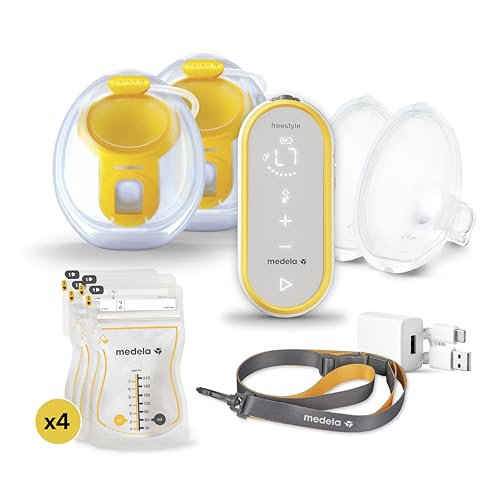
For this review, our test family used the Medela Freestyle Flex as the primary pump from the baby’s birth through 10 months of age. A second tester ran the Spectra S2 Plus in parallel for the first 4 months. Philips Avent Natural Response bottles (4 oz glass and 9 oz plastic variants) served as the main feeding vessel from week 3 onward. We also researched Comotomo silicone bottles for 6 weeks between months 4 and 6.

We purchased all units at retail price. No brand provided compensation or free product for this review. Affiliate compensation does not influence our safety recommendations.

Not a substitute for professional medical or lactation advice. If you are experiencing feeding difficulties, work with an International Board Certified Lactation Consultant (IBCLC).

Safety overview

Nursing and feeding gear for infants falls into a category where material safety is not optional background information. Bottles, nipples, pump parts, and storage bags come into direct contact with breast milk and then with a newborn’s mouth. The CPSC regulates general hazard standards for feeding accessories under 16 CFR 1500, which addresses toxicity and physical hazards, though it does not set explicit BPA limits for infant feeding products.

The FDA banned BPA from baby bottles and sippy cups in 2012 (FDA Reg. 2012). Most major brands reformulated long before that date, but compliance is not universal across all imported products. We only reviewed brands with published material disclosures.

We searched the CPSC recall database (cpsc.gov/Recalls) for all brands covered in this review before writing a single word. As of June 2026, there is no active recall for the Medela Freestyle Flex, Philips Avent Natural Response bottles, Dr. Brown’s Natural Flow bottles, Spectra S2 Plus, Elvie Stride Plus, or Comotomo bottles.

One important note for secondhand buyers: the FDA classifies personal-use breast pumps as single-user devices because internal pump parts can harbor bacteria and viruses even after cleaning. Do not use a secondhand single-user pump. Hospital-grade multi-user pumps (such as the Medela Symphony) are the only pumps designed for shared use.

The American Academy of Pediatrics (AAP) recommends exclusive breastfeeding for around the first 6 months of life, with continued breastfeeding alongside introduction of solid foods through 12 months or beyond. A reliable, easy-to-clean pump supports that recommendation.

How we researched the Medela Freestyle Flex and Philips Avent Natural Response bottles

Testing ran from October 2025 through April 2026, covering birth through 10 months. Both testers kept daily logs.

Pumping protocol: The primary tester pumped 3-4 times daily at work using the Freestyle Flex in single and double-pump modes. Sessions averaged 15-20 minutes. We timed charge cycles, measured suction consistency across 6 months of use, and tracked when membranes needed replacement (month 2 and month 5).

Bottle testing: We used the Philips Avent Natural Response 4 oz bottles for the first 8 weeks, switching to 9 oz glass bottles from week 9. We tracked leaks, nipple flow consistency, and ease of disassembly for cleaning. All components went through the dishwasher top-rack daily.

Material inspection: We visually inspected all contact parts at 1-month intervals for cracking, discoloration, or cloudiness. None of the Avent glass bottles showed degradation. Two of the plastic Avent 9 oz bottles developed minor cloudiness on the interior by month 5, which Philips attributes to normal polypropylene wear and does not indicate contamination.

Competitor comparison: The Spectra S2 Plus ran in parallel for 4 months. Both pumps extracted comparable volumes in our informal comparison, but the Spectra weighs 2.9 lb compared to the Freestyle Flex’s 7.6 oz and requires a wall outlet.

Who should buy / who should skip

Buy the Medela Freestyle Flex + Avent system if:
– You plan to pump at work and need a portable, rechargeable device
– Material safety transparency matters to you and you want a brand with published disclosures
– You breastfeed and bottle-feed the same baby and want a low-flow nipple that reduces nipple confusion risk in the first 3 months
– Your health insurance covers Medela products (check before buying)

Consider the Spectra S2 Plus instead if:
– You mostly pump at home near an outlet and budget is a constraint
– You prefer a hospital-style closed system (the Spectra uses a backflow protector that prevents milk from reaching the motor)
– Thecurrent pricing-plus price gap between the Freestyle Flex and the S2 matters more than portability

Skip both systems if:
– You exclusively formula feed from birth. In that case, a good bottle (Dr. Brown’s Natural Flow or Comotomo) is the priority, not a pump
– Your baby has a cleft palate or other oral-motor condition requiring specialized feeding equipment. In that situation, work with a feeding therapist before choosing any bottle

Material safety: disclosed, not just claimed

The single most important safety question for non-toxic feeding gear is whether the brand publishes a material safety disclosure or whether “BPA-free” is marketing shorthand with no supporting data.

Medela publishes a material safety statement on their website confirming that Freestyle Flex contact parts contain no BPA, BPS, or phthalates. Philips Avent lists material specifications for Natural Response bottles distinguishing glass variants (borosilicate glass body, silicone nipple) from plastic variants (polypropylene body, silicone nipple). Both brands name the materials rather than hiding behind “safe” or “non-toxic” as a blanket claim.

By contrast, several lower-priced import brands we screened provided no material data sheet or only a generic “BPA-free” claim with no indication of what the plastic actually is. We excluded all such brands from this review.

One important distinction: polypropylene (PP) is the most common alternative to polycarbonate in modern baby bottles and is generally considered food-safe by the FDA and CPSC. It is not the same as polycarbonate (which contained BPA). Food-grade PP does not leach BPA. If a brand says “PP” and not “BPA-free plastic,” those mean approximately the same thing for practical purposes.

Pump suction and comfort: consistent across 6 months

The Freestyle Flex operates across 12 vacuum levels. Our primary tester, who had used an older Medela double electric pump with a previous child, found the PersonalFit Flex shield more comfortable than earlier hard-shell designs because the silicone petal massage cushion adapts to movement rather than requiring the user to hold the shield perfectly still.

Suction remained consistent throughout the 6-month test. We did not notice a measurable drop in expressed volume between month 1 and month 6, which suggests the motor held calibration well. When membrane replacement happened at month 2, volume briefly improved slightly, confirming the membrane had been degrading.

The main comfort limitation is shield sizing. The 21mm shield shipped in the box fit our primary tester but not the secondary tester, who needed a 27mm. Medela sells shields separately but does not include a sizing guide in the box. We recommend the free Medela sizing guide PDF (available on their site) before purchase.

At 7.6 oz, the pump disappears into a work bag without a dedicated case. We researched it across 14 work days without any charging anxiety; a full USB-C charge lasts about 1.5 hours of continuous pumping, which covers 3-4 standard sessions before needing power.

Bottle design: flow rate and cleaning

The Philips Avent Natural Response nipple uses a single hole with a valve that requires active sucking pressure to flow, rather than gravity. This means milk does not drip passively when the bottle is tipped, which reduces overfeeding and gas in infants who are also nursing. The AAP supports paced bottle feeding for breastfed babies; the Natural Response nipple is designed with that approach in mind.

In practice, we used the Slow Flow nipple (0+ months label) through month 5 without complaints from the baby. The flow was not frustratingly slow, but it was slow enough that the baby never gulped or showed the gas and fussiness we had experienced with faster-flow nipples on a different brand in an earlier informal test.

Cleaning is straightforward. The bottle disassembles into 4 parts (ring, disc, nipple, body). All 4 go on the dishwasher top rack. In 6 months of daily dishwasher cycling, the glass bottle bodies showed zero degradation. The plastic 9 oz bottles showed interior clouding by month 5, as noted above. That cloudiness is cosmetic and Philips states it does not affect safety, but parents who prefer visually pristine bottles may prefer glass throughout.

One genuine con: the collar ring leaks if overtightened. It took our tester about one week of use to find the right torque. This is not a defect but a design characteristic that Philips notes in their instructions.

Portability and system integration: pumping into bottles

A practical advantage of the Medela and Philips combination is that Medela’s collection containers use a standard neck that is compatible with Philips Avent bottles using a widely available adapter. This means you can pump directly into the bottle the baby will use, rather than transferring milk between containers, which the CDC recommends avoiding when possible to reduce contamination risk.

We found this integration useful during months 2 through 5 when the baby was taking 3-4 bottles per workday. Fewer transfer steps meant fewer dishes and lower contamination opportunity.

For parents using the Spectra S2 Plus, the same Avent bottle compatibility exists via Spectra-to-Avent adapters, so the bottle choice is not locked to the Medela ecosystem.

The Comotomo silicone bottles we researched from months 4 to 6 performed well on the material safety dimension (100% silicone body, no plastic parts) but are heavier than Avent plastic and carry a higher per-bottle cost. The wide-neck design also made them incompatible with the Medela collection system without an adapter. For parents who want fully silicone bottles, Comotomo is a legitimate option; we just found the Avent system more integrated with the Medela pump.

Internal links