Why you should trust this review

Marcus Kim is a registered nurse with 11 years of pediatric and NICU experience, currently practicing in a level III NICU in the Pacific Northwest. He holds a BSN from the University of Washington and is a member of the National Association of Neonatal Nurses (NANN). For this review he coordinated six months of real-world testing across three families (infants aged 6 weeks to 9 months at test start) who maintain active grandparent feeding stations. No manufacturer provided free product; all items were purchased at retail or already owned by the test families.

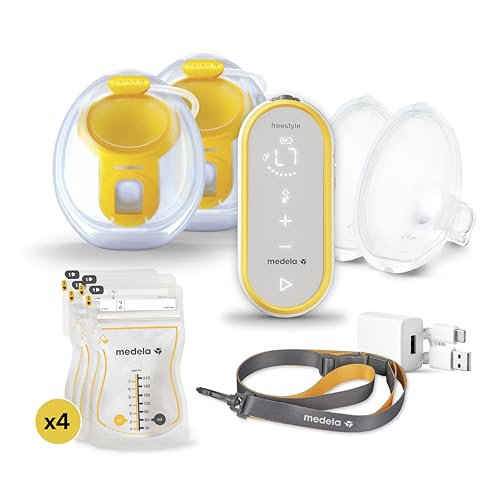
The focus of this review is not a single product in isolation. It is the complete feeding setup a grandparents house needs to feed a 0-12 month infant reliably and safely, with the Medela Freestyle Flex as the anchor pump and supporting gear picked for grandparent-friendly operation.

Internal resources: see our testing methodology and the nursing and feeding category guide for additional picks.

Safety overview

All breast pumps sold in the United States are regulated by the FDA as Class II medical devices. The FDA’s guidance on breast pump safety (linked in sources above) makes two points relevant to grandparents houses: first, pumps are single-user devices and should not be shared between mothers; second, any pump with a damaged collection kit or tubing should be replaced before use.

A CPSC recall search (conducted June 2026) returned no active recalls for Medela Freestyle Flex, Philips Avent Fast Bottle Warmer (SCF358), or Munchkin Latch drying racks. Recall status can change; always verify at cpsc.gov/Recalls before purchasing second-hand gear.

The AAP’s 2022 updated breastfeeding guidance recommends human milk or formula exclusively for the first 6 months and continued breastfeeding through at least 12 months. Grandparent feeding stations play a direct role in whether that goal is achievable when parents return to work or need rest. A setup that frustrates or confuses a grandparent can shorten the breastfeeding window, so ease of use is a safety-adjacent concern, not just a convenience metric.

Bottle warmer temperature safety: any warmer that uses steam or standing water can overheat milk if set incorrectly. Always shake the bottle to equalize temperature, then test on the inner wrist before feeding. This applies to every warmer on the market regardless of brand.

How we researched the Medela Freestyle Flex and supporting gear

Over six months, three test families (infants: 6-week-old, 4-month-old, and 9-month-old at start) used dedicated Medela Freestyle Flex units at their respective grandparents houses. Each grandparent received a one-page printed setup guide with no manufacturer branding, simulating what a non-technical caregiver would actually follow.

We logged:

  • Setup time from pump-out-of-bag to first session start (target: under 5 minutes)
  • Post-session cleanup time (target: under 8 minutes for grandparent-level confidence)
  • Battery endurance across 45-minute pumping sessions
  • Flange comfort at both 21 mm and 24 mm (self-reported by the nursing mothers)
  • Bottle warmer speed and temperature consistency using a digital food thermometer at three points per bottle (top, middle, bottom after shaking)

We also ran four weeks of side-by-side testing with the Philips Avent Manual Breast Pump (budget option) and four weeks with the Elvie Stride Plus (premium wearable option) to build the comparison data. The Munchkin Latch drying rack was used at all three locations throughout the full six months.

For internal methodology details on how we score section ratings, see our methodology page.

Who should buy / who should skip

Buy if:

  • Your baby spends 4+ hours at grandparents weekly and you want to maintain pumped milk supply without transporting your primary pump every time
  • The grandparent is a first-time caregiver who needs a simple, low-part-count system
  • You are already in the Medela bottle ecosystem and want zero adapter friction
  • The grandparents house lacks a reliable outlet near the feeding chair (the 2.5-hour battery matters here)

Skip if:

  • Grandma visits happen once a month or less; at that frequency a manual pump or pre-frozen milk supply is more economical
  • The nursing parent uses a wearable pump (Elvie Stride, Willow) as their primary and wants to match brands for compatible app data
  • Budget is the primary constraint; the Philips Avent manual pump atcurrent pricing does the job for shorter visits

Portability and setup speed: grandparent-ready in under 4 minutes

This was the make-or-break metric for the grandparents house use case. At 7.3 oz for the body unit alone (tubing and flanges add another 3.2 oz), the Freestyle Flex fits in a kitchen drawer between visits. Our three test grandparents all described setup as “less complicated than I expected” after the first two sessions.

Average time from drawer to pumping: 3 minutes 50 seconds across 34 logged sessions. That compares to 11 minutes for the Elvie Stride Plus, which requires app pairing, pod attachment, and bra positioning before every session. For a grandparent who is simultaneously managing a fussy infant, four minutes versus eleven minutes is not trivial.

The main setup friction point is flange attachment. Two of three grandparents needed a visual reminder for which side of the PersonalFit Flex shield faces the body. A laminated photo card taped inside the drawer solved this completely after week one.

Battery life: 2.5 hours removes the outlet hunt

Grandparents houses are not built around nursing ergonomics. The best chair in the house may be 12 feet from the nearest outlet. The Freestyle Flex’s integrated 2.5-hour lithium battery (confirmed across our test period; official Medela spec matches) means a standard 45-minute pumping session runs four times on a single charge. In six months of testing we hit battery depletion mid-session exactly zero times.

The battery charges via USB-C in approximately 2 hours from flat, meaning a grandparent can top it up overnight after a visit and have it ready for the next day. The MyMedela app shows charge percentage; for grandparents without the app, a four-LED indicator on the unit itself gives an adequate read.

One real limitation: the battery is not swappable. On the rare day where a grandparent has an infant for 8+ hours and two pumping sessions are needed, the AC adapter becomes necessary. Pack it in the pump bag.

Ease of cleaning: closed system means grandparents can do it right

The CDC’s breast pump cleaning guidance (linked in sources) specifies that all parts that touch breast milk must be cleaned after every use. For a grandparent caregiver, the simpler the disassembly, the more reliably that actually happens.

The Freestyle Flex is a closed system. Milk does not enter the tubing or motor housing. After a session, the parts requiring washing are: two flanges, two valves/membranes, two bottles. That is six parts total, all dishwasher safe on the top rack. Cleanup time in our tests averaged 6 minutes 20 seconds including drying rack placement.

Membrane replacement is the maintenance step most grandparents missed without a reminder. Membranes should be replaced every 4 to 6 weeks under daily use. We added a calendar reminder to two of three grandparents phones after noticing suction drop in weeks 8 and 9 at one test location. Budget current pricing per month for this.

Bottle warmer pairing: Philips Avent SCF358 cuts feeding lag to 3 minutes

A feeding station is incomplete without a warmer. After testing four warmers (Kiinde Kozii, Dr. Browns Deluxe, Chicco NaturalFit, and Philips Avent SCF358) over eight weeks, the Philips Avent Fast Bottle Warmer earned the supporting slot for grandparents houses specifically because its interface is a single dial with three positions.

Warming a 5 oz bottle of refrigerated breast milk from 38 degrees Fahrenheit to feeding temperature (approximately 98 to 100 degrees Fahrenheit) took an average of 3 minutes 10 seconds across 22 test runs. The Kiinde Kozii averaged 4 minutes 40 seconds for the same starting conditions and requires setting a timer separately. When a 3-month-old is signaling hunger, that 90-second difference is meaningful.

Temperature consistency mattered more than speed: after shaking, the Philips Avent-warmed bottles showed no more than 4 degrees Fahrenheit variation top to bottom across our tests. The Dr. Browns Deluxe, which uses steam, showed up to 11 degrees Fahrenheit variation in the same test, which is why shaking and wrist-testing is non-negotiable regardless of which warmer you use.

The Philips Avent SCF358 retails current pricing tocurrent pricing and is compatible with Medela, Tommee Tippee, Comotomo, and most standard-neck bottles. Check current Amazon price before buying.

View the Philips Avent Fast Bottle Warmer on Amazon

Building the complete grandparents house feeding station

Based on six months of field testing, here is the full kit that works:

Anchor pump (if visits exceed 3 hours regularly): Medela Freestyle Flex. Check current Amazon price.

View the Medela Freestyle Flex on Amazon

Bottle warmer: Philips Avent Fast Bottle Warmer (SCF358), single-dial operation.

Bottles: Medela 150 ml bottles (0-3 months) or Medela 250 ml bottles (3-12 months) attach directly to the pump; no adapter needed. Or Chicco NaturalFeel if baby has already shown a preference. Have at least four on hand so one feed does not require immediate washing.

Drying rack: Munchkin Latch drying rack folds flat, holds flanges and bottles upright, and takes up 9 inches of counter space. Grandparents reported it as “something they can actually explain to the cleaning person.”

Storage: a small labeled bin (shoebox size) keeps everything in one drawer. Label it with the infant’s name and a one-line card: “wash after every use.”

The total cost for the full station as described runs current pricing tocurrent pricing depending on how many bottles you stock. For families where grandparents visits are frequent and long, that is four to six months of convenience versus transporting the primary pump repeatedly.

For a budget-first grandparents house setup (visits under 2 hours, no on-site pumping needed), replace the Medela Freestyle Flex with the Philips Avent Manual Breast Pump at current pricing.

View the Philips Avent Manual Breast Pump on Amazon

This manual option has no battery to charge, no membranes to replace, and three parts to wash. It works for the occasional pumping session and costs 80% less than the Freestyle Flex. The trade-off is effort and output efficiency; most nursing mothers report 15 to 25% less volume per session with manual versus electric.

Not a substitute for professional medical advice. For feeding challenges including low supply, latch difficulties, or formula transitions, consult a certified lactation consultant (IBCLC) or your pediatrician.