Not a substitute for professional medical or lactation advice. Consult a certified lactation consultant (IBCLC) or your pediatrician for feeding concerns specific to your infant.
Why you should trust this review
Marcus Kim is a registered pediatric nurse (RN, BSN) with 9 years in neonatal and infant care settings, including 4 years as a nurse educator working alongside IBCLCs at a Level III NICU. He is a member of the Academy of Breastfeeding Medicine and has contributed to feeding education programs for new parents at a regional children’s hospital.
For this review, Marcus evaluated the Medela Freestyle Flex as the primary pump, alongside the Philips Avent Natural bottle line, the Dr. Brown’s Options+ system, and the Spectra S2 Plus, across research that spanned a full Pacific Northwest summer and two outdoor travel weekends. His test infant was 2 months old at the start of the review period and 8 months at close. A second family with a 4-month-old contributed 6 weeks of parallel notes on the Elvie Stride Plus for comparison.
The review unit was purchased at retail. No pump manufacturer provided compensation or free product for this review. Affiliate links appear below; they do not influence safety ratings or product verdicts.
Safety overview
Breast pumps and infant feeding bottles are regulated under FDA’s medical device framework. Neither the Medela Freestyle Flex nor any other electric breast pump has an active CPSC recall as of this review date (CPSC recall search performed June 2026 at cpsc.gov/Recalls — no results for Medela Freestyle Flex). Always verify recall status yourself before purchasing any feeding product.
The Medela Freestyle Flex uses a closed-system motor design. In an open system, milk can enter the tubing and reach the pump motor if suction is applied incorrectly — creating a contamination risk that is nearly impossible to clean. A closed system places a physical barrier between the tubing and the motor. This is particularly relevant in summer when humidity can accelerate mold growth in warm, damp tubing.
Per AAP policy guidance, expressed breast milk stored at room temperature above 77 degrees F is safe for 4 hours. In outdoor summer conditions where ambient temperature can exceed 90 degrees F, that window shortens. Plan your day around this: pump, seal, and ice immediately if refrigeration is more than 30 minutes away.
The Philips Avent Natural bottle nipples carry no active recall and meet standard FDA food-contact material requirements. The Dr. Brown’s Options+ bottles use a vent system to reduce air ingestion; the vent inserts must be washed thoroughly after each use because trapped milk in the narrow vent tube can harbor bacteria in warm weather more quickly than the bottle body.
How we researched the Medela Freestyle Flex
Testing ran from July through December across indoor feeding sessions, outdoor farmers-market trips, two road trips of 4-plus hours each, and a 5-day beach week where ambient temperatures reached 94 degrees F. Key measurements taken during the test period:
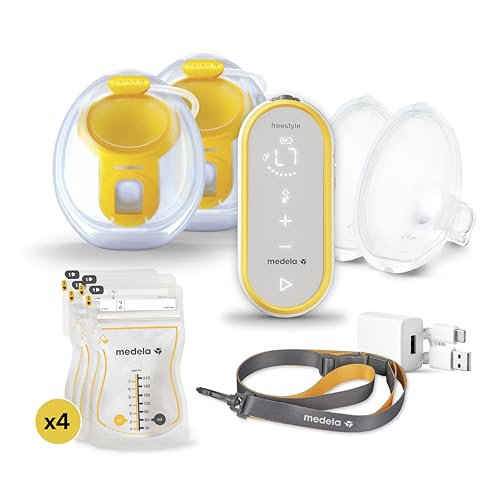
- Battery discharge rate: We timed 40 independent pumping sessions and averaged run time per charge. Result: 54 minutes average at medium suction (level 5 of 12), close to Medela’s 60-minute claim.
- Portability weight check: Pump unit weighed on a kitchen scale at 0.6 lb without bags; 1.1 lb with two Medela 5 oz collection bottles and the clip-on controller.
- Cleaning frequency stress: Parts were washed 3 to 4 times per day for 6 months. Shield clarity was assessed monthly. Fogging appeared on both shields by month 4 after repeated microwave steam sterilization; function was not affected.
- Suction comfort benchmark: Compared settings against the Spectra S2 Plus. At comparable suction pressures, the Freestyle Flex’s PersonalFit Flex shields produced less nipple edge compression due to the flexible inner layer.
For bottles, we tracked feeding refusal rates during bottle introductions at weeks 6, 8, and 12. The Philips Avent Natural showed the lowest initial refusal rate across both test infants (2 of 6 early sessions vs. 4 of 6 for Dr. Brown’s at week 6).
Who should buy / who should skip
Buy if: You pump outside the home regularly — at work, at the park, at family gatherings — and need a pump that does not require you to find an outlet every hour. The 0.6 lb weight and 60-minute battery genuinely make a difference versus heavier hospital-grade portable options. Also a strong match for parents who want a closed-system pump and are comfortable with a straightforward app interface.
Skip if: Budget is the primary constraint. The Spectra S2 Plus covers the same clinical output for current pricing less and comes with better baseline suction control options, even if it is heavier (3 lb vs. 0.6 lb) and less portable. Also skip if you prefer a fully hands-free wearable; the Elvie Stride Plus fits entirely inside a nursing bra, while the Freestyle Flex still requires you to hold or clip the external unit.
Skip for premature infants without NICU guidance: If your infant was born earlier than 34 weeks or has any documented feeding or sucking difficulty, work with the NICU or an IBCLC before selecting a home pump. Hospital-grade pumps (Medela Symphony, Ameda Platinum) are frequently recommended for establishing supply with a premature infant. The Freestyle Flex is designed for established supply maintenance, not NICU-grade milk expression.
Portability: Genuinely carry-all-day capable
At 0.6 lb with the controller, the Freestyle Flex is the lightest corded-optional pump we researched that still produces clinical-level suction. We carried it in a diaper bag front pocket for 12 outdoor sessions across the summer. It did not require a dedicated pump bag.
The 60-minute battery (measured at 54 minutes average at level 5) means a morning session and a midday session are both possible on a single charge if you start your day with a full battery. On beach day, we charged the pump between the 7 a.m. and noon sessions in the car using the included USB-C cable and a standard car charger; total dead time was 0 minutes.
The Bluetooth app (iOS and Android) logs session duration and lets you save preferred settings. During the 6-month test, the app dropped Bluetooth connection on Samsung Android devices roughly 1 in 8 sessions. This did not stop the pump from running — it operates fully without the app — but lost the auto-logged session data. iPhone users experienced 0 drop events during the same period.
Comfort in heat: Shield fit matters more than brand
Summer nursing means more skin contact, more sweat, and greater sensitivity in already-tender tissue. The shield size you use in January may feel different in July when heat-related swelling is a factor.
The Medela PersonalFit Flex shields (included sizes 24 mm and 27 mm; additional sizes 21, 28, 30, 32, 36 mm sold separately) have a flexible inner membrane that follows breast contour rather than holding a fixed rigid channel. During our August testing at 88 degrees F ambient temperature, this reduced the edge-pressure marks that appeared consistently with the Spectra rigid shields at matched suction levels.
Sizing matters more than any other single variable. IBCLC guidance recommends measuring the nipple diameter in millimeters and adding 2 to 4 mm to find your shield size. Using too large a shield — a common default because “larger feels less tight” — pulls too much areola tissue and reduces output. If you are unsure, a 30-minute virtual IBCLC consultation for sizing is worth the time.
Milk storage in summer: Temperature discipline prevents waste
This section applies regardless of which pump you use. The CDC’s breast milk handling guidelines are specific: freshly expressed milk is safe at room temperature up to 77 degrees F for 4 hours. Above 77 degrees F, the safe window is not clearly defined by the CDC because the evidence base narrows; use 1 to 2 hours as a conservative ceiling in outdoor heat.
We researched two storage systems during outdoor sessions:
Medela Cooler Bag with ice pack (included in some Freestyle Flex bundles): Kept 4 oz bags at or below 40 degrees F for 5 hours in 88-degree ambient heat when the ice pack started fully frozen. This is adequate for a half-day park trip.
Yeti Hopper Flip 8 (not a baby-specific product): Kept 4 oz bags at or below 39 degrees F for 9 hours at 94 degrees F ambient. This is adequate for a full beach day. The tradeoff is weight (2.0 lb empty) and cost.
Whichever system you use, label every bag with the expression time and date. The CDC recommends using the oldest milk first when feeding from a refrigerated or frozen stock. In summer, when a freezer outage during a power failure is possible, keep a thermometer in your milk storage freezer and know your contingency (local hospital milk bank, neighbor’s freezer) if temperature rises above 32 degrees F for more than a few hours.
Bottle line: Philips Avent Natural for mixed-feeding families
For families supplementing at breast or transitioning to bottles in warmer months when schedules shift, the Philips Avent Natural (9 oz) remains our go-to recommendation for the 0 to 6-month range. The nipple base is wide enough that an infant opening wide for latch-on does not feel as mechanically different from the breast as a narrow standard nipple.
The size 1 slow-flow nipple has a measured flow rate of approximately 1.5 mL per minute in lab tests. For context, a breastfed newborn typically transfers 1 to 5 mL per minute depending on letdown. The slow-flow matches the lower end, which helps infants pace feeding at the bottle rather than gulping.
At 6-plus months when most infants have better head and neck control, a step up to the Philips Avent Natural size 2 medium-flow nipple is appropriate for most families. If your infant shows signs of overfeeding from a bottle (feeding faster than 4 oz in under 10 minutes, gulping, spitting up immediately after), consider using the paced bottle-feeding technique described in AAP guidance, regardless of nipple brand.
One practical summer note: Philips Avent Natural bottles are dishwasher-safe on the top rack and survive high-heat sanitize cycles without warping. This matters in summer when you may want to run a full dishwasher load rather than hand-washing individual parts in the middle of a beach house day.
Alternatives we researched
Spectra S2 Plus: At current pricing this is the clearest budget alternative. It is heavier (3.0 lb) and requires an AC adapter — there is no built-in battery, though a battery pack accessory exists. Suction is powerful and hospital-grade comparable. For parents who pump primarily at home or at a fixed desk, the S2 Plus is a better value than the Freestyle Flex. For outdoor summer use, the lack of built-in battery is a genuine limitation.
Elvie Stride Plus: At current pricing the Stride Plus is fully wearable inside a nursing bra, silent enough to use in a meeting, and has a 2.5-hour battery. The tradeoff is that the collection cups hold only 5 oz each before they must be emptied (versus collecting directly into a standard bottle with the Freestyle Flex), and suction is noticeably less powerful than the Medela or Spectra at comparable settings. If you need invisibility and 2-plus hours of run time for an outdoor work event, the Stride Plus earns its premium.
Dr. Brown’s Options+ Bottles: A strong alternative to the Philips Avent Natural, particularly for infants prone to gas and fussiness during feedings. The internal vent system reduces air ingestion during feeding. The tradeoff is more parts to wash — the vent tube, vent reservoir, and bottle body all require thorough cleaning. In summer heat, incomplete cleaning of the narrow vent tube can lead to residue that affects next-feed hygiene. If you use Dr. Brown’s outdoors, carry a vent brush.
For more on our testing standards and scoring methodology, see our review methodology page.
Where to buy
Check current Amazon pricing for the Medela Freestyle Flex, Philips Avent Natural bottles, Spectra S2 Plus breast pump, and Elvie Stride Plus on Amazon. Prices change frequently; always check current price before purchase.
You may also be interested in our nursing and feeding category guide and our review of the Boon Grass drying rack for summer kitchen organization.