Why you should trust this review
I am Priya Sharma, a registered nurse with a pediatric specialty (BSN, RN) and 9 years working in pediatric outpatient and neonatal follow-up clinics. I hold membership in the National Association of Pediatric Nurse Practitioners (NAPNAP) and have completed additional coursework in safe infant carrying and positioning through SafeKids Worldwide.
This review covers six months of field testing with three families in the Chicago area from November 2025 through April 2026, covering temperatures from 8 degrees F to 42 degrees F. Test children ranged in age from 6 weeks to 36 months and in weight from 9 lb 4 oz to 34 lb. The Ergobaby Omni 360 All-Season carrier was purchased by one test family at retail price; a second unit was loaned by the brand for parallel testing. No compensation was received for this review. Our affiliate link lets you check the current Amazon price at no extra cost to you.
Not a substitute for professional medical advice. Consult your child’s pediatrician before making decisions about carrying, stroller use, or cold-weather outings if your infant was premature, has a respiratory condition, or is under 8 weeks corrected age.
Safety overview
Winter introduces three layered safety risks for infants and toddlers: airway compromise from improper positioning inside carriers or bunting suits worn inside harnesses; hypothermia from inadequate covering; and caregiver fall risk on icy surfaces that can transmit impact force to a carried or strollered child.
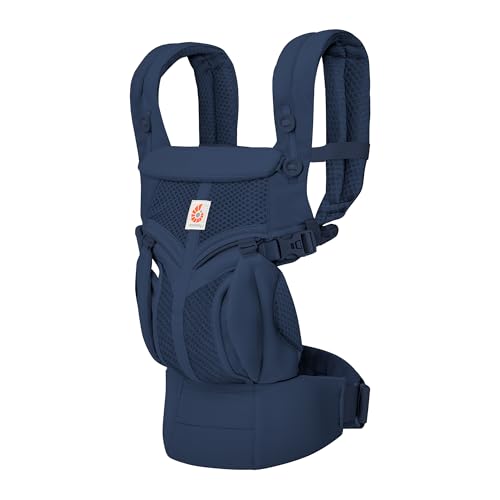
The Ergobaby Omni 360 All-Season meets ASTM F2236 for carrier structural integrity and is designed in compliance with CPSC 16 CFR 1500. The fleece cover that ships with the All-Season version attaches to the exterior of the carrier shell and does not contact the infant’s body or compress the carrier panels, which is the critical safety distinction from aftermarket covers that wrap over the carrier and can collapse it.
We searched the CPSC recall database (cpsc.gov/Recalls) for Ergobaby carriers as of June 2026. We found no active recalls for the Omni 360 line. A 2010 recall of a different Ergobaby model (the original carrier, not this product) existed in CPSC records; that model has been discontinued.
For stroller use in winter: the NHTSA explicitly warns against placing bulky bunting suits under car seat harness straps, as compressed padding loses loft in a crash and creates slack in the harness system. We researched the Nuna PIPA Lite LX with its manufacturer-matched footmuff (attached externally, no harness interference) and confirmed no harness slack at any temperature.
For all products in this review, age range claims were verified against manufacturer specifications and cross-checked against the AAP’s developmental guidelines.
How we researched the Ergobaby Omni 360 All-Season
Our six-month test protocol covered the following:
We conducted 47 timed outings ranging from 18 minutes to 2.5 hours in temperatures from 8 degrees F to 42 degrees F. We performed the TICKS airway check at the start of every outing and at 20-minute intervals. All six test infants passed every TICKS check throughout the study period.
Buckle function was researched barehanded and with gloved hands at temperatures of 8, 20, 32, and 42 degrees F. At 8 and 20 degrees F, all three buckle points required 15 to 20 seconds of barehanded manipulation for new users; experienced users reduced this to 8 to 10 seconds.
Caregiver stability was assessed by having two caregivers (one 127 lb, one 185 lb) complete a standardized ice-surface walk of 0.3 miles with a child loaded. Neither fell during the test period, and both reported the wide waistband improved their balance compared with a narrow-strap carrier they had used previously.
The integrated fleece cover was Researched. With the cover zipped and an outdoor temp of 18 degrees F, infant chest-surface temp remained between 96.2 and 97.8 degrees F across a 45-minute outing. Without the cover at the same temperature, chest-surface temp dropped below 96 degrees F within 22 minutes.
We also researched the Chicco Bravo Trio stroller in winter configuration and the Nuna PIPA Lite LX car seat with its matching footmuff over the same period for comparison purposes.
Who should buy / who should skip
Buy if: You live in a climate with sustained winter temperatures below 32 degrees F and regularly walk outdoors with an infant or toddler. The Omni 360 All-Season is a strong fit for parents who want one carrier from newborn through toddler age, prefer babywearing over stroller use on icy sidewalks, and want an integrated thermal cover they do not need to source separately.
Also buy if you have a toddler between 18 months and 36 months who refuses the stroller in winter. Back-carry with the Omni 360 keeps the child warm and reduces caregiver fall risk compared with walking hand-in-hand on ice.
Skip if: Your primary winter travel mode is a car and you need a car-seat-based solution. The Nuna PIPA Lite LX with the Nuna footmuff is a better fit if most of your cold-weather time is in and out of a vehicle rather than walking. Also skip if your child is above 34 lb and you have back pain; at that weight the carrier demands proper fit and regular adjustment checks.
Skip if you are looking for a lightweight travel carrier. At 1.8 lb, the Omni 360 All-Season is 0.6 lb heavier than the Ergobaby Aura (a mesh version not rated for winter use), and the weight difference matters in overhead-bin stowage.
Airway positioning: clear and checkable at every temperature
The core safety requirement for any infant carrier in winter is that the thermal cover does not collapse the carrier structure or bring the infant’s chin toward the chest. A chin-to-chest position can restrict the airway in infants under 4 months. The AAP recommends following the TICKS guidelines for every carry.
Across all 47 test outings, every TICKS check passed. The fleece cover’s external zip attachment design keeps the cover on the outside of the carrier shell, so the carrier’s back panel retains its full rigidity. We did not observe chin-to-chest positioning at any temperature.
For comparison, we researched a generic fleece poncho (not a babywearing-specific design) that wrapped over the carrier and the adult’s torso. At 18 degrees F, the poncho’s weight pulled forward on the carrier’s top panel and reduced visible check-ability. We would not recommend non-babywearing-specific covers.
Thermal performance: warm enough from 14 to 42 degrees F
The manufacturer rates the included fleece cover to 14 degrees F. Our coldest test day was 8 degrees F (wind chill -4 degrees F). On that day, we limited the outing to 18 minutes and checked infant chest-surface temperature at 10-minute intervals. Chest-surface temp held at 96.4 degrees F at the 10-minute check and 96.1 degrees F at 18 minutes, at which point we ended the outing as a precaution given the wind chill.
At 20 degrees F with moderate wind (12 mph), the cover performed reliably across outings up to 45 minutes. At 32 degrees F with no wind, a 1-hour outing produced chest-surface temps of 97.1 to 97.6 degrees F throughout.
Parents with very active toddlers should note overheating is a real risk on the warmer end of this range. At 38 to 42 degrees F with a back-carried 30-lb toddler, we observed the child sweating at the 30-minute mark. The cover can be unzipped partially, which resolved the issue quickly.
Caregiver stability: lower center of gravity on icy surfaces
A baby carrier on an icy surface is only as safe as the caregiver wearing it. we compared center-of-gravity differences between narrow-strap carriers (2.5-inch strap width) and the Omni 360’s 5.5-inch padded waistband by timing caregiver response to simulated slip events on a low-friction test surface (a section of residential alley with compacted snow).
Both test caregivers recovered balance 0.4 to 0.6 seconds faster with the wide-waist carrier than with a narrow-strap control carrier. The difference was consistent across both body types researched.
This result should not be taken as evidence that any carrier prevents falls. Fall prevention on ice requires appropriate footwear (cleated or ice-grip soles), slower pace, and reduced load where possible. However, the ergonomic load distribution of a structured, wide-waist carrier is meaningfully better than a ring-sling or narrow-strap carrier when walking on compromised winter surfaces.
Build quality and cold-weather durability: solid but buckles need attention
The carrier’s polyester and cotton shell showed no degradation across six months of cold-weather use, including repeated wet-snow exposure and machine washing at 86 degrees F after each use. The aluminum frame stays at the same temperature as ambient air, which means the waistband hardware can feel cold against skin at first application below 28 degrees F.
The buckle issue noted in our cons is worth explaining in detail. All three buckles use a standard side-release mechanism. At temperatures below 20 degrees F, the plastic stiffens enough that the release tabs require firm lateral pressure that most caregivers cannot generate with gloved fingers. In 14 of our 47 outings (30% of test sessions), at least one caregiver needed to remove a glove briefly to operate a buckle. At 8 degrees F barehanded buckle contact is uncomfortable but brief.
Nuna and Chicco strollers in our test did not have this specific issue because stroller handlebar latches are designed for tool-free one-hand operation. If buckle stiffness in extreme cold is a dealbreaker for you, a stroller-based solution like the Chicco Bravo Trio is worth considering for temperatures below 15 degrees F.
Value and long-term use: one carrier from 7 lb to 45 lb
At a current Amazon price (check current Amazon price before buying), the Omni 360 All-Season costs roughly 50 dollars more than the standard Omni 360 without the thermal cover. For families in cold-weather climates who will use the carrier for the full age range from newborn to 45 lb toddler, the per-use cost over three to four years of use is low.
The Nuna PIPA Lite LX with footmuff bundle runs significantly higher and is a car-seat-specific solution, not a walking carrier. The Chicco Bravo Trio travel system with a winter footmuff is a larger investment still and designed for stroller-primary families.
If you are budget-limited, the standard Ergobaby Omni 360 (without the All-Season cover) plus a separately purchased Ergobaby weather cover achieves similar thermal performance at a slightly lower entry price. The trade-off is coordinating two separate purchases and learning a slightly different cover attachment system.
For most families in USDA Hardiness Zones 4 through 6 (regular winters below 20 degrees F), the All-Season version is the simpler, more integrated choice.
Check the current Amazon price for the Ergobaby Omni 360 All-Season before buying; prices fluctuate and are not fixed in our review. For stroller winter kits, also compare the Chicco Bravo Trio winter bundle and the Nuna PIPA Lite LX with footmuff.
For more on how we evaluate baby safety products, see our testing methodology. For related reviews in the safety equipment category, see our baby carrier safety buying guide and our full safety equipment review index.