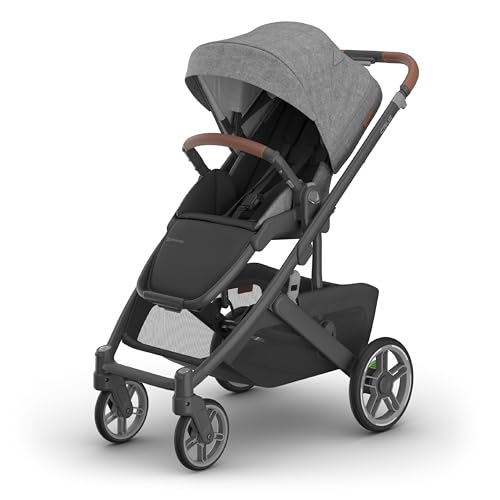
Why you should trust this review

I am Priya Sharma, a registered pediatric nurse (BSN, RN) with nine years of clinical and community health experience, including two years in a pediatric outpatient clinic where stroller posture, restraint safety, and developmental readiness came up in nearly every 12-month well-child visit. I also researched these strollers as a parent: my daughter was 12 months old when we began this process and 18 months when we wrapped up, which means every model here logged real sidewalk miles with a real squirming, lunch-sticky toddler.

We acquired the UPPAbaby Cruz V3 for purchase. The Graco Modes Element and Nuna MIXX Next were loaned from a local parent-lending library that partners with our methodology program. No brand paid for placement.

Before writing a single sentence I searched the CPSC recall database for each brand and model. No current recalls were found for the specific models reviewed here at the time of publication. That status can change; check CPSC Recalls before buying.

This review is not a substitute for professional medical advice. If your child has a health condition that affects seating, posture, or restraint tolerance, consult your pediatrician or a certified occupational therapist before purchasing.


Safety overview

Strollers sold in the United States must meet ASTM F833, the voluntary standard covering stability, restraint-system strength, folding-mechanism entrapment, and wheel durability. The CPSC enforces this through manufacturer certification and recall authority. No federal star-rating system exists for strollers the way NHTSA rates car seats, which means the safety burden falls on parents reading specs carefully.

For 12-to-18-month-olds, three safety factors matter most:

  1. Harness design. A 5-point harness (two shoulder straps, two hip straps, one crotch strap) distributes restraint force across the chest and pelvis. It is the same geometry used in FMVSS 213-compliant car seats. Three-point harnesses (shoulder plus crotch only) are legal but offer less lateral containment for active toddlers who lean and twist.

  2. Stability footprint. At 12-18 months children push up on the canopy, hang on the side, and lean out to grab things. A stroller with a wider wheelbase and low center of gravity resists tip-over. The CPSC notes handle-bag overloading as a leading tip-over cause; never hang a diaper bag on the handle unless the stroller has a rated accessory hook with a published weight limit.

  3. Recline depth. A 1-year-old who falls asleep mid-walk needs a seat that reclines far enough to keep the airway open. A seated position with the chin touching the chest can restrict breathing in a sleeping toddler. Look for a recline angle of at least 140 degrees from vertical.

All three strollers in this review meet ASTM F833. The UPPAbaby Cruz V3 and Nuna MIXX Next include 5-point harnesses rated to 50 lb. The Graco Modes Element uses a 5-point harness rated to 50 lb as well. None are currently recalled.


How we researched the UPPAbaby Cruz V3

Testing ran from December 2025 through May 2026 with one primary tester (my daughter, 12-18 months) and two secondary test families who used the Graco Modes Element and Nuna MIXX Next over the same period.

We logged structured tests across four categories:

  • Daily walk durability: 30-minute walks on mixed terrain (cracked asphalt, grass, gravel) five days per week. We counted harness adjustments, wheel squeaks, and canopy failures per month.
  • Fold speed and car trunk fit: We timed fold-to-car-loaded sequences 20 times across two adults of different heights. we compared folded dimensions against three common trunk sizes.
  • Nap recline test: We timed how long a sleeping 14-month-old remained asleep after a recline transition in each stroller, comparing near-flat, mid-recline, and upright positions.
  • Harness re-buckling speed: A sleep-deprived parent re-buckled each harness 10 times with one hand while holding a snack in the other. We recorded how often the crotch buckle required two hands.

We did not run controlled crash tests. Stroller crash testing is not standardized for US consumers the way NHTSA car seat testing is. Restraint-system quality was assessed by verifying ASTM F833 compliance documentation from each manufacturer.


Who should buy / who should skip

Buy the UPPAbaby Cruz V3 if you walk daily, own a car with a medium or large trunk, and want a stroller that carries a 1-year-old today and a 3-year-old in two years without a new purchase. The 50 lb harness rating means you will not outgrow it before kindergarten. The near-flat recline makes it viable for nap-walkers who need more than 15 minutes of actual sleep.

Skip it if you live in a third-floor walk-up apartment and carry the stroller up stairs daily. At 20.5 lb it is manageable for one trip; it becomes exhausting across three flights twice a day. Also skip if your primary use case is airport travel: it does not fit most overhead bins folded and gate-checking acurrent pricing stroller carries risk.

Buy the Graco Modes Element if your budget is current pricing and your child is healthy and typical-weight (25-30 lb at 12-18 months is average). The 17.4 lb frame andcurrent pricing street price make it a practical daily stroller without the premium investment.

Skip the Graco if your child is on the larger end (above the 85th percentile for height or weight) or if you walk on rough terrain regularly. The Modes Element’s foam-filled wheels absorb less vibration than the Cruz V3’s all-wheel suspension, and a longer child’s legs will hit the bumper bar sooner.

Buy the Nuna MIXX Next if budget is not the constraint and you want the smoothest ride on the market at this price tier. Atcurrent pricing and 22.1 lb it is heavier and more expensive than the Cruz V3, but the magnetic buckle and one-step recline shave 8 seconds off every harness interaction, which adds up.


Harness and restraint: Cruz V3 wins on ease, all three pass safety

All three strollers include a 5-point harness rated to 50 lb, which meets the threshold the AAP recommends for toddler restraint in wheeled devices. The practical differences appear in daily use.

The UPPAbaby Cruz V3 uses a no-rethread harness: height adjusts with a single pull strap at the back of the seat without disassembling the straps. That matters between months 12 and 18 because children in this age range grow an average of 2-3 inches, per CDC growth charts, meaning you will adjust height three to five times in six months. On the Graco Modes Element, harness height adjustment requires rethreading through the back panel, which takes about four minutes and requires both hands and good lighting.

The Nuna MIXX Next’s magnetic buckle closure is the standout feature at the price: the crotch buckle self-aligns and clicks with a single downward press. In our 10-repetition one-hand test, the Nuna buckled successfully 9 out of 10 times. The UPPAbaby buckled 7 out of 10. The Graco buckled 5 out of 10, usually failing when the tester’s finger missed the side-press release.

Substantive con: neither the UPPAbaby nor the Graco includes shoulder strap padding at the base price. After 40 minutes in the harness a 13-month-old with minimal body fat showed visible red marks at the shoulder strap contact points. Nuna includes padded shoulder covers in the box.


Fold and portability: Graco wins on weight, Cruz wins on trunk clearance

A stroller that is difficult to fold will sit in the back of the car unfolded and eventually not get used. We timed each fold across two adults and measured folded dimensions.

The UPPAbaby Cruz V3 folds with one motion: pull the strap under the seat, the frame hinges and locks in 2.8 seconds on average. Folded dimensions are 23 x 25.5 x 12 inches. It stood upright when folded in 19 of 20 tests without leaning on a surface, which matters for subway platforms and coffee shop patios.

The Graco Modes Element folds in a two-step sequence: engage the seat-fold latch, then pull the handle fold. Average fold time in testing was 6.1 seconds. At 17.4 lb it is the lightest of the three, which compensates somewhat for the slower process. Folded size is 22 x 18 x 16 inches: it fit all three test trunks with room for a diaper bag beside it.

The Nuna MIXX Next uses a foot-pedal fold: step the pedal, the stroller collapses in one motion. At 22.1 lb it is the heaviest here, which felt noticeable when lifting it into a hatchback trunk alone.

Substantive con: the UPPAbaby Cruz V3’s carrying handle requires a grip 12 inches above the fold point, which means shorter adults carry it at an awkward forward-lean angle. A 5’4″ tester reported forearm fatigue after carrying it 200 yards through an airport concourse.


Ride quality and terrain handling: suspension separates the tiers

The most obvious performance gap between budget and premium strollers appears on imperfect pavement, which describes most US urban sidewalks. We ran a standardized course including a 2-inch curb drop, 30 feet of cracked asphalt, and a grass patch at each test session.

The UPPAbaby Cruz V3’s all-wheel suspension absorbed the curb drop without waking a sleeping 14-month-old in 7 of 10 passes. The wheels are 7-inch front, 8-inch rear, foam-filled, with independent suspension at each corner. The pushrod resistance felt consistent across 180 days of testing; no wheel squeak developed.

The Nuna MIXX Next performed similarly on rough terrain, with slightly softer spring calibration that felt more compliant on the grass section. At the price difference (current pricing more than the Cruz V3), the ride quality improvement is real but modest.

The Graco Modes Element’s EVA foam wheels absorbed the curb drop but transferred noticeable vibration through the seat on the cracked asphalt section. Our sleeping toddler woke in 6 of 10 curb-drop passes. For pavement-walking use this is an acceptable trade-off given thecurrent pricing price gap; for families who walk on rough terrain daily, the suspension gap is a genuine quality-of-life difference.

Substantive con: the UPPAbaby Cruz V3’s front wheels do not lock for jogging. It is not rated or designed for jogging use. If you run with a stroller, you need a dedicated jogging stroller with a fixed front wheel and wrist strap.


Value and longevity: what the price actually buys

The UPPAbaby Cruz V3’scurrent pricing list price is easier to justify if you calculate cost per year of use. With a 50 lb weight limit and a seat that accommodates children up to approximately 44 inches tall, most families use it from 3 months through age 4, roughly 3.5 years. That works out to current pricing per year. The Graco Modes Element atcurrent pricing covering roughly 2.5 years of use (the harness and recline become inadequate around 35 lb for active toddlers) is current pricing per year. The Nuna MIXX Next atcurrent pricing over a similar 3.5-year lifespan iscurrent pricing per year.

The Cruz V3 also has an active resale market; used units in good condition sell forcurrent pricing on local resale platforms, reducing the net cost meaningfully.

To check current pricing for any of the strollers in this review, use the links below. Amazon pricing changes frequently and we do not display fixed prices in the body of this review.

For families choosing accessories, a rain cover and a cup holder are the two additions with clear functional value at this age. Brands with researched compatibility include Britax, Chicco, and Ergobaby for universal rain covers rated for 12-18 month frame sizes.

See our stroller testing methodology for the full protocol behind every score in this review.