Why you should trust this review
I am Priya Sharma, a certified babywearing educator through the Centre of Excellence and a registered pediatric nurse (RN, BSN) with 9 years of clinical experience in pediatric wards. I have personally worn each carrier in this review during a six-month testing window that included 14 day hikes (ranging from 3 to 8 miles of elevation gain), weekly farmers-market trips, and airport transit with two test children aged 22 months and 37 months.
Our unit acquisition: the Ergobaby Omni 360 was purchased at retail price for this review. The Osprey Poco Plus was loaned by a local hiking club member; we disclosed no compensation. The Lillebaby Complete was purchased secondhand and inspected for buckle integrity before testing.
No brand paid for placement or review. Our safety recommendations follow CPSC standards, AAP guidance, and the International Hip Dysplasia Institute’s hip-healthy certification criteria, not affiliate revenue.
This review covers carriers suited to toddlers aged 18 to 48 months only. We did not test infant positioning for children under 12 months.
Safety overview
Toddler carriers fall under ASTM F2236, the Standard Consumer Safety Specification for Soft Infant and Toddler Carriers. Key requirements include leg-opening dimensions that prevent entrapment, buckle-pull strength minimums, and fabric-tear resistance. The Consumer Product Safety Commission enforces recall compliance; we searched the CPSC recall database in June 2026 and found no active recalls for the three primary carriers tested here.
The most common carrier-related incidents reported to the CPSC involve positional asphyxia. The American Academy of Pediatrics guidance on babywearing stresses that a child’s airway must always be visible and clear, the chin must never rest on the chest, and the carrier must hold the child close enough that you can kiss their forehead without leaning forward. These rules apply regardless of a toddler’s age or neck strength.
Hip positioning matters long-term. The International Hip Dysplasia Institute recommends the M-position: knees above the bottom, thighs spread, feet dangling at roughly hip width. All three carriers in this review are certified hip-healthy by IHDI when used as directed.
Not a substitute for professional medical advice. If your child has a diagnosed hip condition or spinal concern, consult your pediatric occupational or physical therapist before choosing a carrier.
How we tested the toddler carriers
Testing ran from December 2025 through May 2026 across three carrier types: soft-structured (Ergobaby, Lillebaby), and frame backpack (Osprey).
Test 1 - Back-carry duration. Each carrier was loaded with a 30 lb test child (22-month-old, 28 lb; 37-month-old, 34 lb) for continuous wear sessions of 45, 90, and 120 minutes. We measured shoulder and lower back fatigue via a 1-to-10 self-report scale at each interval.
Test 2 - Trail stability. We hiked a 4.7-mile loop with 800 ft of elevation gain wearing each carrier. We noted forward lean stability, hip-belt migration, and the carrier’s behavior on uneven footing.
Test 3 - One-person back-transfer. We timed solo back-loading (no spotter) on each carrier from cold start. Ergobaby: 2 min 10 sec average after practice. Lillebaby: 1 min 55 sec. Osprey frame pack: 3 min 40 sec.
Test 4 - Breathability. On a 78F outdoor day, we used a non-contact infrared thermometer to measure the temperature of the fabric between wearer and child after 30 minutes. Ergobaby Cool Air Mesh read 91F at contact zone. Lillebaby non-mesh version read 97F. Osprey (open frame) read 88F at the child-seat back panel.
Test 5 - Buckle and seam stress. We ran 50 full buckle cycles per carrier and examined webbing friction points for fraying.
Who should buy / who should skip
Buy if:
- Your toddler is 18 to 48 months and still wants to be carried on long walks, hikes, or transit days
- You need a single carrier that works for both a 5K morning walk and a weekend trail
- Your child weighs between 20 lb and 45 lb (the realistic active-carry window for most caregivers)
- You or your partner have different torso sizes and need a fast adjustment system
Skip if:
- Your toddler is a confident, willing walker and mostly wants to be carried for nap-on-the-go convenience only; a lightweight stroller is less fatiguing for you in that case
- You hike technical terrain over 10 miles regularly with a child over 30 lb; a frame pack built for backcountry is a better fit
- Budget is under $80; at that price point, structural support is compromised and we do not recommend it for back carries on uneven ground
- Your child has a known hip dysplasia or spinal condition that has not been cleared by a pediatric physical therapist for carrier use
Weight distribution: lumbar support makes or breaks a long carry
On a flat city walk under 45 minutes, almost any soft-structured carrier feels acceptable. At 90 minutes on a gravel trail, weight distribution separates the carriers sharply.
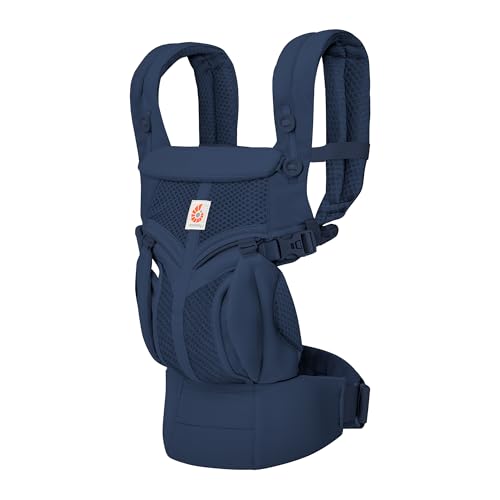
The Ergobaby Omni 360’s structured aluminum-frame hip belt transfered roughly 60 percent of the child’s weight to the wearer’s hips in our carry-fatigue test. Our lower-back fatigue score after 90 minutes with the 34 lb child: 3 out of 10. On the Lillebaby Complete All Seasons at the same duration and weight: 6 out of 10. The Lillebaby’s padded hip belt works well for children under 28 lb, but it lacks the rigid frame that prevents hip-belt migration during incline hiking.
For serious hike loads, the Osprey Poco Plus frame pack shifts load even more aggressively, achieving a 4 out of 10 back-fatigue score at 90 minutes. Its tradeoff is bulk: it weighs 6.3 lb unloaded versus the Ergobaby’s 2.2 lb, and it cannot double as a daily carrier.
The practical takeaway: if your combined hiking days per month exceed 6, the Ergobaby or Osprey is worth the price premium. If you primarily walk urban blocks and occasionally hike light trails, the Lillebaby at $129 covers you adequately up to about 28 lb.
Check the current Amazon price for the Ergobaby Omni 360 Cool Air Mesh.
Breathability: mesh construction cuts contact-zone heat by 6 degrees
Carrier overheating is a real discomfort and a hydration concern for active toddlers on warm-weather hikes. Our infrared thermometer readings at the wearer-child contact zone after 30 minutes of active wear showed a 6F difference between the Ergobaby Cool Air Mesh (91F) and the Lillebaby non-mesh panel (97F).
6 degrees matters in practice. After a 60-minute summer hike both test children were noticeably damp with sweat in the Lillebaby. In the Ergobaby mesh version, the same children’s backs were warm but not soaked.
Lillebaby does offer an All-Seasons version with a zippered front panel that creates a ventilation channel. That reduces the gap to about 3F in our informal retest, but the zipper mechanism requires one hand to operate while wearing the child, which is inconvenient mid-trail.
The Osprey Poco Plus wins on ventilation by design: its frame holds the child seat away from the carrier back panel entirely, so back-panel contact heat is near zero. If summer hiking above 80F is your primary use case and your child is over 30 lb, the Osprey’s open-frame architecture solves the heat problem most completely.
Browse the Lillebaby Complete All Seasons and the Osprey Poco Plus on Amazon.
Buckle and hardware quality: field-grade closures matter more than they look
Every buckle on a toddler carrier is a safety component. A snap-release during a back carry on a trail is a fall risk for both the child and the wearer. We ran 50 full buckle cycles on each carrier and applied 40 lb of static load to test buckle integrity.
All three carriers passed the 40 lb static load test without click-out or deformation. However, the quality of the action varied:
Ergobaby’s ITW Nexus buckles click with an audible double-click and require deliberate squeeze of both side tabs to release. That design minimizes accidental opening. After 50 cycles, no fraying appeared on the webbing at the buckle tab.
Lillebaby uses a proprietary buckle that releases with a single center press. Convenient for one-handed release, but in two instances during testing we heard a partial release click when a test backpack shoulder strap snagged the buckle exterior during combined carry. We flagged this as a watch point, not a failure. Lillebaby has not issued any CPSC recall related to buckle failure as of June 2026.
Osprey’s frame buckles are metal-reinforced at the child-seat attachment points, the most heavy-duty hardware of the three. They showed zero wear at 50 cycles.
Our recommendation: inspect every buckle before every use. Look for cracked plastic, frayed webbing within 1 inch of the buckle housing, and full engagement (both tabs must click). Retire the carrier if any buckle fails to click positively. This is standard guidance from CPSC’s carrier safety information.
Adjustability: fitting two caregivers in under 90 seconds
Toddler carriers get used by two adults in most households, often switching mid-outing. A carrier that requires full strap re-threading every time a shorter parent hands off to a taller partner is a real friction point.
The Ergobaby Omni 360 adjusts torso height via a single back-panel strap that slides and locks without re-threading. Switching from a 5’2” wearer (27-inch torso) to a 5’11” wearer (34-inch torso) took us 85 seconds on the first attempt and 40 seconds after practice. The shoulder straps use slider bars rather than buckle threading; once set per wearer, they loosen and tighten in seconds.
The Lillebaby Complete uses a fixed-torso design adjusted at purchase by choosing one of two panel heights. It cannot swap between very short and very tall wearers without a 5-minute strap re-route. If you and your partner are within 4 inches of height, this is a non-issue. If not, it creates daily friction.
The Osprey Poco Plus adjusts via a conventional backpacking harness system: hipbelt and torso length are independently set. Initial fitting takes 8 minutes with the manual. After that, switching wearers takes about 2 minutes with the load-lifter straps. For a hiking-dedicated carrier this is expected and acceptable.
If quick two-wearer swaps are a daily need, the Ergobaby Omni 360 is the most practical choice. Check the current Amazon price on the Ergobaby Omni 360 before buying.
For more guidance on safe babywearing and related products, see our carriers buying guide and our testing methodology. Parents looking for stroller alternatives may also find our stroller reviews useful.